Where the Streets Still Remember

ELLFIAN RAHIM | 27 January 2026

Many street names are a living archive – quiet markers of trades, people and moments long past, still guiding us through the city even as everything else changes.

RAPID urban development is reshaping cities in profound ways, sometimes altering the distinctive character, cultural texture and community life that once defined them. As Kuala Lumpur’s topography changes at a remarkable pace, it too faces the possibility of such transformation.

Fortunately, old street names around the city continue to serve as a living archive, revealing the history, trade and social fabric of a place long after the original buildings or inhabitants are gone. Many also echo the descriptive names once used by residents to identify locations well before the advent of modern mapping.   

“The names of the many streets around this area sort of narrate a story of early Kuala Lumpur,” says Jane Rai, an award-winning Malaysian tourist guide and storyteller, and the woman behind the Free Walk Kuala Lumpur Unscripted and Kuala Lumpur Heritage Walks.

She points out, for instance, that the former Java Street (now Jalan Tun Perak) – takes it name from Kampong Rawa, a large early Malay settlement that was already thriving even before large-scale tin mining gave birth to Kuala Lumpur. Jalan Sultan, meanwhile, was named in honour of Sultan Abdul Samad, the fourth ruler of Selangor. His long reign from 1857 to 1898 coincided with a period of significant change, including the Selangor Civil War and the establishment of Kuala Lumpur itself.

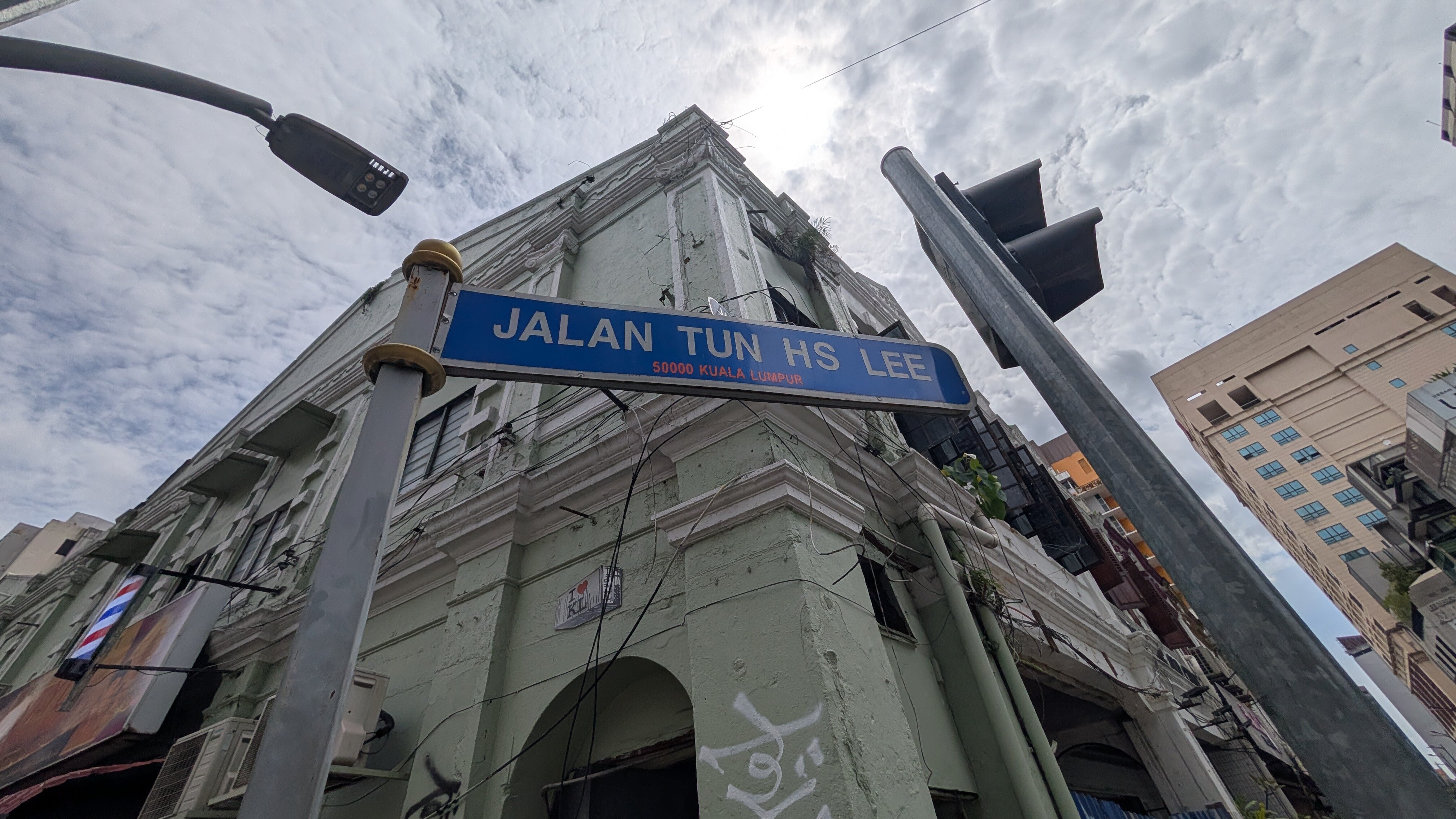
Equally fascinating is Jalan Tun H.S. Lee, named after the nation’s first finance minister – a highly influential figure in the Malayan Chinese community and one of the founders of the Malayan Chinese Association (MCA).
  
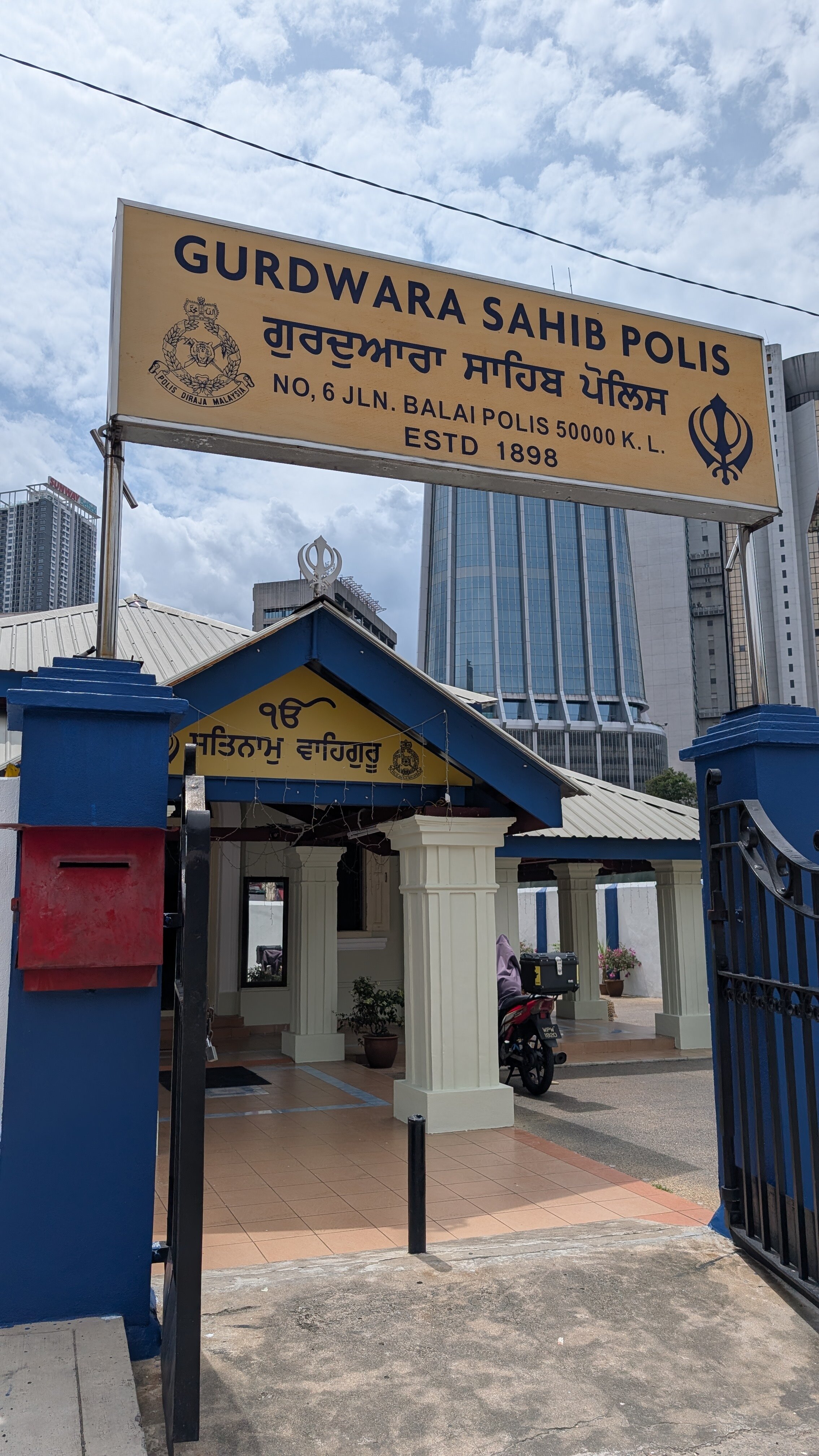
“And let’s not forget the story behind Jalan Hang Kasturi, named after the legendary Malay warrior from 15th-century Malacca,” Jane adds. “Even a street as plainly named as Jalan Balai Polis points to layers of history – referencing the old police station that once stood along a longer road known as Station Street, which linked High Street (now Jalan Tun H.S. Lee) to Petaling Street.” The area was lined with pre-war shophouses and included the historic Gurdwara Sahib Polis, reflecting early colonial policing and the presence of the Sikh community.

All these narratives, Jane notes, lead back to one pivotal historical figure: Yap Ah Loy. The third Kapitan China of Kuala Lumpur, he played a central role in rebuilding the tin-mining settlement after the Selangor Civil War – also known as the Klang War – in the early 1870s.

“Kuala Lumpur was ground zero during the conflict. There was destruction everywhere,” Jane explains. “But Yap Ah Loy encouraged people to grow rice and other crops again. He took up loans to rebuild and was nearly bankrupted by a slump in tin prices – yet he never gave up.”

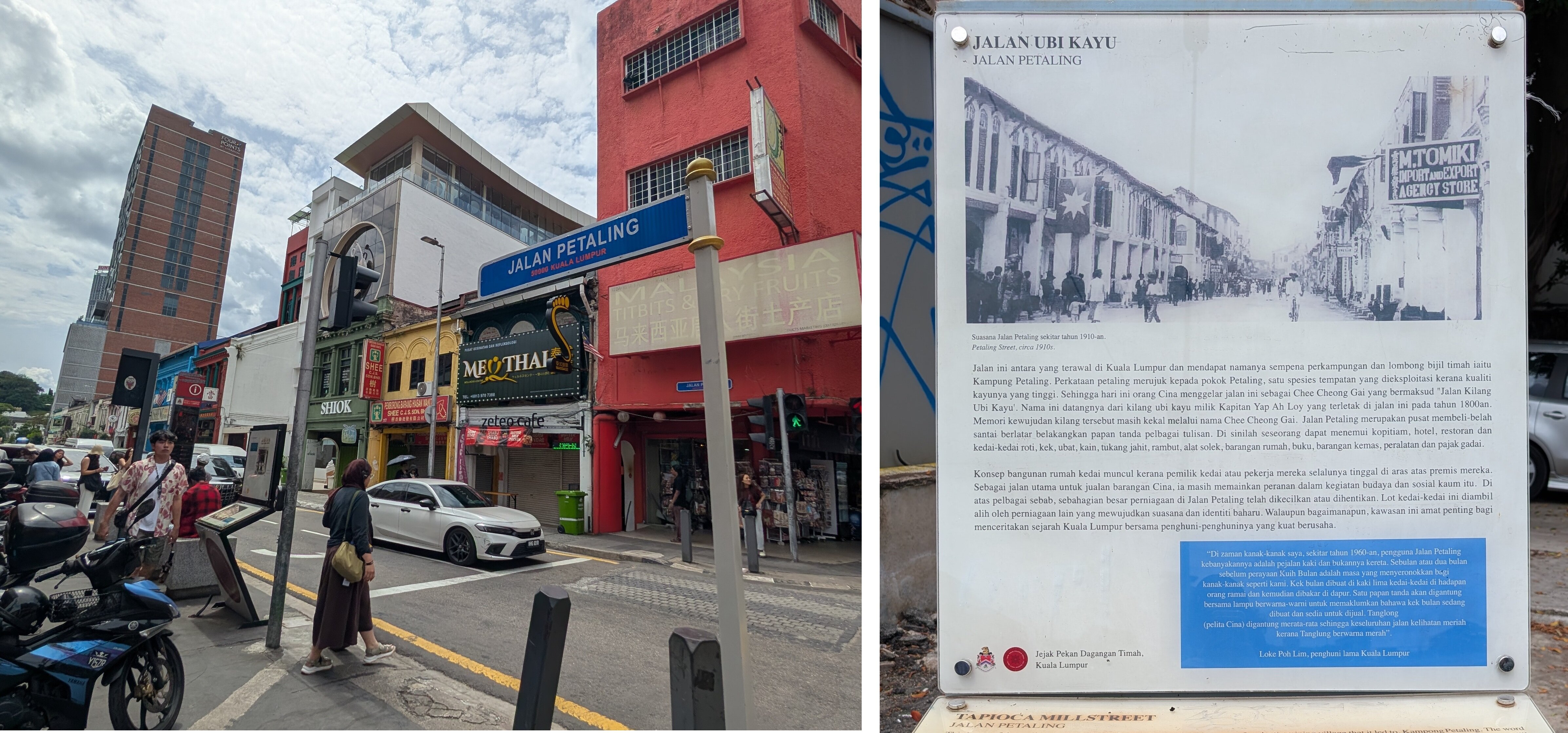
Did you know? Before it was Petaling Street, it was Chee Cheong Gai – 'Starch Factory Street' – named after a tapioca mill set up by Yap Ah Loy in 1870, a small industry that helped shape early Kuala Lumpur.

All these narratives, Jane notes, lead back to one pivotal historical figure: Yap Ah Loy. The third Kapitan China of Kuala Lumpur, he played a central role in rebuilding the tin-mining settlement after the Selangor Civil War – also known as the Klang War – in the early 1870s.

“Kuala Lumpur was ground zero during the conflict. There was destruction everywhere,” Jane explains. “But Yap Ah Loy encouraged people to grow rice and other crops again. He took up loans to rebuild and was nearly bankrupted by a slump in tin prices – yet he never gave up.”

A smile spreads across Jane’s face as she reflects on her approach to heritage storytelling. She believes the most meaningful way to keep Kuala Lumpur’s past alive is by connecting present-day residents and visitors with these stories of the city. Doing so, she says, helps people feel more connected to the communities that surround the streets they walk through.

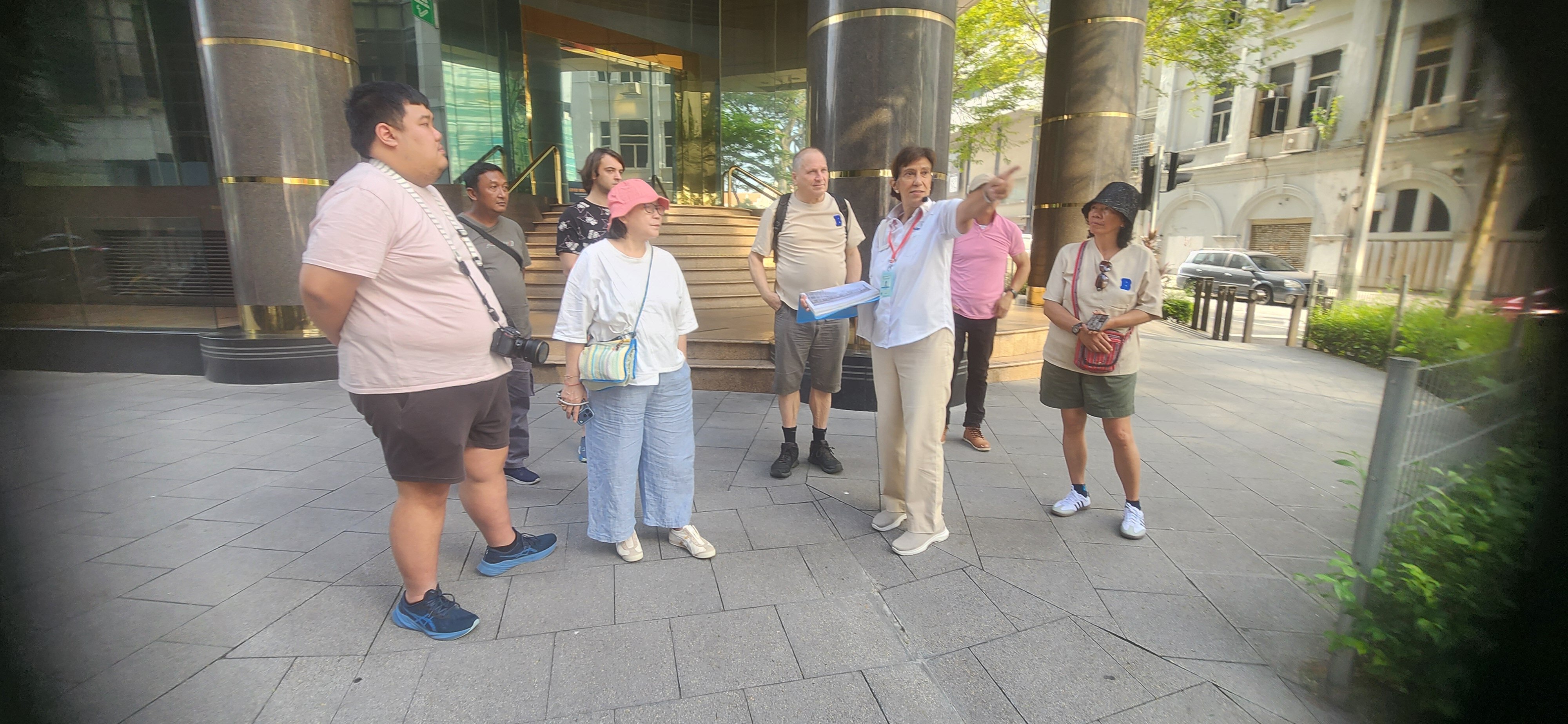
Because the tours are unscripted, guides are free to choose routes suited to each group. As a result, even returning participants are unlikely to experience the same walk twice.
  
A former journalist with The Star in the 1980s, Jane describes herself as a storyteller who finds deep satisfaction in sharing history in ways that engage and resonate. It was this passion that led her to pursue a tourism course towards the end of that decade – a decision she says she has never looked back on.

Over more than three decades as a certified tour guide with various companies, Jane gradually honed her ability to craft thoughtful and insightful itineraries for people from all walks of life.

“When I first started, there was no internet or smartphones,” she recalls. “I relied heavily on printed historical materials and brochures, studying them closely to familiarise myself with the buildings and structures around Kuala Lumpur – especially in areas such as Merdeka Square and Chinatown.”

In 2020, Jane struck out on her own, launching the Free Walk Kuala Lumpur Unscripted walking tours. Today, she and a small team of guides conduct two-hour walks, including the Chinatown Cultural Walk and the East–West Connection tour, both open to anyone keen to uncover the stories behind Kuala Lumpur’s older districts.

The Chinatown Cultural Walk is a tip-based tour exploring Petaling Street and its surroundings. Participants uncover stories of early Chinese migrants, tin mining, traditional trades and the area’s evolving streetscape, while also encountering vibrant street art – including Kwai Chai Hong, a beautifully restored heritage alley – alongside old shophouses and contemporary cafés.
  
The East–West Connection tour, on the other hand, explores the historic colonial district near the confluence of the Klang and Gombak Rivers. It focuses on Kuala Lumpur’s diverse origins, shaped by Malay, Chinese and European influences, and features prominent examples of colonial architecture.
  
It is often on this route, Jane explains, that participants experience first-hand the city’s layered history, as grand colonial buildings stand alongside traditional shophouses, explored at a deliberately unhurried pace.
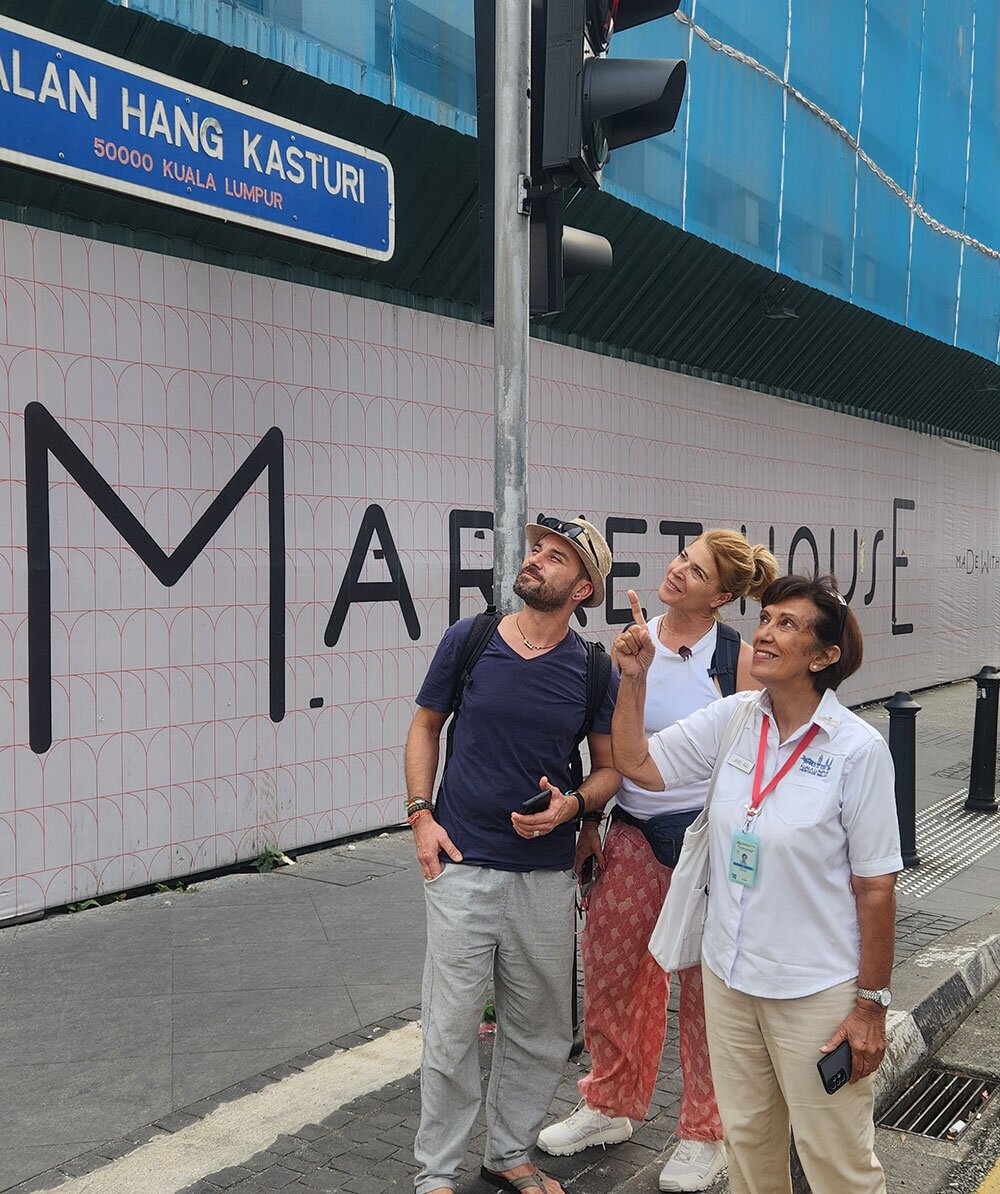
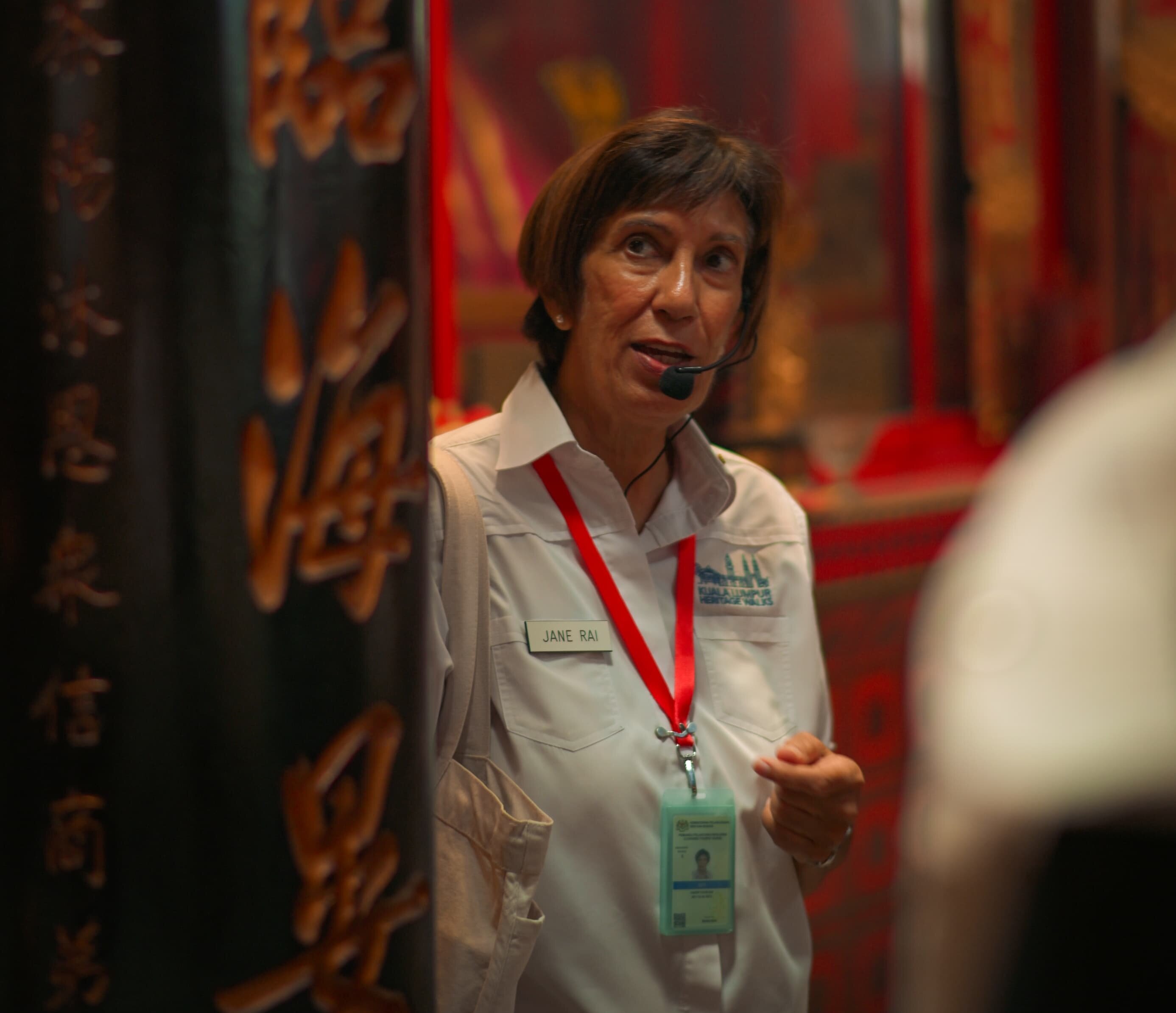
Tourist guide Jane Rai describes herself as a storyteller who finds deep satisfaction in sharing history in ways that engage and resonate.

Along the way, guides share stories of Malay sultans, Chinese kapitans, early settlers and key historical events. The route typically covers the colonial heart of the city – from Medan Pasar and the riverbanks near Masjid Jamek – before ending around Central Market or its vicinity.

This philosophy underpins Jane’s emphasis on well-researched and carefully curated walking tours. Her own experiences of similar tours abroad have shown how effective they can be in conveying history – moving beyond dry facts and figures to offer an immersive, multisensory and contextual understanding of place.
  
“By walking through the streets themselves,” she says, “people engage with both tangible and intangible heritage – and arrive at a deeper understanding of the past.”

Discover more stories

Ooops!
Generic Popup2