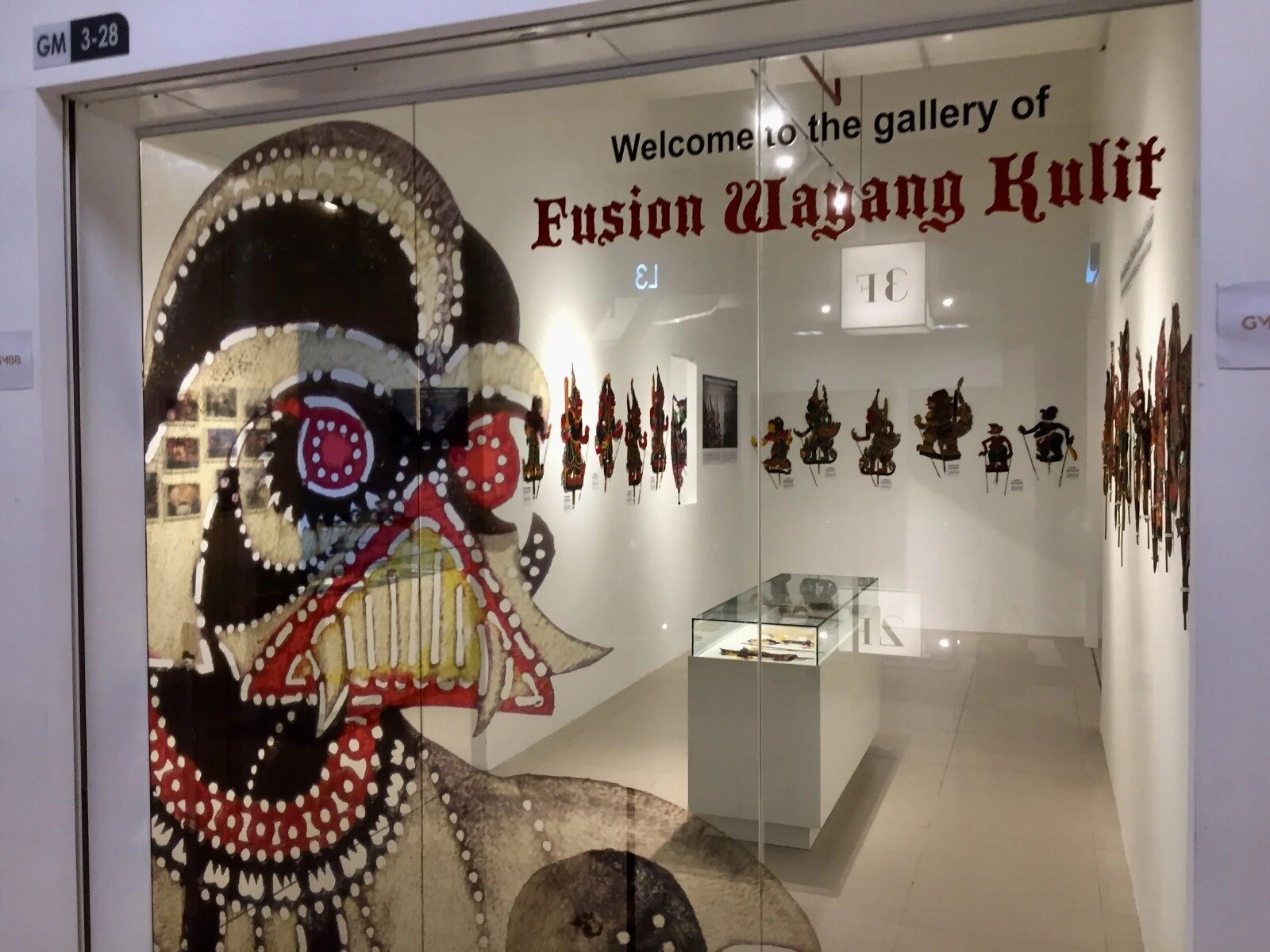
Preserving a Classical Malay Heritage in the Modern Era

TUN HIZAMI | 1 February 2026

Tok Dalang Muhammad Dain Othman showing wayang kulit enthusiasts how it's done at Fusion Wayang Kulit's trial sessions. – Photos: Tun Hizami
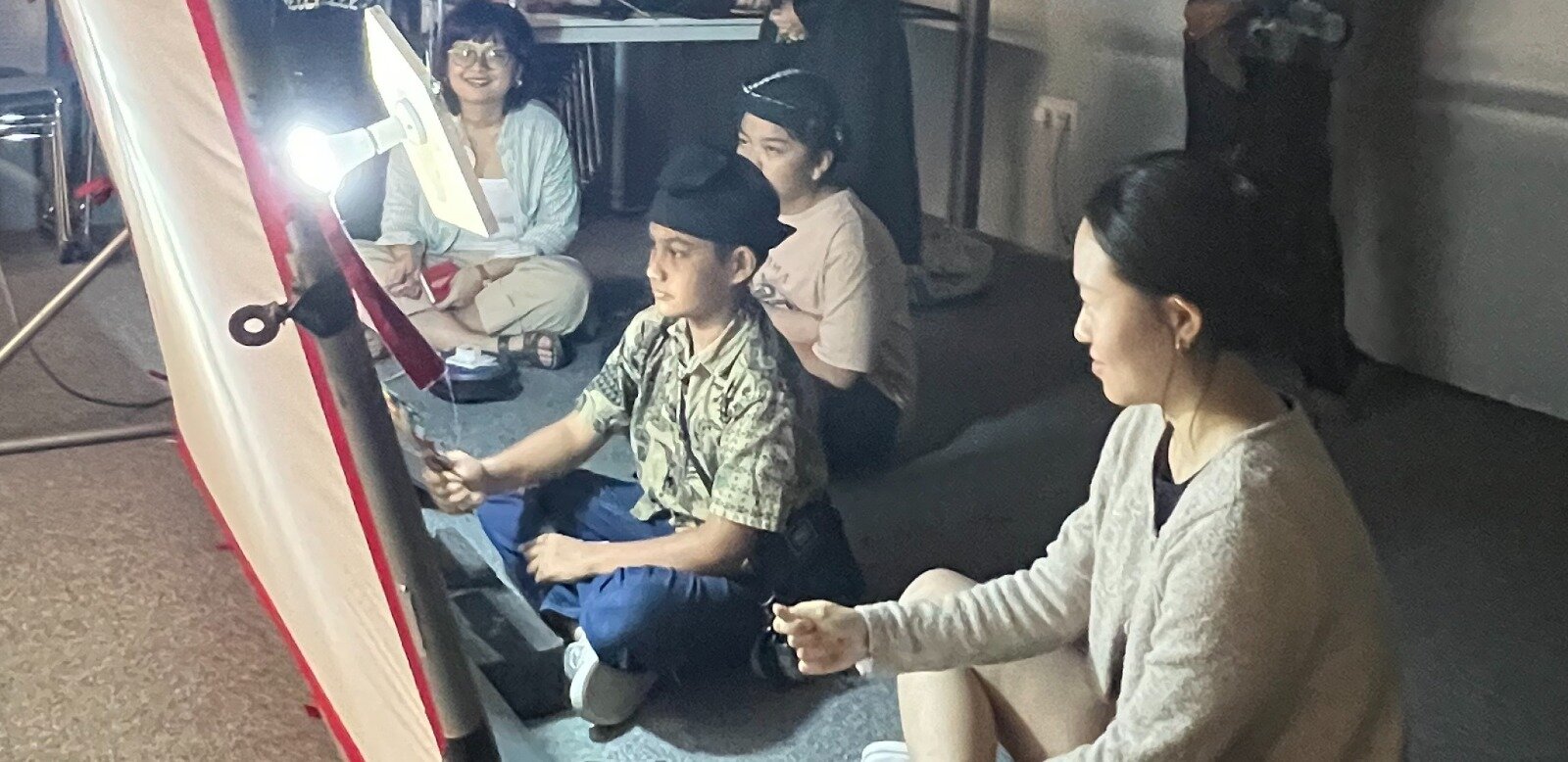
IN a dark room, light cuts through a white screen. The melodies of the serunai, drums and gong fill the air, then comes the voice of the tok dalang as he steers the story, animating the shadows of once-still puppets. This is the soul of wayang kulit – an art form that took root in Malaysia around the 15th century, shaped by influences from India, China, Thailand and Indonesia.

Today, however, this classical heritage is often seen as fading. In response, efforts to keep the art alive continue – including free trial classes organised by Fusion Wayang Kulit at GMBB, a creative community mall in Kuala Lumpur. Fusion Wayang Kulit is an award-winning collective working to breathe new life into Malaysia’s wayang kulit, blending traditional storytelling with pop culture and science fiction influences.
  
Among the youngest participants at these classes was 12-year-old Ayril Faayadh Mohd Fuaad, who shared that his interest in wayang kulit began after watching a performance at the Akademi Seni Budaya Dan Warisan Kebangsaan (Aswara) in 2023. 
  
At first, he admitted he felt a little afraid of the intricately carved puppets made from buffalo hide. But after trying it for himself, that fear slowly faded, and he began to feel a genuine connection to the traditional Malay art form.


Twelve-year-old Ayril Faayadh Mohd Fuaad (centre) is happy that his interest in wayang kulit is fully supported by his family and school friends. 

Ayril’s favourite character is Seri Rama, a king from the mythical kingdom Seusia Mendarapura. Today, aside from honing his skills as a young tok dalang, Ayril also draws and crafts his own character puppets for performances. He considers himself fortunate that his interest in wayang kulit is fully supported by his family and school friends.

A different journey was shared by 28-year-old Gwen Lyne, who said she has been familiar with wayang kulit since childhood. Her desire to try it, however, only emerged last year after watching a performance by The Wayang Women, an international all-female collective.   
  
After attending the Fusion Wayang Kulit’s trial class, Gwen realised just how important listening skills and hand coordination are, as the puppets’ movements must be perfectly synchronised with traditional musical rhythms. She said the experience has sparked a deeper interest in, and she plans to continue with upcoming sessions scheduled for February.

Tintoy Chuo at the Sony booth during the Cos-Mic event last year, where wayang kulit shadow puppets created for PlayStation Studios Asia and Sony Pictures Malaysia were featured as part of the display. – Photo: FB

Spreading the art of Wayang Kulit

According to Fusion Wayang Kulit founder Tintoy Chuo, following the trials, official classes will held twice a month – on the second and fourth weeks – each session lasting three hours. The programme offers eight levels of learning and is open to participants aged 15 and above, with fees starting from RM300.  

“The idea of organising wayang kulit classes came up last year. I’m grateful to have received sponsorship support from, Yayasan Hasanah, an impact-driven foundation of Khazanah Nasional, and Arts for All Seasons (ArtsFAS), which has allowed us to run these classes in a structured and consistent way,” Tintoy shared.   

Beyond organising classes, Tintoy also has extensive experience in creating modern character puppets, including his claim to fame – reimagining figures from the Star Wars universe such as Darth Vader, an Imperial Stormtrooper and Princess Leia.

Same heroes, different shadows: Superheroes take on a new form through Fusion Wayang Kulit’s modern character puppets.

Although his artistic talent was evident from age four, Tintoy was only introduced to wayang kulit in 2012 while attending a Designers Weekend exhibition at Publika Shopping Gallery. After an introduction to master puppeteer Tok Dalang Muhammad Dain Othman (aka Pak Dain), the two hit it off and began working together to bring wayang kulit to a wider audience.

Pak Dain is a master wayang kulit practitioner from Kelantan who shares his knowledge here in Kuala Lumpur.
Getting to Know Pak Dain

Pak Dain is a 13th-generation practitioner of traditional Kelantanese Wayang Kulit and the programme’s principal instructor at Fusion Wayang Kulit.

According to Pak Dain, the learning process is divided into three stages. The first focuses on theory, covering the history of wayang kulit, introductions to the various character puppets, and an appreciation of traditional music.

The second stage involves demonstrations that focus on understanding dialogue and storyline development, including narrative structuring techniques used in wayang kulit performances. The final stage is practical, giving participants the opportunity to conduct a full performance and experience the role of a tok dalang firsthand.

“There is no such thing as ‘it’s too late’ to learn wayang kulit,” Pak Dain said, citing himself as an example. Although he hails from Kampung Morak, in Tumpat, Kelantan – widely regarded as the birthplace of wayang kulit in Malaysia – he only mastered the art at the age of 30.

With over three decades of experience since the 1990s, Pak Dain has witnessed the evolution of wayang kulit from its traditional format to fusion adaptations, including the introduction of contemporary characters, modern music such as EDM, and entertainment elements that resonate with younger audiences.

Keeping pace with technological change, Pak Dain has also incorporated Artificial Intelligence (AI) into performances, such as using digitally generated voices for certain characters. While retaining the Kelantanese dialect, he enriches performances with contemporary Bahasa Melayu and English to appeal to audiences from diverse backgrounds.

“There aren’t any barriers to modernising this art, as long as its five core principles – story, music, characters, physical form and development – are respected,” he explained. 

Despite perceptions that wayang kulit is fast fading, Pak Dain’s international performances in countries such as Germany, Austria, Thailand, Japan and most recently Taiwan, prove that the art form remains relevant and continues to captivate audiences beyond Malaysia.  
  
Adding to this, Pak Dain and Tintoy also collaborated with Sony Pictures Malaysia in 2024 to produce wayang kulit puppets for the character Venom.
   
With Visit Malaysia 2026 underway, Pak Dain hopes the government and arts practitioners will seize the opportunity to promote wayang kulit more widely. He reckoned that such initiatives would not only ensure traditional arts continue to be valued, learned and passed on to future generations, but also hold strong potential to attract tourists to Malaysia’s rich cultural heritage.

Fusion Wayang Kulit 
Location: GM-3-29 (3rd floor), GMBB KL, No, 2, Jalan Robertson 50150 Kuala Lumpur, Malaysia.
Gallery operation hours: 11am - 8pm daily
Training for Wayang Kulit Dalang, Puppet-making workshops and guided tours are all available.
Contact [email protected]

Discover more stories

Ooops!
Generic Popup2