Merdeka Textile Museum ready to weave heritage into the heart of KL

30 May 2026

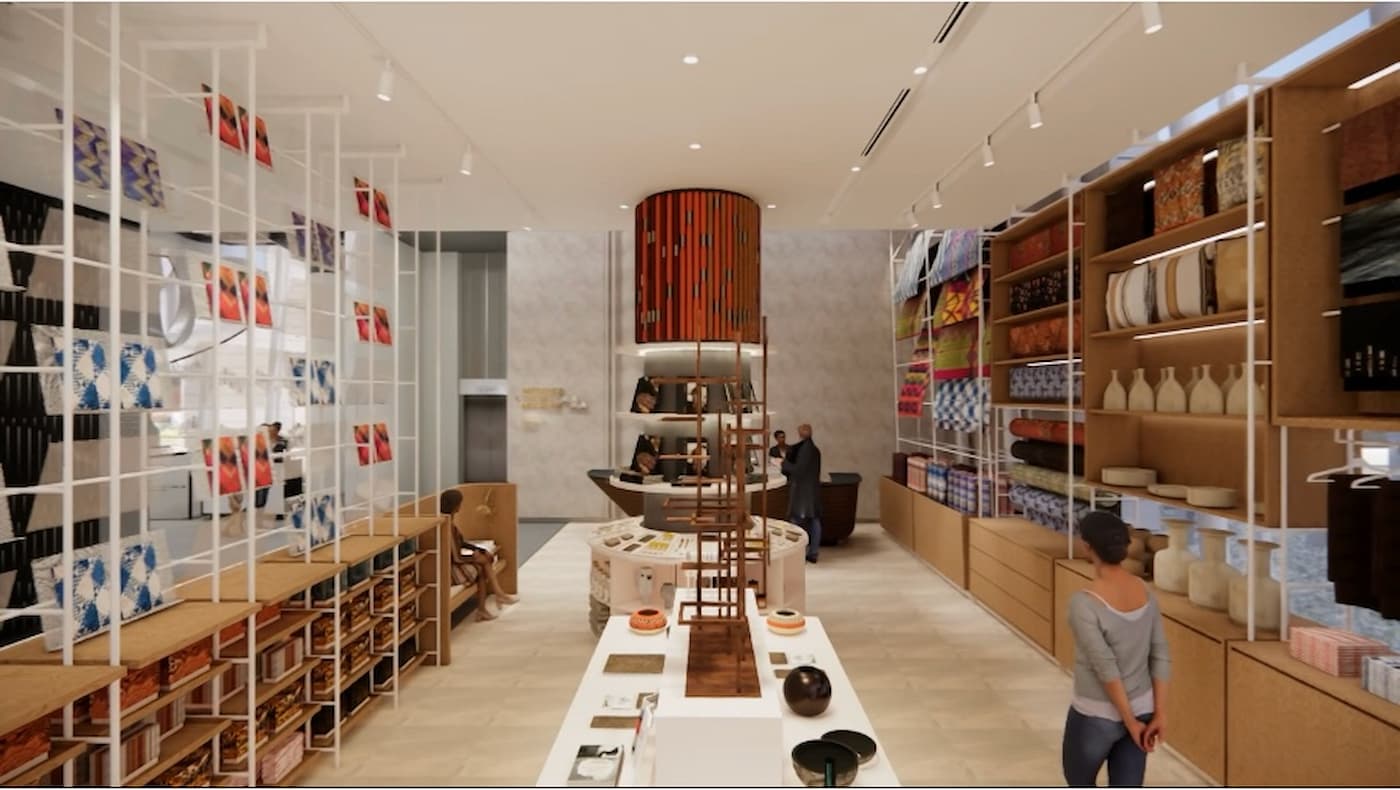
The Merdeka Textile Museum adds an important cultural dimension to Kuala Lumpur while preserving a significant part of Malaysia’s textile heritage for future generations. This artwork render offers a glimpse of what the museum is envisioned to look like when it is slated to open in August.  – Graphics: PNB MV
KUALA LUMPUR got to “see” a museum before it officially opens its doors. Saturday’s KL Festival programme peeled back the polished surface of the yet-to-open Merdeka Textile Museum (MTM) to reveal something rarely shown to the public – the making of a cultural institution itself.
 
Titled The Making of Merdeka Textile Museum, the session blended performance and conversation to unpack how Azah Aziz’s celebrated textile collection has been – over the last six years – transformed into a living, multisensory experience within the Merdeka 118 precinct.

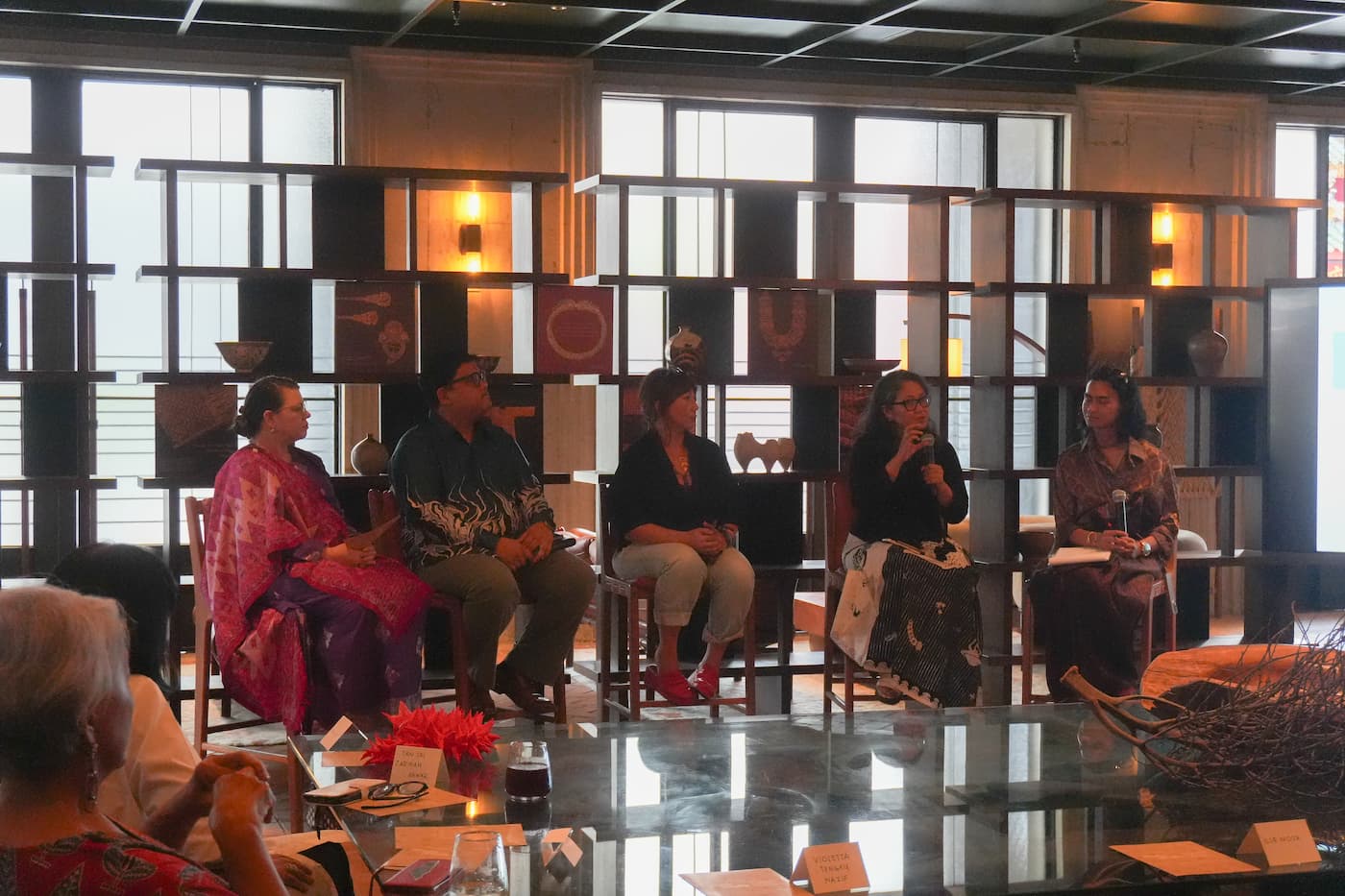
The afternoon session at Else Hotel on Jalan Tun HS Lee featured a panel discussion with Suryani Senja Alias, the MTM museum director; writer and cultural researcher Khairulanwar Rahmat; Farah Azizan, Director of Studio Bikin; and Dr Patricia Ann Hardwick, Head of Sunway Centre for Digital Humanities and Cultural Heritage.

Suryani spoke of her excitement as the museum nears its opening after years of development. “Many people have asked along the way, why we need another textile museum when we already have one in Kuala Lumpur. And the answer is that this museum has been designed through the lens of Azah Aziz – a cultural icon, female journalist and women’s rights advocate. You will see a very different story told here. Azah Aziz is ‘our’ voice, not the voice of an outsider.”

Azah, born Sharifah Azah Mohamed Alsagoff, was a journalist, scholar and cultural historian devoted to the study of Malay textiles and literature. She was the wife of Royal Professor Ungku Abdul Aziz Ungku Abdul Hamid, and her seminal work Rupa dan Gaya Busana Melayu forms a key intellectual foundation for the museum, extending its relevance beyond garments into questions of worldview, social practice and memory.

On Saturday, museum curator Suryani explained the concepts of Bunga Pecah Lapan and Lipat 44, describing the gallery and Azah’s research as "a gift" to the public. She also noted that the museum seeks to offer a distinctive curatorial perspective while positioning itself at the forefront of education and research on Malay textiles.

The panel discussion was designed as a public conversation about design thinking and the emotional architecture of heritage-making. It signalled a broader shift in how museums in KL are being imagined – not as static repositories, but as active cultural spaces shaped by participation, storytelling and sensory engagement. 

The Making of Merdeka Textile Museum on May 30 at Else Hotel featured a panel comprising  (from left): Dr Patricia Ann Hardwick, Khairulanwar Rahmat, Farah Azizan, Suryani Senja Alias and moderator Ahmad Norfitri Baderulnizam.

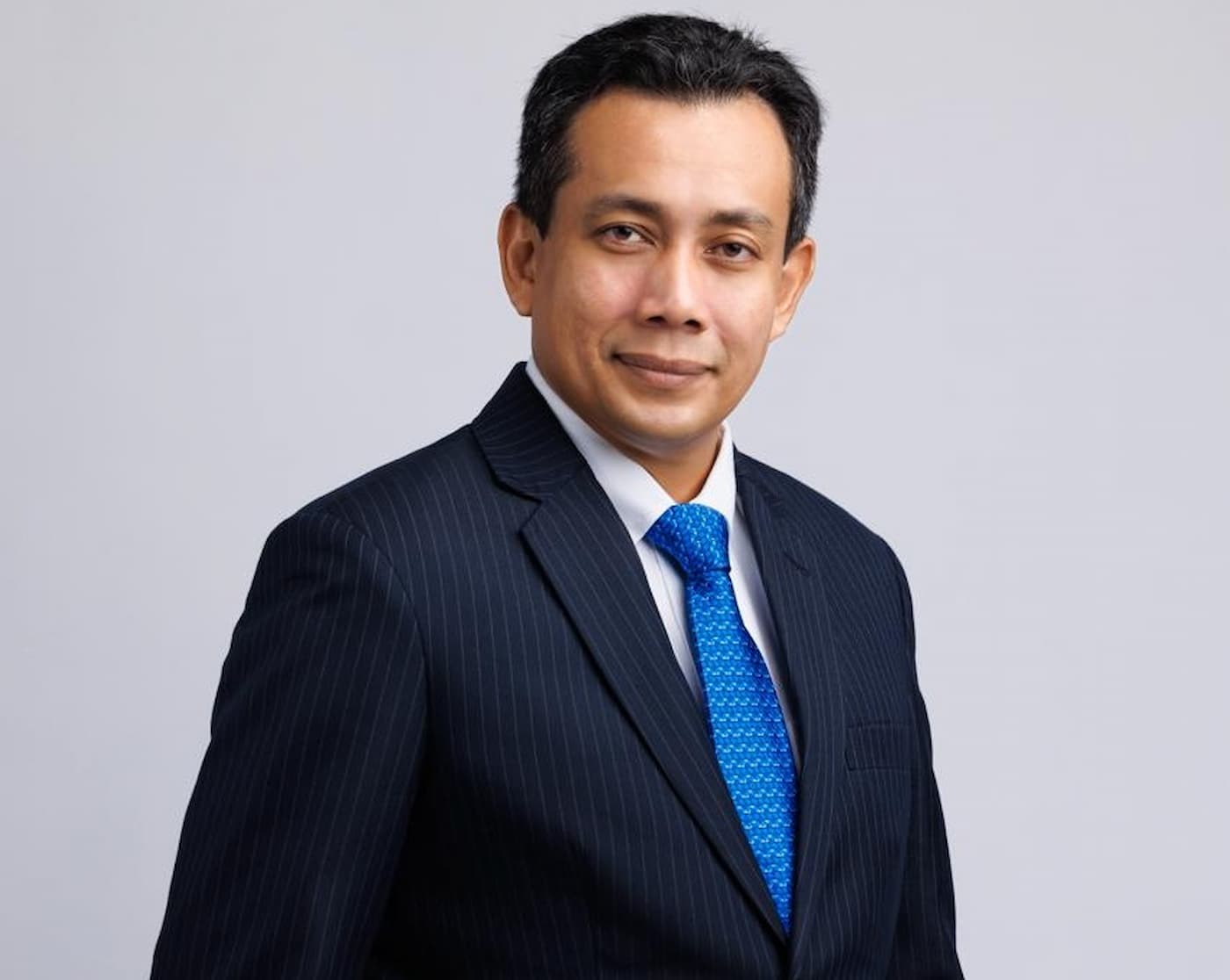
In a previous interview, Dato’ Ir. Ts. Izwan Hasli Mohd Ibrahim, CEO of PNB Merdeka Ventures, had said that MTM is deeply tied to the identity of its location. “The Merdeka 118 precinct has always been envisioned as more than a commercial development – it is where heritage, culture and the future of Kuala Lumpur come together,” he said. “The Merdeka Textile Museum adds an important cultural dimension while preserving a significant part of Malaysia’s textile heritage for future generations.”

Izwan emphasised that the MTM is not simply a project about preservation, but about continuity. “It is not only about textiles,” he said, “but about preserving a way of life, identity and cultural expression from across the Malay world. The museum draws inspiration from Rupa dan Gaya Busana Melayu, which documents not just garments and adornments, but the values, customs and way of life embedded within Malay world textile culture.” 

That ambition is reflected in the curatorial approach, which seeks to bridge historical depth with contemporary accessibility. The museum is being designed to feel welcoming and intuitive, particularly for younger audiences who may not typically engage with textile heritage in traditional gallery settings.

Instead of static display cases alone, visitors will encounter layered storytelling supported by digital media, interactive installations and augmented reality experiences that bring motifs and patterns into motion. These tools are intended to reframe heritage not as distant or fragile, but as something dynamic, evolving and present.

“We are incorporating digital media and interactive tools throughout the museum, including augmented reality experiences. The museum also uses illustrative storytelling to reintroduce well-known legends and cultural references from across the Malay world, allowing visitors to experience these stories beyond traditional static displays,” Izwan explained. “The intention is to help them connect textile traditions with identity, craftsmanship and storytelling in a more relatable way.”

The multisensory design approach was explored during the KL Festival sharing session, extending this philosophy into space itself. Lighting, soundscapes, textures and spatial flow were carefully orchestrated to  shape how visitors moved through and emotionally responded to the collection.
    
Rather than treating the museum as a neutral container, the design positions it as an active storyteller. “The  museum experience goes beyond simply displaying artefacts,” Izwan said. “It considers how lighting, sound, textures and spatial design can work together to create a more immersive and emotional connection with the collection. The aim is to make the museum feel engaging, memorable and alive.”

This approach also addresses a longstanding perception problem faced by museums – that they are formal, distant or inaccessible. For the Merdeka Textile Museum, accessibility is not an afterthought but a guiding principle.
Dato’ Izwan, CEO of PNB Merdeka Ventures, said the museum is envisioned as an accessible and engaging space for a wide audience, including students, families and younger generations, while serving as a centre for learning, creativity and appreciation of Malaysia’s textile heritage.

Educational programmes, workshops and community-based activities are being developed alongside the core exhibition, ensuring the space remains active beyond the gallery floor. The aim is to position the museum as a place of learning and participation, rather than passive observation.   
 
“We want it to feel relevant not only to heritage enthusiasts, but also to students, families and younger generations,” Izwan said. “It is about creating an important centre for learning, creativity and appreciation of textile heritage.”
 
Within the wider Kuala Lumpur context, the museum also carries symbolic weight. As the city continues to evolve through rapid urban development and cultural renewal, institutions such as this are increasingly seen as anchors of identity within a changing landscape.
 
For Izwan, the significance lies in how the museum reframes how people see the city itself. “We hope people will gain a deeper appreciation of Kuala Lumpur not just as a modern city, but as a place shaped by rich cultural layers, living traditions and shared histories,” he said.
 
This perspective aligns closely with the broader Warisan KL initiative, which seeks to reconnect urban communities with the layered histories embedded within the capital’s streets, buildings and cultural practices. The Merdeka Textile Museum, situated within one of the city’s most visible new precincts, becomes part of that continuum – bridging past and present in a single architectural gesture.


As the KL Festival session invited audiences to witness the making of the museum, it also opens a wider conversation about what heritage institutions can become in the 21st century. Not simply places to look back, but spaces to rethink how identity is formed, shared and carried forward.

In that sense, the museum is already doing its work before its official opening slated for August – inviting the public not just to see textiles, but to understand the threads that connect memory, craft and city life.

And as Kuala Lumpur continues to redefine itself through projects like Merdeka 118, the Merdeka Textile Museum stands as a reminder that the future of the city will always be woven from the stories it chooses to preserve – and the ones it chooses to tell anew.

Discover more stories

Ooops!
Generic Popup2