Mapping Access

ELLFIAN RAHIM | 29 December 2025

NAVIGATING Kuala Lumpur can be challenging at the best of times. For persons with disabilities (PwD), everyday journeys through the city – from using public transport to entering shops, galleries or event spaces – often involve additional barriers that are invisible to most. Broken lifts, missing ramps and uneven sidewalks are not inconveniences; they determine whether someone can participate fully in city life at all.

As Kuala Lumpur pushes ahead with urban regeneration and placemaking efforts, accessibility has become a critical measure of how inclusive the city truly is. This is where IncluCity, a locally developed digital app, comes in. Designed to crowdsource real-time accessibility information, the platform helps PwDs navigate KL more independently while providing city planners, businesses and the public with practical insights into where improvements are needed.  
  
The public can play its part in reporting specific obstacles like broken-down elevators, lack of ramps, or a blocked sidewalk using a dedicated platform like a digital app on their portable devices. This will go a long way in creating a comprehensive, dynamic map of accessibility challenges.
  
Launched in September 2023, IncluCity reflects a growing recognition that a heritage city must also be a liveable one – not just preserved in bricks and mortar, but experienced equally by all who move through it.
  
Armani Shahrin leads the team that founded and launched the IncluCity digital app back in September 2023. Previously, this events industry professional had also dedicated herself to founding NakSeni – a social enterprise empowering and elevating the status of Malaysian artists with disabilities.

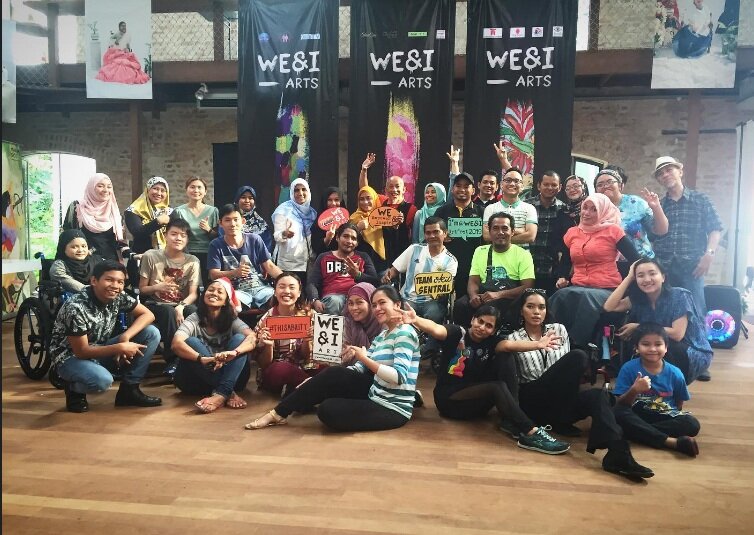
Armani has also devoted her time and energy to set up and run the WE&I ArtFest, an annual Malaysian arts festival held in conjunction with the International Day of Persons with Disabilities (IDPWD) in December. Celebrating and empowering PwDs since 2018, the festival showcases the community’s diverse artistic talents through exhibitions, workshops, performances and bazaars, aiming to promote improved inclusivity, independence and public awareness.


“NakSeni became very active during the pandemic, especially for my own sister Izzati and her friends, who are persons with disabilities,” explains Armani. “Something like this was especially needed when their routines and opportunities disappeared overnight as a direct result of the pandemic. So, what started as a small effort to help PwD artists earn income through art quickly became a community built on trust,” she reveals.

“As NakSeni grew, we repeatedly encountered pretty much the same barriers over and over. Even when opportunities existed, the spaces themselves were not accessible. As a result, every other exhibition or event required proper workarounds, plenty of problem-solving and all sorts of compromises.”

Armani reckons that this realisation became the impetus for the birth of IncluCity as her experiences through NakSeni taught her that empowerment starts with access.

“So, IncluCity was not so much a pivot… it is more of a progression. If NakSeni celebrates ability, then IncluCity transforms the environment around it,” states Armani proudly.

Armani Shahrin and her sister Izzati. The pandemic marked a turning point for NakSeni, which grew out of efforts to support Izzati and her friends, all persons with disabilities, when everyday routines disappeared.

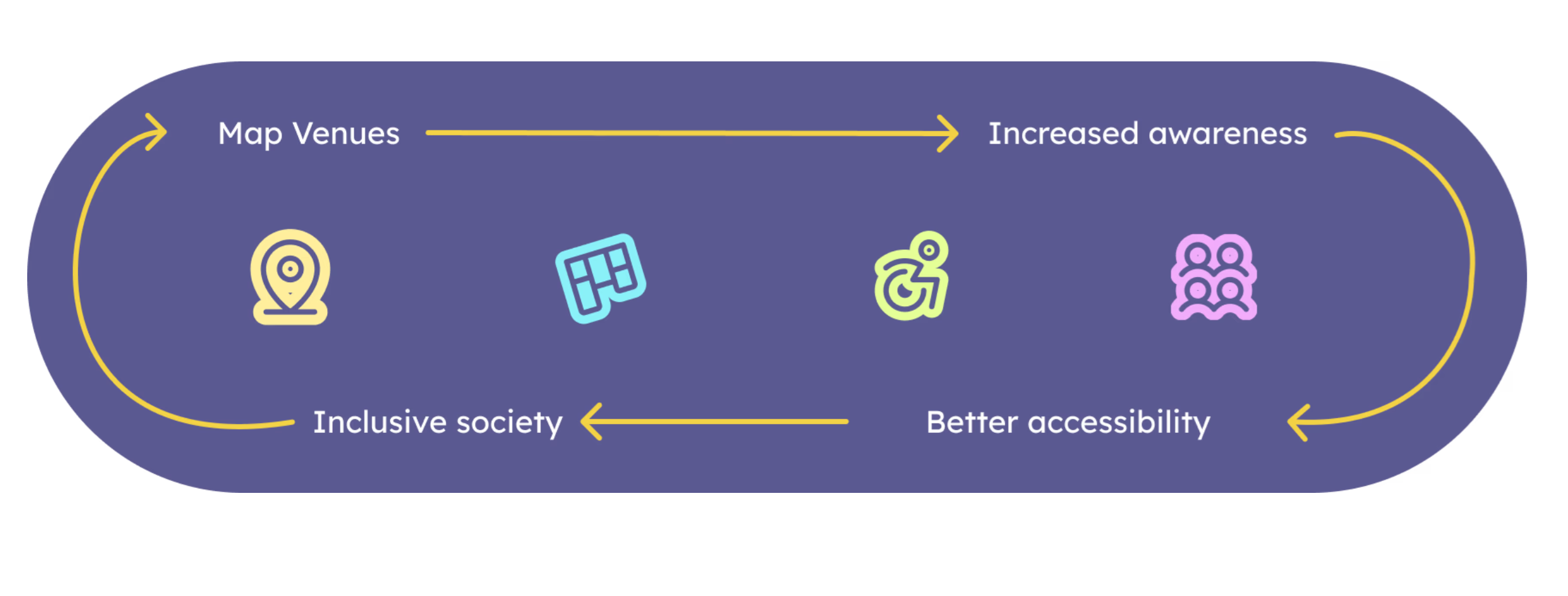
“IncluCity as a platform began taking shape around 2022, following years of live experiences through WE&I ArtFest and associated community work. Today, the platform exists as a functional app with a rapidly growing database. The IncluCity app itself allows users to explore mapped venues, contribute observations, and access curated resources. Content is developed through community input, fieldwork and collaboration. We see strong potential to expand this feature through deeper partnerships, making the platform even richer over time.”

Through the app, users can easily get current and verified information on how safe and accessible a venue is, thus facilitating confident independent travel within the city. IncluCity also provides accessibility ratings for each listed venue. This rating system helps businesses learn more about how to better accommodate the needs of the PwD community. Alongside a list of PwD-friendly businesses and partners, the app also provides links to educational articles and tools for users.

Yet, even now, IncluCity still operates like a lean, early-stage startup. A small core team manages strategy, product, and community engagement, supported by PwD volunteers, testers, artists and partners. Armani believes that this lean structure keeps the team very grounded. “This is important as Kuala Lumpur moves through initiatives such as Warisan KL (an urban regeneration initiative by the Government to revitalise historic downtown KL). IncluCity sees itself as part of a wider movement shaping a more people-centred city, contributing real accessibility insights where they matter most.”

However, Armani will be the first to point out that building a crowdsourced accessibility platform has its own special challenges, especially since accessibility is deeply contextual! “What works for one person may still be a barrier for another. Are we looking at a venue’s accessibility from the lens of a wheelchair-user or a visually-impaired person? What if that person has multiple disabilities or is neurodivergent?”
Armani reveals that her team has learnt from its accessibility audit partners that although there are already standards in place for certain basic requirements when it comes to accessibility, implementation tends to be inconsistent. “But these challenges validate the need for IncluCity and strengthen our approach with every iteration.”

In 2026, Armani hopes to grow IncluCity’s movement into an everyday urban infrastructure. “We aim to deepen our data quality, improve usability and expand collaborations to normalise inclusion for PwDs in society because we believe once we do that successfully, we can prepare the city for our future-selves. Our vision is to make accessibility information part of everyday decision-making, contributing to cities that are not just smarter, but more human.”

IncluCity is available as a free download on the Google Play Store or the Apple App Store.

Discover more stories

Ooops!
Generic Popup2