Amirul Zain | 10 June 2025
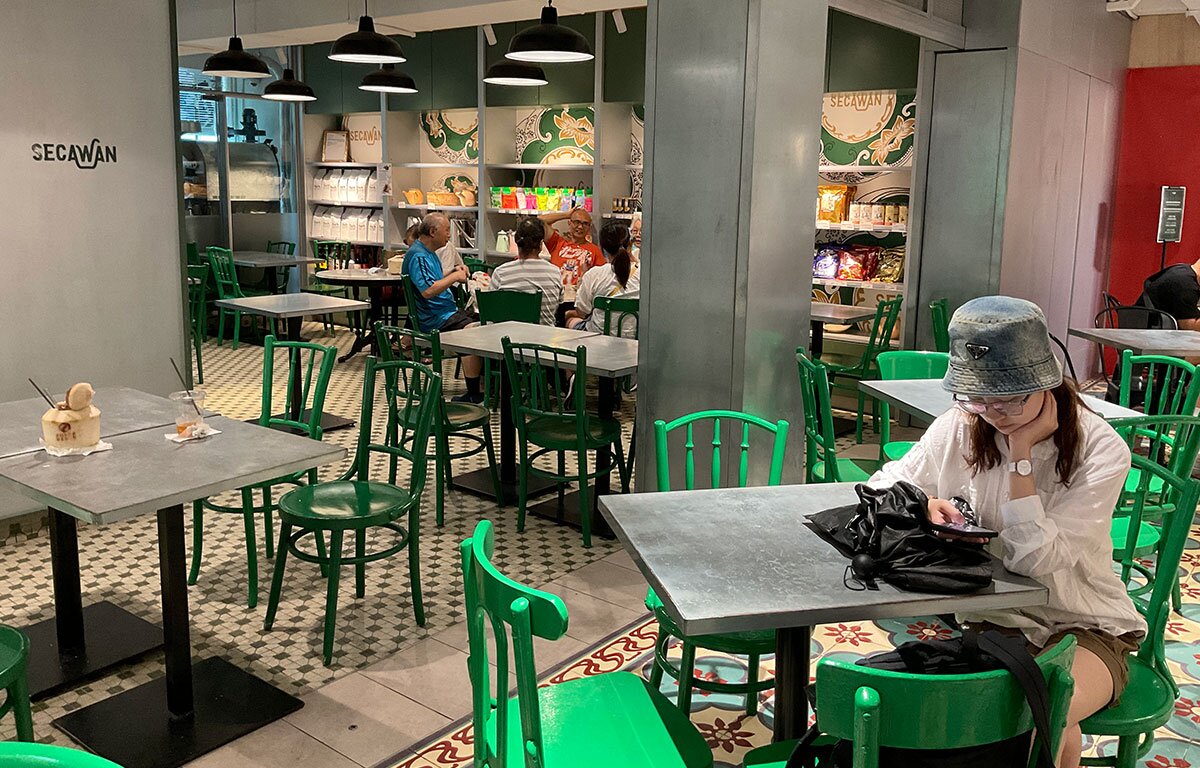
Secawan is neatly tucked inside Central Market, beside Pasar Besar – a grocer-meets-artisan-market concept where tradition meets trend. Open for just two years, this compact café has quickly earned a name for itself with its array of beautiful, balanced kuih.
While its nasi lemak is a hit, the real stars are the kuih — homemade and thoughtfully refined. Bestsellers include the silky seri muka, the delicate blue-hued kuih tai tai, and the fragrant, banana-filled lepat pisang. The recipes are based on tradition, but tweaked to ensure balance and consistency.
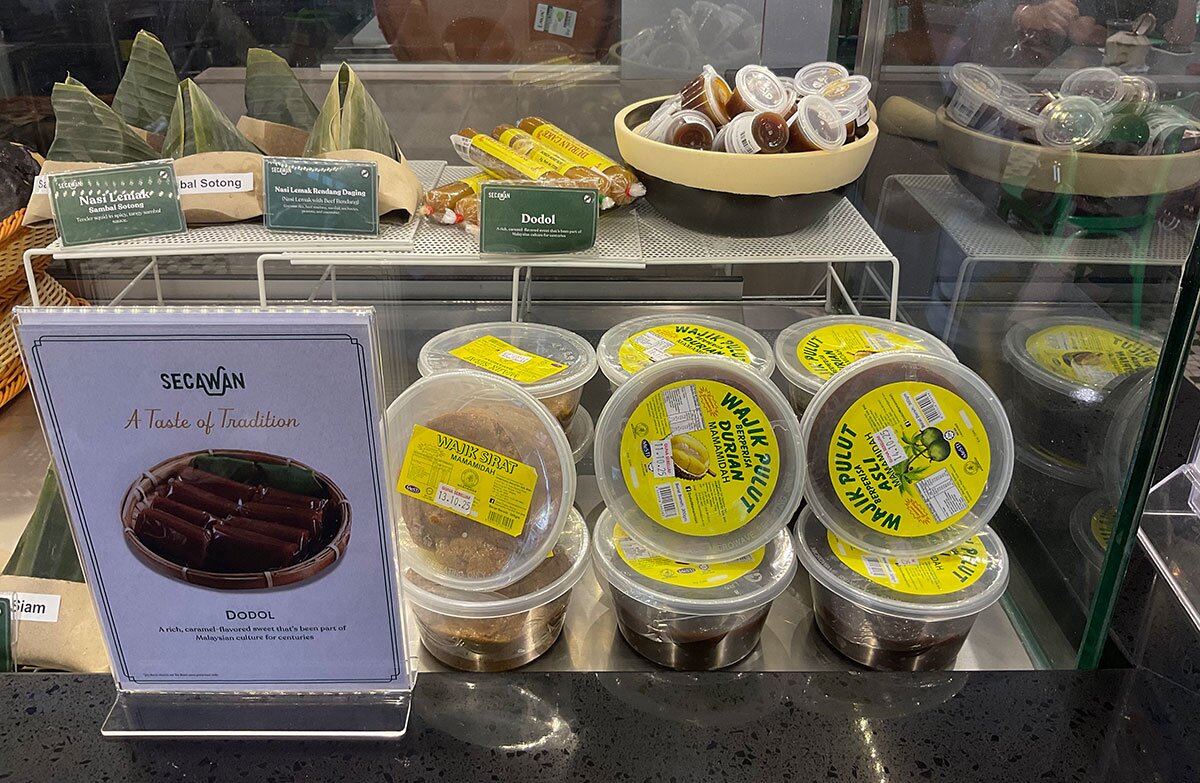
Ainul, a bright-eyed staff member who recently transferred from cashiering to café duty, lights up when talking about the kuih. “Tourists are always shocked by the colours — they think it’s all fake,” she laughs. “But we use only natural dyes, from bunga telang to pandan.”
While the vibe here is contemporary, there’s care behind the counter. Every piece is made fresh in the morning and usually sells out by the end of the day — a testament to the growing demand for local sweets that aren’t just nostalgic, but also Instagram-worthy. The dining area is simple yet cozy, blending a mix of traditional tile motifs and modern industrial design, perfect for a quick rest stop while browsing the stores of Central Market.
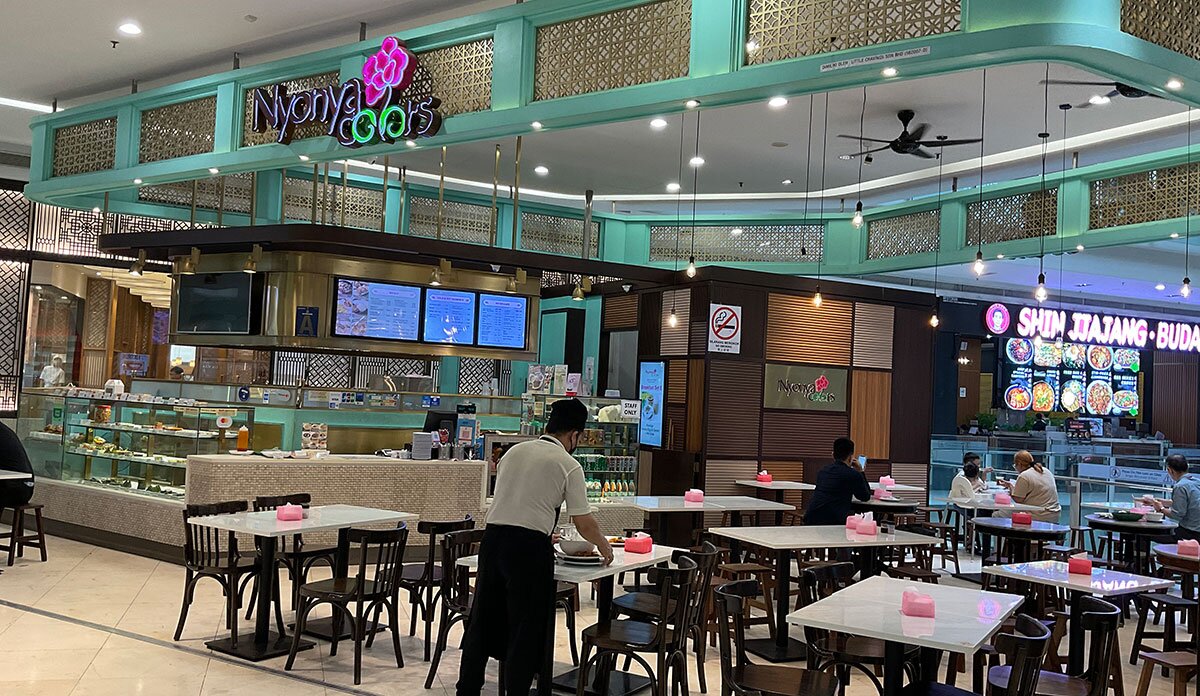
At Nyonya Colours in NU Sentral, everything is polished — the service, the display, the kuih. And yet, there’s a warmth to it that feels genuine. This well-established chain has been around long enough to earn a place in many Malaysians’ hearts, serving kuih that’s as dependable as it is delicious.
The Nu Sentral branch has been running for 12 years, and Dwi, the soft-spoken supervisor, has been there for nine. “It’s been a long time,” he says, “but it doesn’t feel like work. My colleagues — even the regular customers — they’ve become family.”
While some might dismiss chains as overly commercial, Nyonya Colours takes quality seriously. Their kuih is made in a central kitchen in Damansara, using regional recipes from across the Nusantara — from Malaysia and Singapore to southern Thailand. Fresh deliveries arrive at each branch three times daily (8am, 10am, 3pm), ensuring that the kuih you get at teatime is fresh.
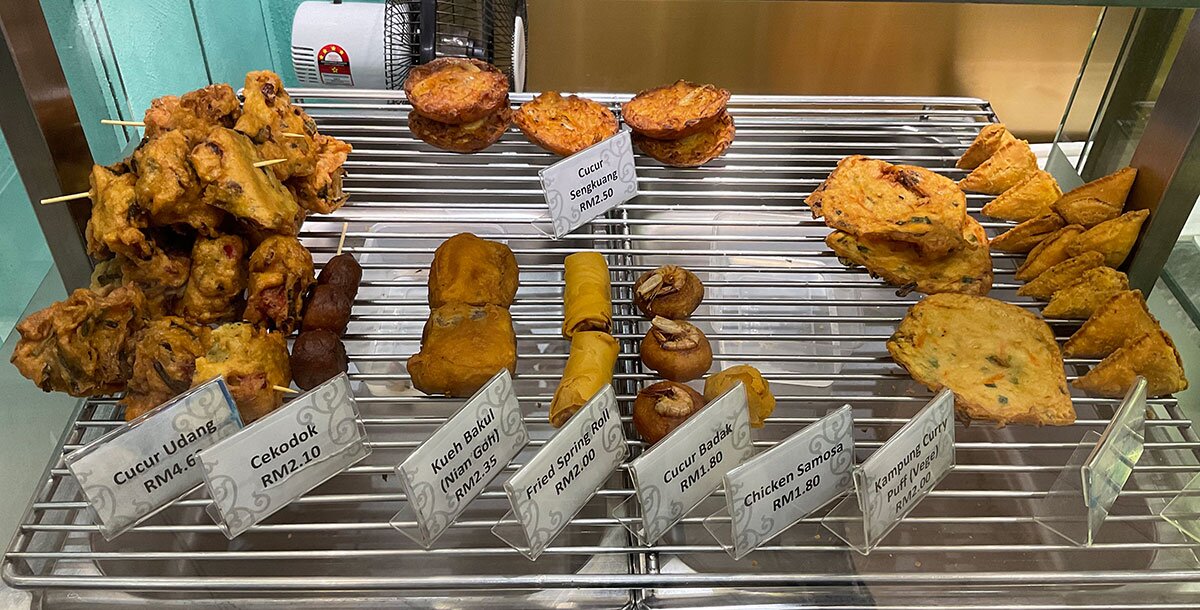
Unlike some stalls where the texture or sweetness can vary from batch to batch, Nyonya Colours offers consistency. Whether you’re craving a chewy kuih bingka, a glossy kuih lapis, or some crispy cucur udang, you’ll find it here — just the way you remember it.
Kuih isn’t just dessert — it’s cultural shorthand. Each piece holds memory, craft and identity in bite-sized form. Whether steamed in bamboo by the roadside, plated in a chic café, or neatly arranged in a chain store, kuih remains a daily joy — something to share, something to crave, something that reminds you that even in a fast-moving city, there’s always room to pause.
So the next time you’re in the heart of downtown KL, and you’re craving something sweet and grounding — skip the cupcakes. Reach for kuih instead.
Discover more stories