“We use walking to raise awareness about safer, more inclusive streets and cities,” says Awatif. “It’s a collaborative process.”
Participants document their observations, turning lived experience into informal audits. The approach is deliberately unpolished. We are not tour guides,” Yasmin says. “But just like everyone else we’re all experts of the city in our own way.”
Kerja Jalan doesn’t shy away from certain parts of the city. This includes the less photogenic aspects – cracked pavements, narrow walkways, the realities that conventional tours might avoid. In doing so, Kerja Jalan reframes walking as an act of civic engagement.
“Everyone shares their unique experiences of the city,” Awatif adds. “Someone who walks to work every day might notice the potholes, while a parent might focus on the lack of play areas or stroller-friendly streets.”
This inclusivity is part of a broader shift in how people engage with Kuala Lumpur. Walking tours offer an alternative to curated, surface-level encounters. They invite a slower, more tactile way of seeing – one that acknowledges both heritage and change.
For guides like Tajuddin, balancing these narratives is part of the craft.
“To make people understand the changes that have been undertaken over the years, I will make use of old pictures during the tour,” he explains. “Example, the old Sin Seng Nam shop in Market Square. It used to be a famous Hainanese coffee shop frequented by the the older generation. Today it has been transformed to a modern confectionary café with more Gen Z patrons.”
Such contrasts are everywhere in the city. Colonial-era façades stand beside newer interventions; traditional trades adapt or fade; familiar spaces are reimagined for new audiences.
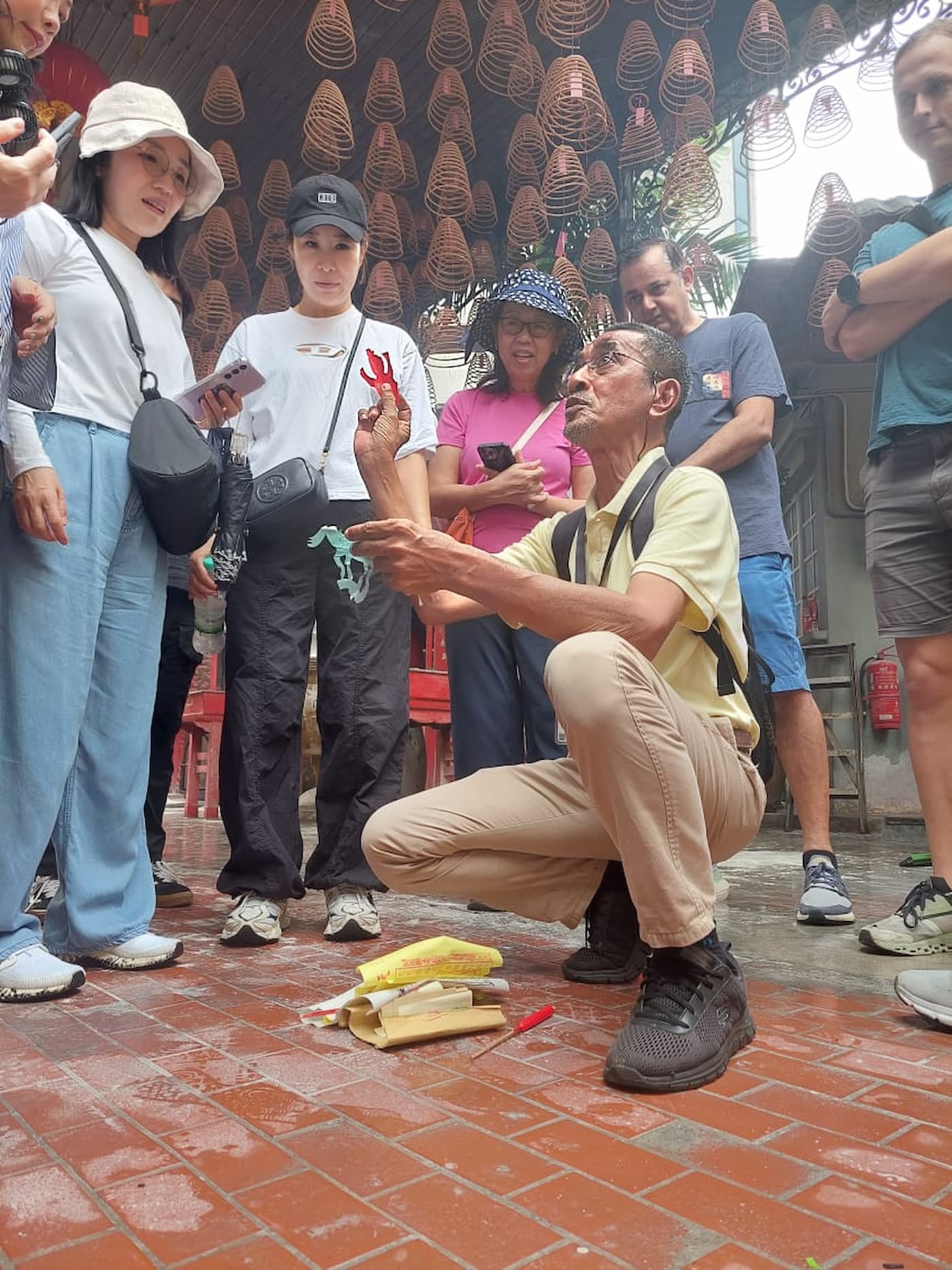
This impulse to look more closely at the city is not new. Long-running initiatives have also played a role in shaping how Kuala Lumpur’s stories are shared. Founded in 2012, Kaki Jelajah Warisan has conducted over a hundred guided tours across the old city centre, exploring themes from “Good Eats in Petaling Street” to “The Founding Story of Kuala Lumpur”.
For its founder, Cheng Fui Lien, the aim has always been to highlight the area’s religious, cultural and historical diversity in a way that is both inclusive and meaningful. “Interestingly, many of our participants are actually from Kuala Lumpur itself,” she says. “What draws them in is not the ‘big landmarks’, but the small details they’ve unknowingly passed by for years.”
That sense of rediscovery often extends into the city’s shared spaces of worship – temples, mosques and gurdwaras that many pass daily, but rarely enter. “A particularly memorable moment for many is visiting a Gurdwara… the openness, the sense of equality, and the practice of sharing food regardless of background often leave a deep impression,” she adds.
.jpg)
.jpg)
.jpg)