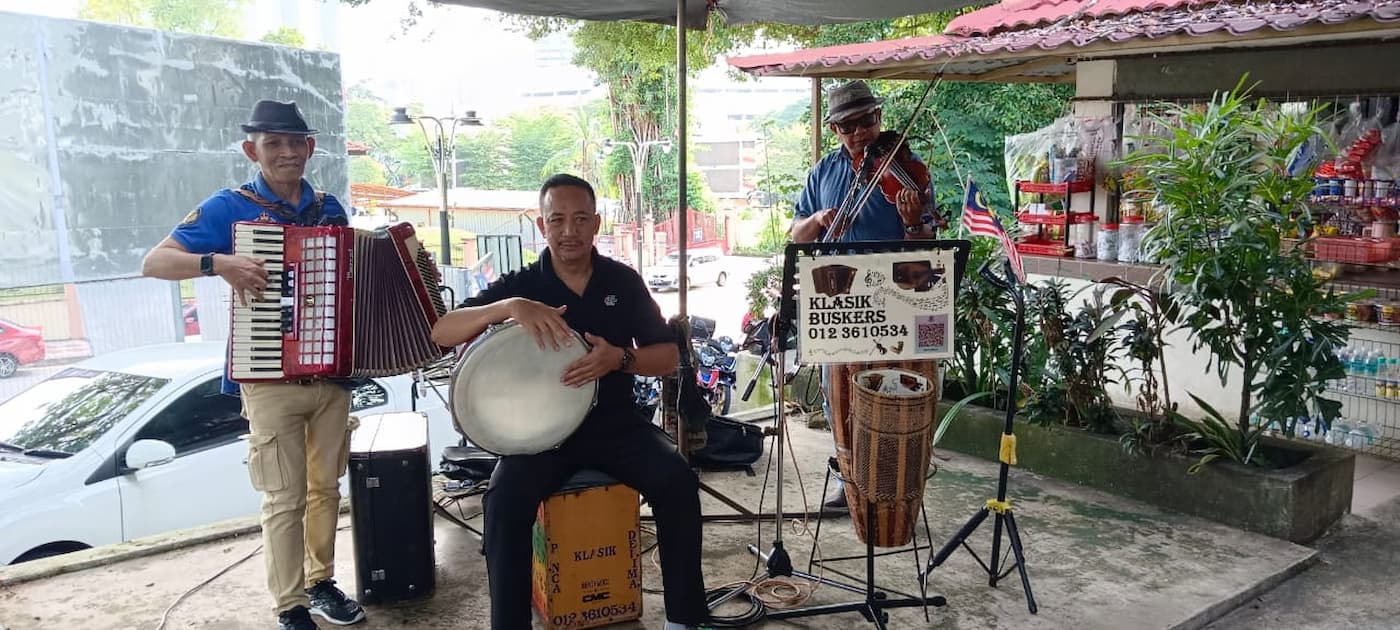
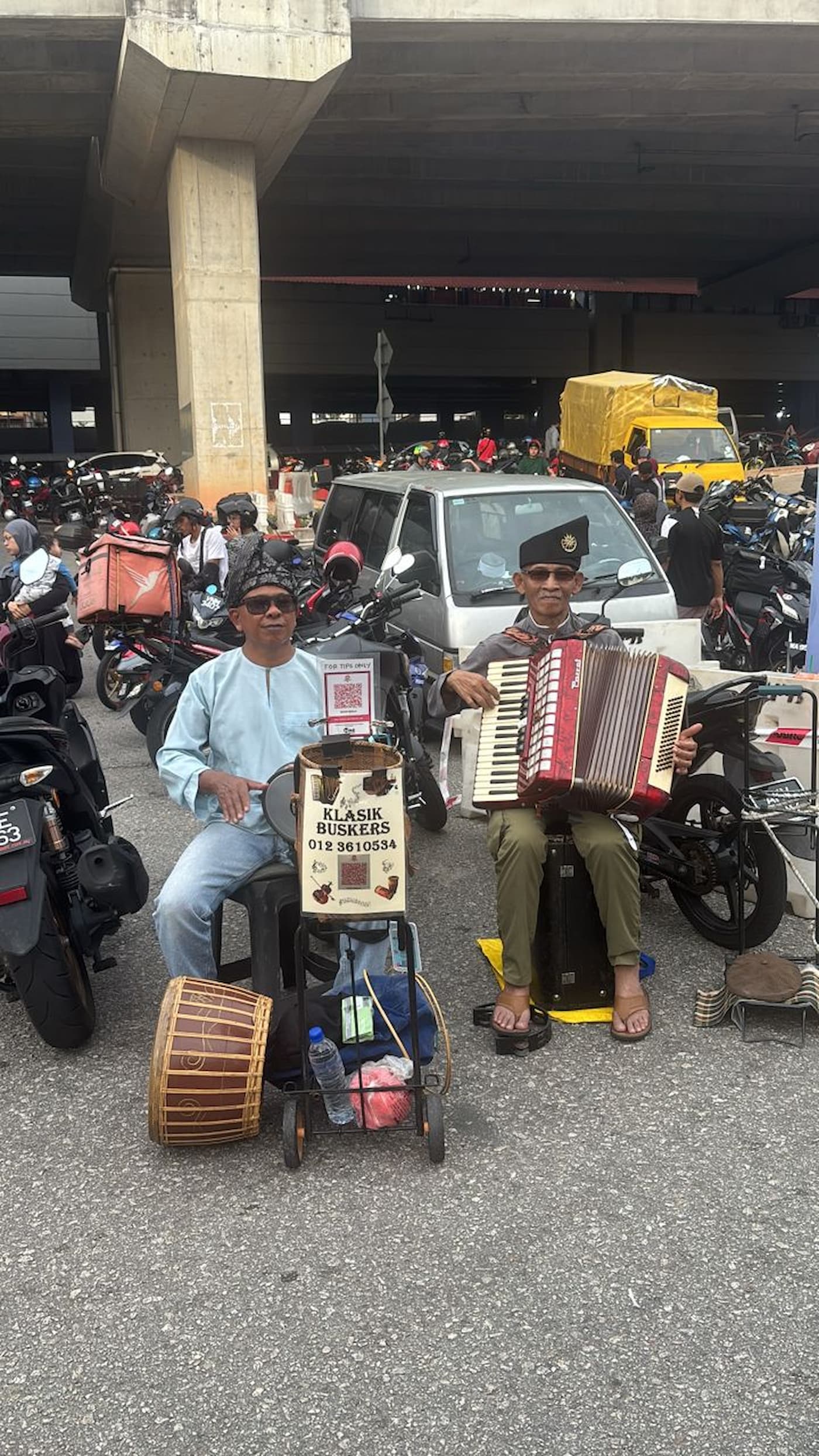
ON the streets of Kuala Lumpur, music often finds you before you go looking for it – a melody mid-step, a voice that lingers just long enough to shift the day.
Across the city, these moments unfold in transit and in-between spaces – along LRT platforms, under sheltered walkways, and through the open corridors of places like Central Market.
They surface, too, in quieter, unplanned moments – when you are simply strolling or browsing, only to be caught off guard by a melodious crooner just a few steps ahead, a QR code by their side inviting a pause, a listen, and perhaps a small gesture of appreciation.
In a city where heritage streets and public spaces are being reactivated and experienced anew, buskers and street musicians form part of its living rhythm – grounding the everyday in something shared, spontaneous and alive.
It is here that busker Fauzil Amin Ahmad finds his stage.
He traces his love for music back to watching his brother and friends play. Curious, he asked to join, took a single music class, and taught himself the rest. What began as imitation grew into something more enduring.
Music soon became his full-time pursuit, performing regularly at events – until the pandemic brought it all to a halt. With gatherings no longer possible, he adapted, moving from formal stages to open-air ones: the streets.
Even now, at 42, he continues to busk by choice. The format offers something he values – freedom. Most nights from 8.30pm onwards, he can be found across the city, from the pavements of Bukit Bintang and Changkat to Central Market, and even in shopping centres like MyTown in Cheras.
Each night brings a different combination of collaborators, with Fauzil performing alongside rotating musicians.
There is joy in the unpredictability. “My audience is made up of random people who love music. When they stop, listen, and sing along, I feel gembira lah – it’s a simple, honest sort of happiness,” Fauzil shares candidly.
But busking is not without its challenges. There are quiet nights when the crowd is less receptive or “manis”, as he puts it, and practical setbacks, like the rain. “Bila hujan, I dont get even one sen,” he says plainly, noting how audiences stay sheltered while the music carries on without them.
More difficult, however, are the moments when his craft is misunderstood – when asking for contributions after a performance is met with judgement. At times, he is seen as a beggar rather than a musician. Still, he is quick to add that this is the minority.
For Ahmad, busking remains rooted in both passion and practicality – for the music, and for a living.
Ahmad’s story is just one thread in a much wider tapestry.
For Edwin Nathaniel, Vice Chairman of Musicians for Musicians Malaysia, Kuala Lumpur’s street music scene is as varied as the city itself.
“You’ll hear everything from rock, indie, jazz and blues to acoustic singer-songwriters, electronic and pop. It’s a place where traditional music sometimes meets contemporary sounds in live performances and fusion gigs. Live music is everywhere – pubs and bars, rooftop lounges, underground and independent spaces, as well as formal and cultural platforms. International and festival concerts are buzzing everywhere,” he explains.
Through MFM, initiatives such as benefit concerts and collaborations with government agencies help support musicians in need while creating opportunities for growth within the industry.