Sacred Spaces, Living Art

ELLFIAN RAHIM | 6 April 2026

Rising gracefully against the Kuala Lumpur skyline, Masjid Negara showcases the harmony of architecture, artistry, and devotion – a space where faith and beauty meet in quiet contemplation.

MORE than framed canvases or curated walls, some of Kuala Lumpur’s most profound expressions of art are found in places of quiet devotion. Here, art is not simply observed – it is inhabited. It lives in the rhythm of prayer calls, in the flicker of oil lamps, in the hush beneath vaulted ceilings. Across the city, mosques, temples and churches reveal how belief has long shaped visual language, giving rise to forms that are at once symbolic, functional and deeply moving.

At the heart of this is Masjid Negara, or the National Mosque, where modern design meets sacred tradition. Opened in 1965, it marked a new chapter for a young nation, replacing Masjid Jamek as the city’s principal mosque. Conceived by architects Howard Ashley, Datuk Hisham Albakri and Dato' Baharuddin Kasim, the mosque departs from classical domes in favour of a striking 16-pointed, umbrella-like roof – its folded concrete planes opening skyward in a gesture of both shelter and surrender.


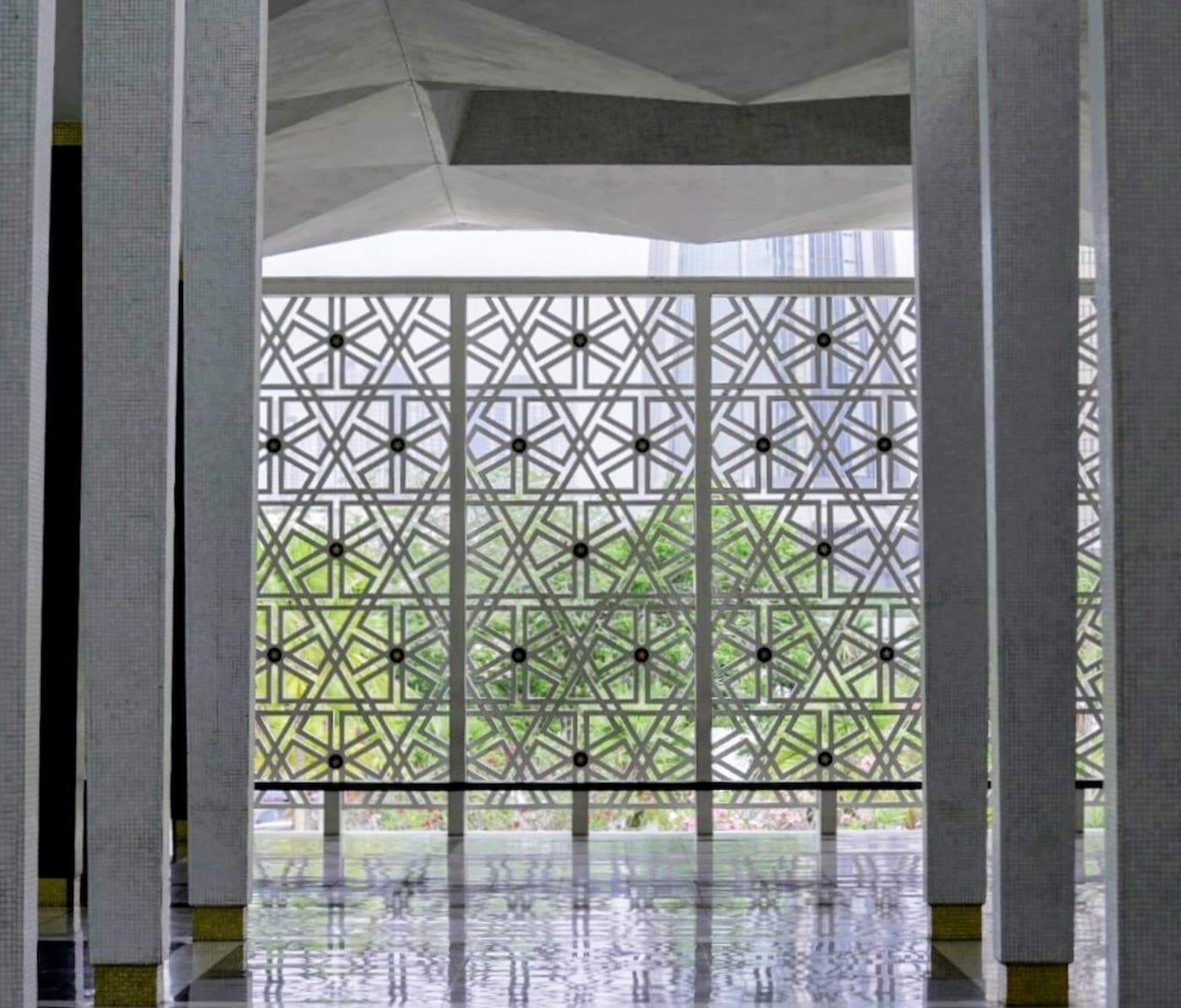
Within its expansive compound, art unfolds through structure and surface. Quranic verses are inscribed across walls and ceilings, while blue and green-hued tiles echo the fluidity of Islamic calligraphy and ornamentation. In place of enclosed walls, patterned screens filter light and breeze – an architectural nod to the traditional Malay kampung house. Even the 73m minaret rises not only as a call to prayer, but as a vertical marker of faith etched into the city’s skyline.

Muhammad Noriman Kamaruddin, Public Relations Officer of Masjid Negara, affirms this traditional influence, adding: “You’ll also see the use of steps and pillars, which are very reminiscent of a kampung house.”   
   
Architect and heritage consultant Datin Ar. Junn Ng reflects: “The beauty of the National Mosque of Malaysia lies in the quiet strength of its original materials – from the terrazzo floors to the intricate mosaics that grace its columns and walls. These elements are not merely finishes, but storytellers, carrying the authenticity, craftsmanship and spirit of their time. To preserve them is to honour the mosque’s true character, ensuring its elegance endures for generations to come.”

According to Muhammad Noriman Kamaruddin, Public Relations Officer of Masjid Negara, the mosque exudes kampung roots in modern form through patterned screens fwhich ilter light and breeze, while steps and pillars echo a familiar language.


Yet this interplay between faith and form is not confined to a single tradition. Across Kuala Lumpur, sacred art takes on many visual languages, each shaped by the beliefs and histories of its communities. In the city’s historic quarters, these expressions often sit side by side, creating a layered cultural landscape where architecture, ritual and artistry converge.

Around Petaling Street, many examples of devotional art blend historic spiritual sites with vibrant, narrative street art. Key spots include the 19th-century Sri Maha Mariamman Temple and the equally historic Guan Di Temple, alongside immersive murals that line back lanes and alleyways.
     
“Many of these murals are painted interactively, incorporating real doors, windows, and pipes into the design,” reveals walking tour guide Jane Rai of Free Walk Kuala Lumpur Unscripted. “The area is best visited during the day for photography, but in the evenings, lanterns and lighting add a nostalgic, artistic ambiance.

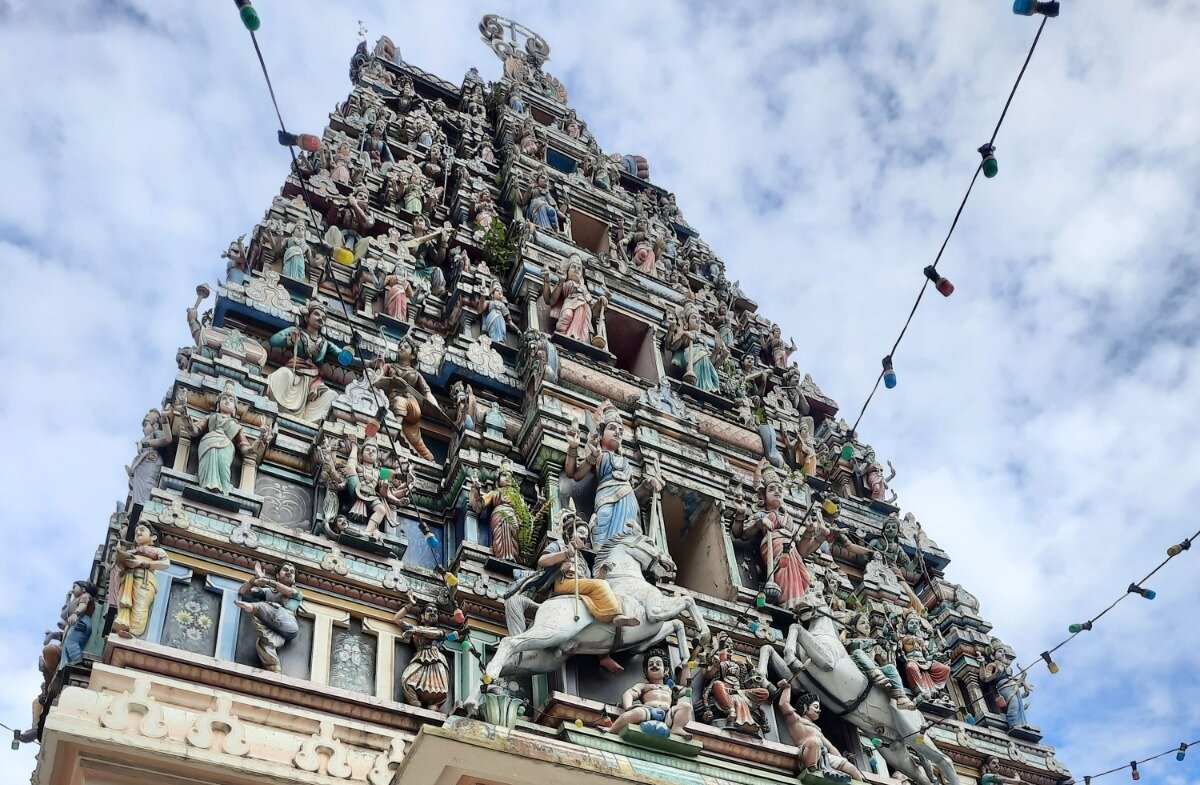
“Of course, another unmissable example of devotional art can be seen at the temple’s gopuram – or entrance tower – at the Sri Maha Mariamman Temple, the oldest functioning Hindu temple in Malaysia,” she continues. The impressive five-tiered structure is adorned with 228 intricately carved and painted Hindu deities, sculpted by artisans brought in from Southern India.

According to Jane, Hindu temple architecture is characterised by intricate designs, elaborate carvings and symbolic representations of the cosmos. The layout of a temple often reflects the mandala, a geometric representation of the universe, with the sanctum sanctorum (garbhagriha) at its centre, housing the main deity.

“The temple’s tower represents the sacred mountain, and the entrance gateway symbolises the threshold between the material and spiritual worlds. Temples are often adorned with carvings of gods, goddesses, mythological scenes and cosmic symbols, all of which serve to elevate the mind and spirit of the devotee,” she explains.

Jane adds that being in such a space is as much a sensory experience as it is a spiritual one. “Walking into a South Indian temple in KL’s Chinatown feels like stepping into a different kind of art gallery – a spiritual space filled with colourful statues of gods and goddesses, intricate sculptures and detailed stonework carved with symbolic motifs in open courtyards.”   

Apart from the Sri Maha Mariamman Temple and the Guan Di Temple, those interested in devotional art can also visit Sin Sze Si Ya Temple, one of the oldest Taoist temples in the city, built by Kapitan Yap Ah Loy in the 19th century.

Every carving, every vessel – a quiet testament to the artisanship you will find at Sin Sze Si Ya Temple.

Elsewhere, sacred art takes on different forms but carries the same quiet intent. At St Mary's Cathedral, early English Gothic architecture reveals itself through stained-glass windows and prominent buttresses, where filtered light becomes part of the spiritual experience itself.

Taken together, these spaces suggest that in Kuala Lumpur, art is not confined to galleries or workshops. It is embedded in ritual, architecture and memory – woven into the very places where communities gather, reflect and seek meaning.

Discover more stories

Ooops!
Generic Popup2