Markets and Memory

MANJEET DHILLON | 21 April 2026

Manjeet Dhillon, food tour host, offers a ground-level view of Lebuh Ampang, where provision shops, ingredients and everyday exchanges reveal a living food heritage shaped by time and use.  – Photos: Way Studio

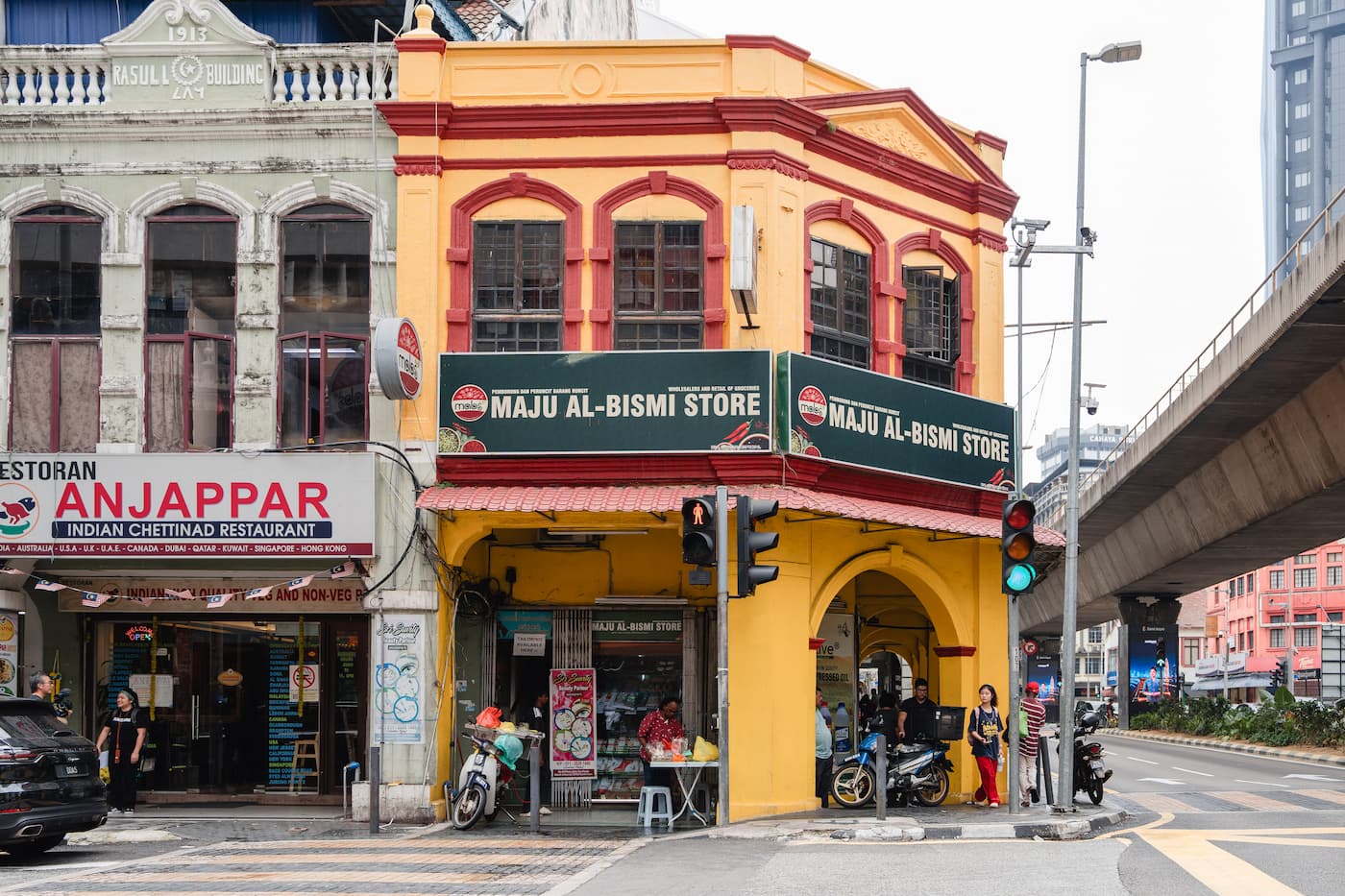
AT the junction of Jalan Tun Perak and Lebuh Ampang, the LRT tracks cut across the street, casting a shifting band of shade over the shoplots below. Maju Al Bismi sits at the corner, partly obscured by the structure above. The frontage spills outward slightly onto the kaki lima, goods stacked close to the entrance, narrowing the way in.

This stretch was once Mountbatten Road. The shop has been here long enough to have seen it renamed.

Outside, a man waits beside his motorcycle, balancing a metal container at the back. He sells iddiyapam, pressed rice flour noodles coiled into soft bundles, usually taken with grated coconut and brown sugar.

Customers approach, take a packet, and leave just as quickly. The exchange folds into the passing movement of the street.

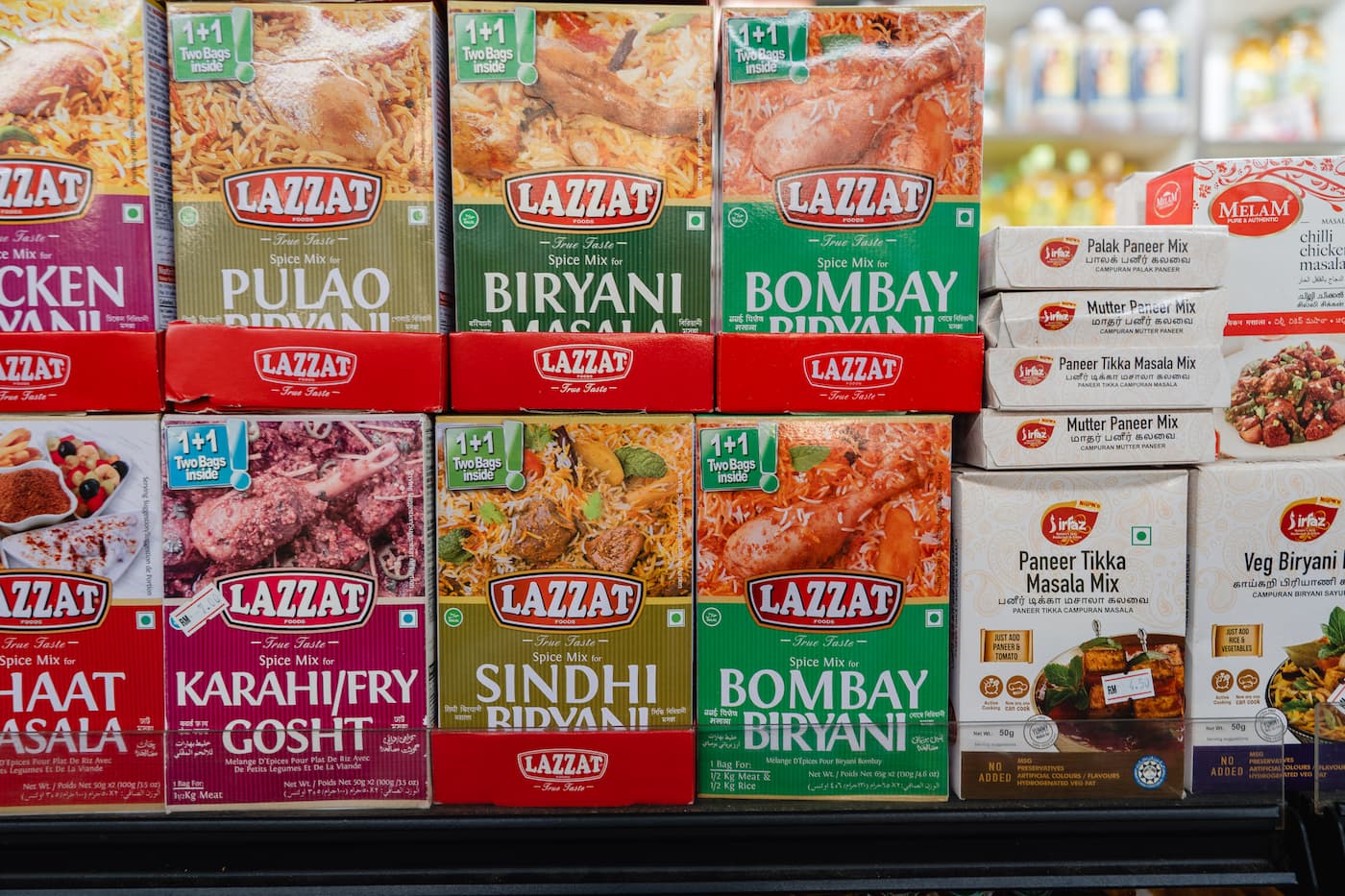
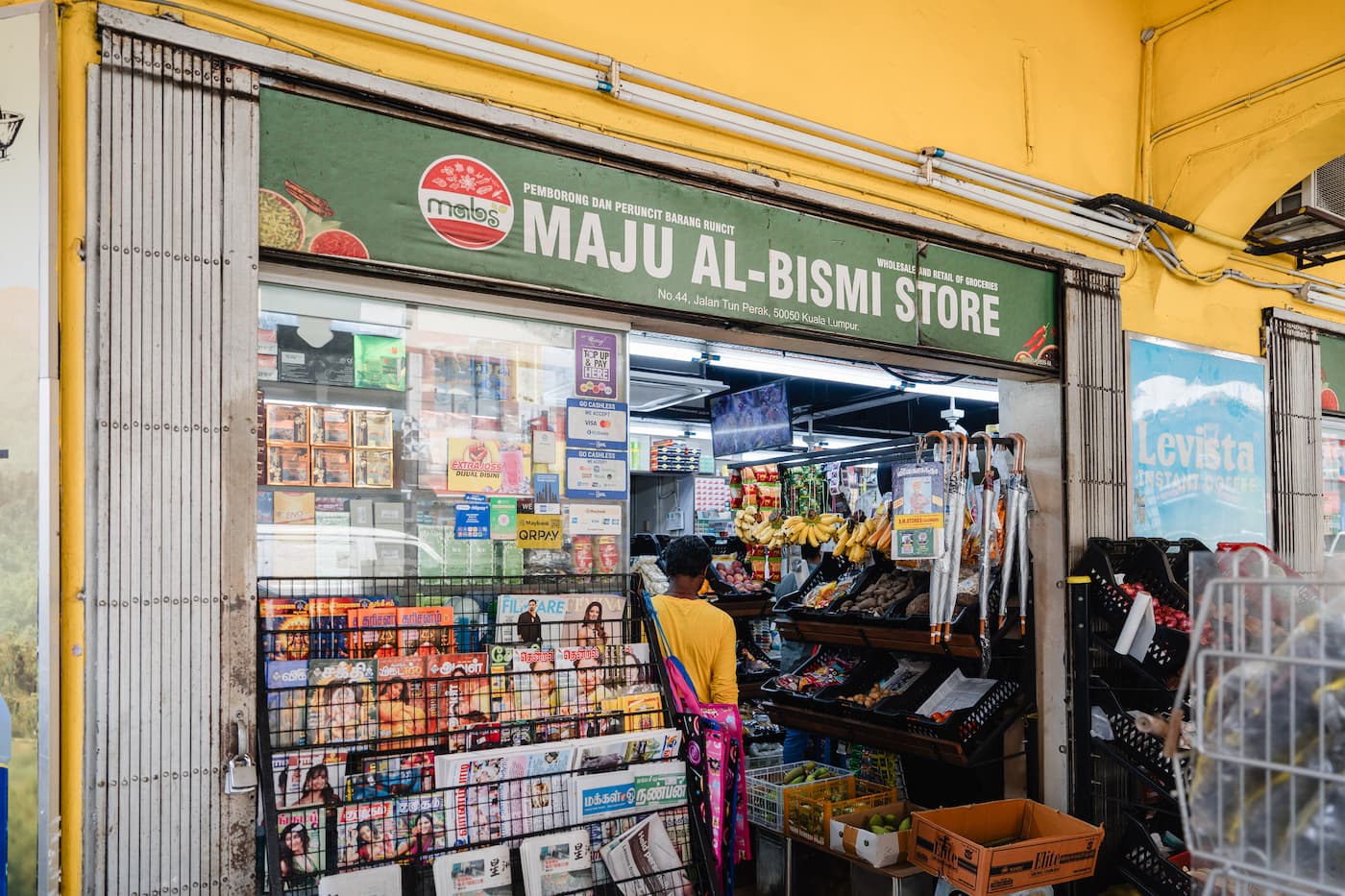
Step into Maju Al Bismi, and the pace shifts. The space is narrow, shelves running along both sides, stacked high with goods. Food items sit alongside household products, packets filling the gaps between tins, everything placed where it can fit.

Mohamed Shafie stands behind the counter, though he rarely stays in one place. A customer steps in, names an item, and he is already reaching for it. Another does not need to speak at all. A packet is placed on the counter before the request is finished.

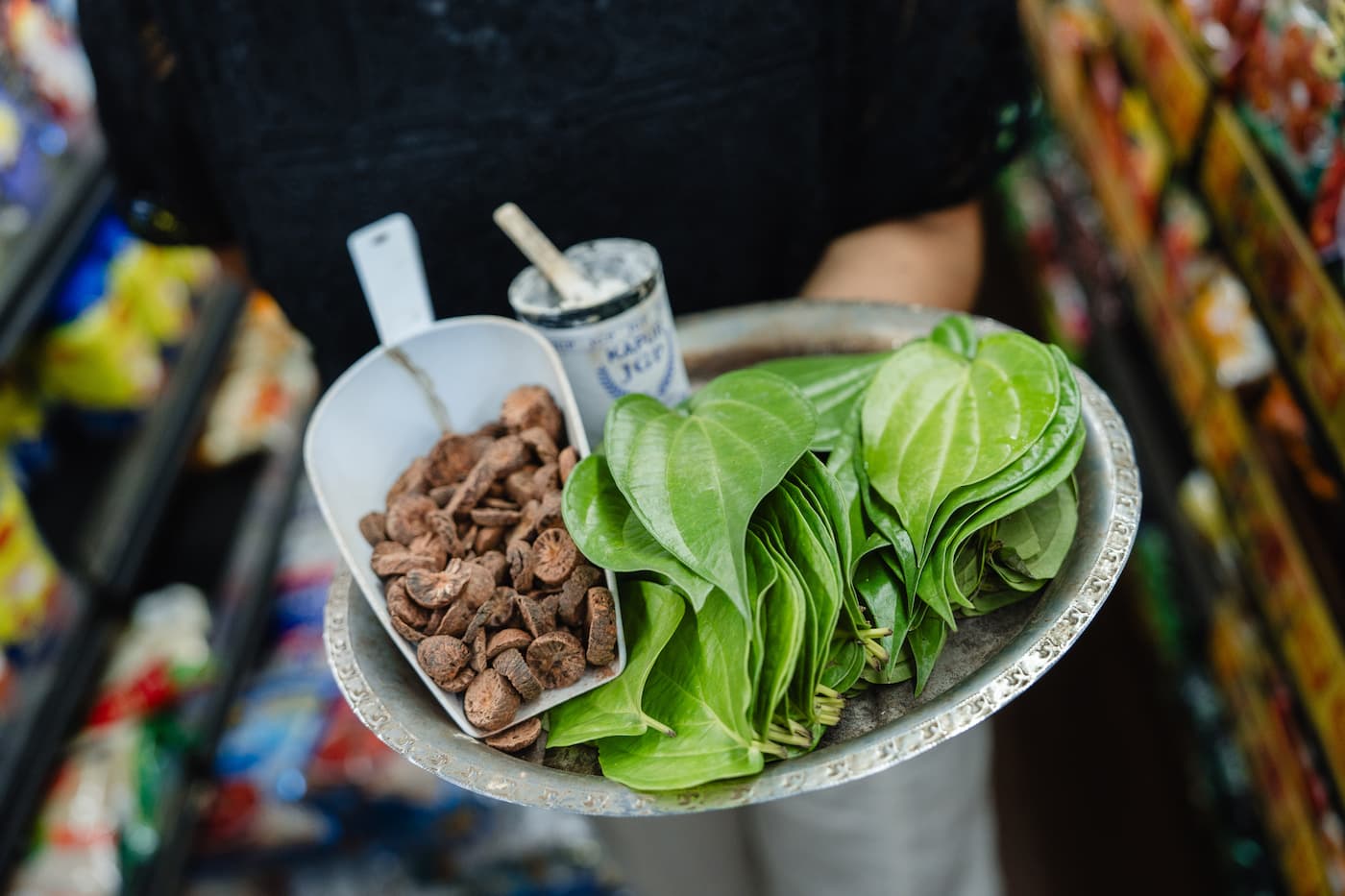
At one corner of the shop, items for paan are set aside. Betel leaves are stacked on a metal tray, alongside a small tin of slaked lime (kapur). In a large sack sits sliced areca nut, buah pinang. A customer takes what is needed and assembles it together elsewhere.

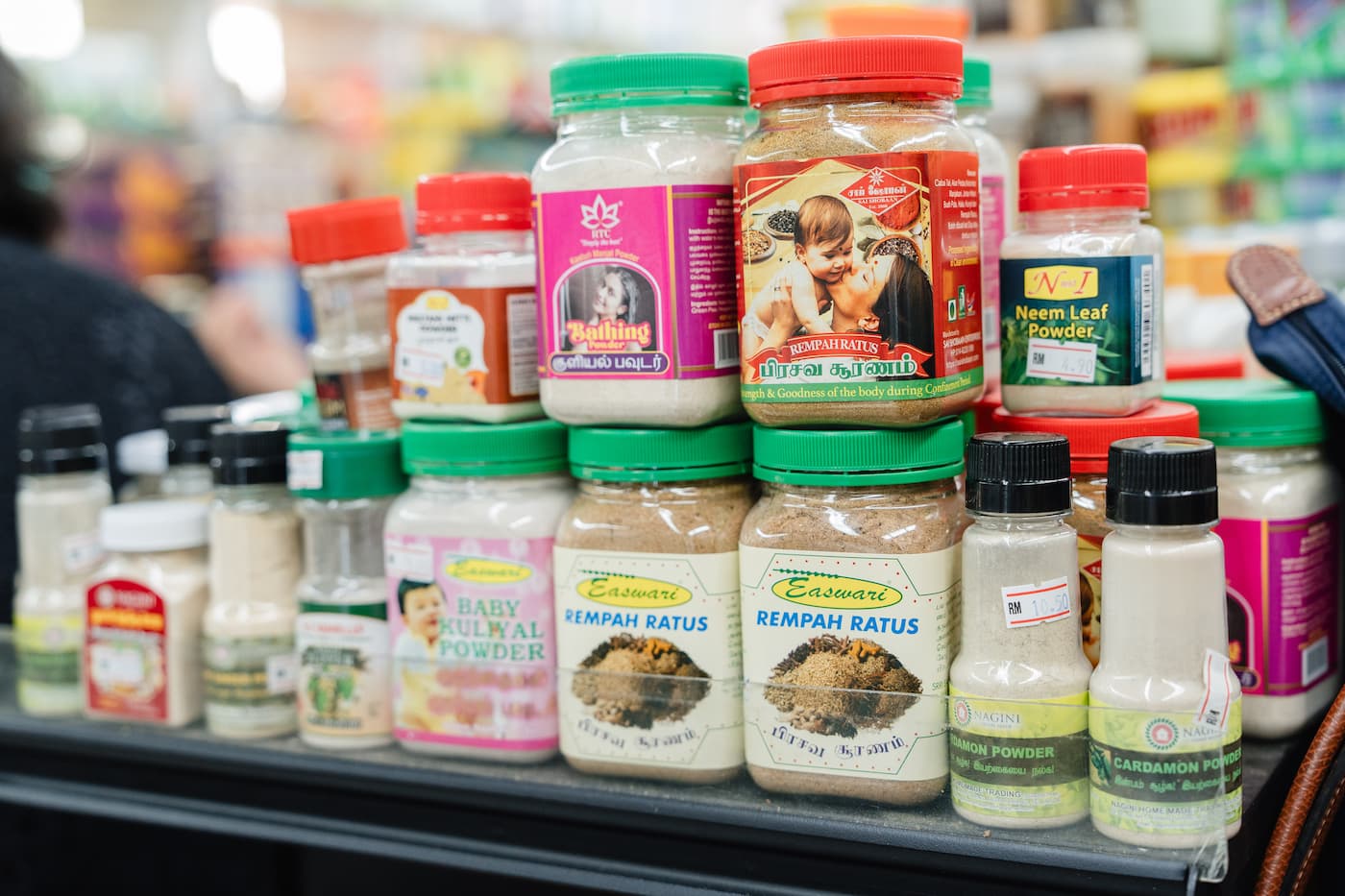
Further in, the space tightens, then opens slightly at the back. This is where the aromatics sit. Cardamom rests in a transparent container, its green colour clear even in low light. Cloves are kept beside it, dry and dark, their shape intact. Star anise, cinnamon sticks bundled together, cumin, coriander, fennel. Some are stored in sacks, others in containers, each measured out by hand.

The scent holds in this part of the shop. It settles into the shelves, into the paper used to wrap small quantities, into the space itself.

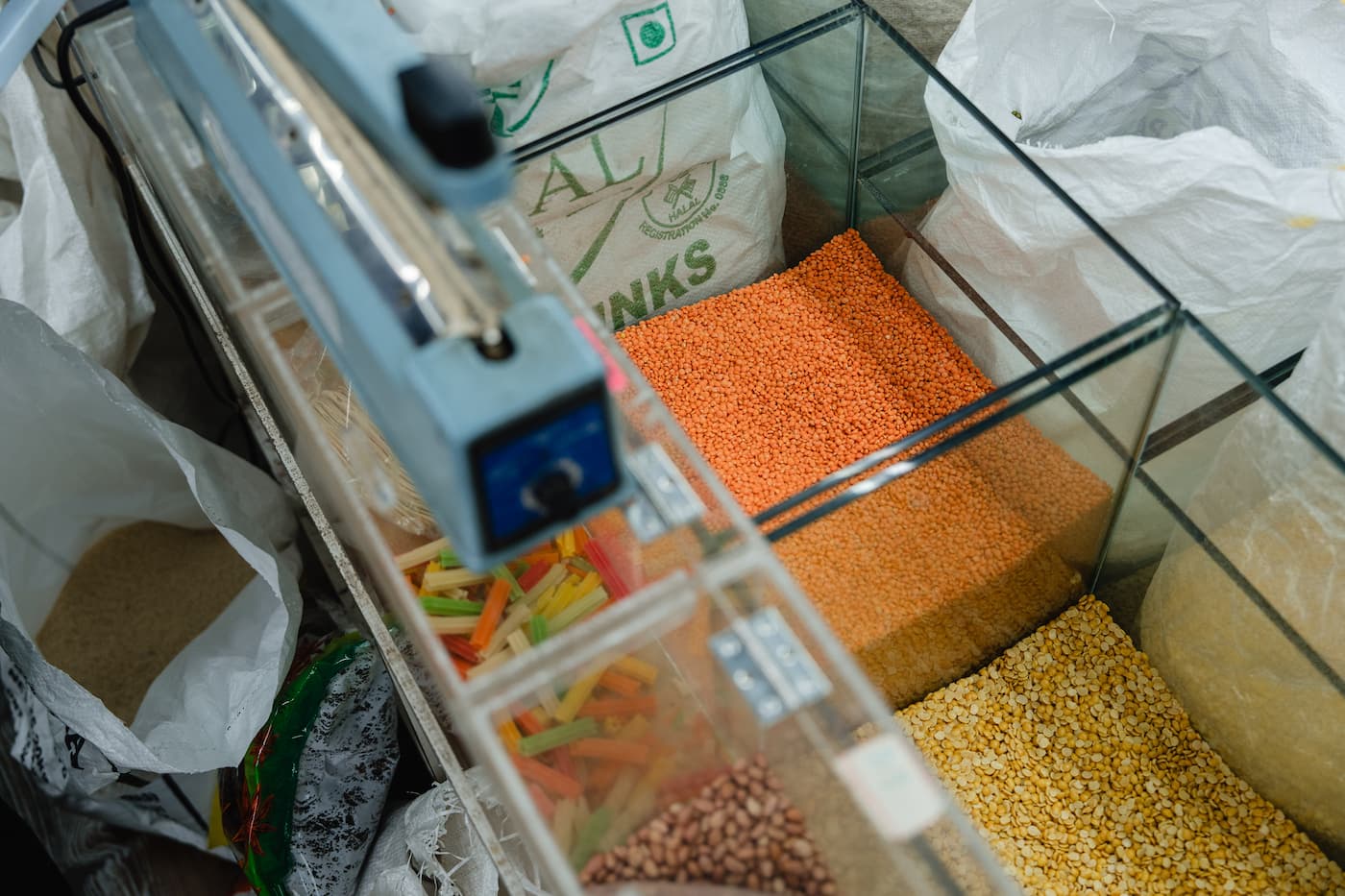
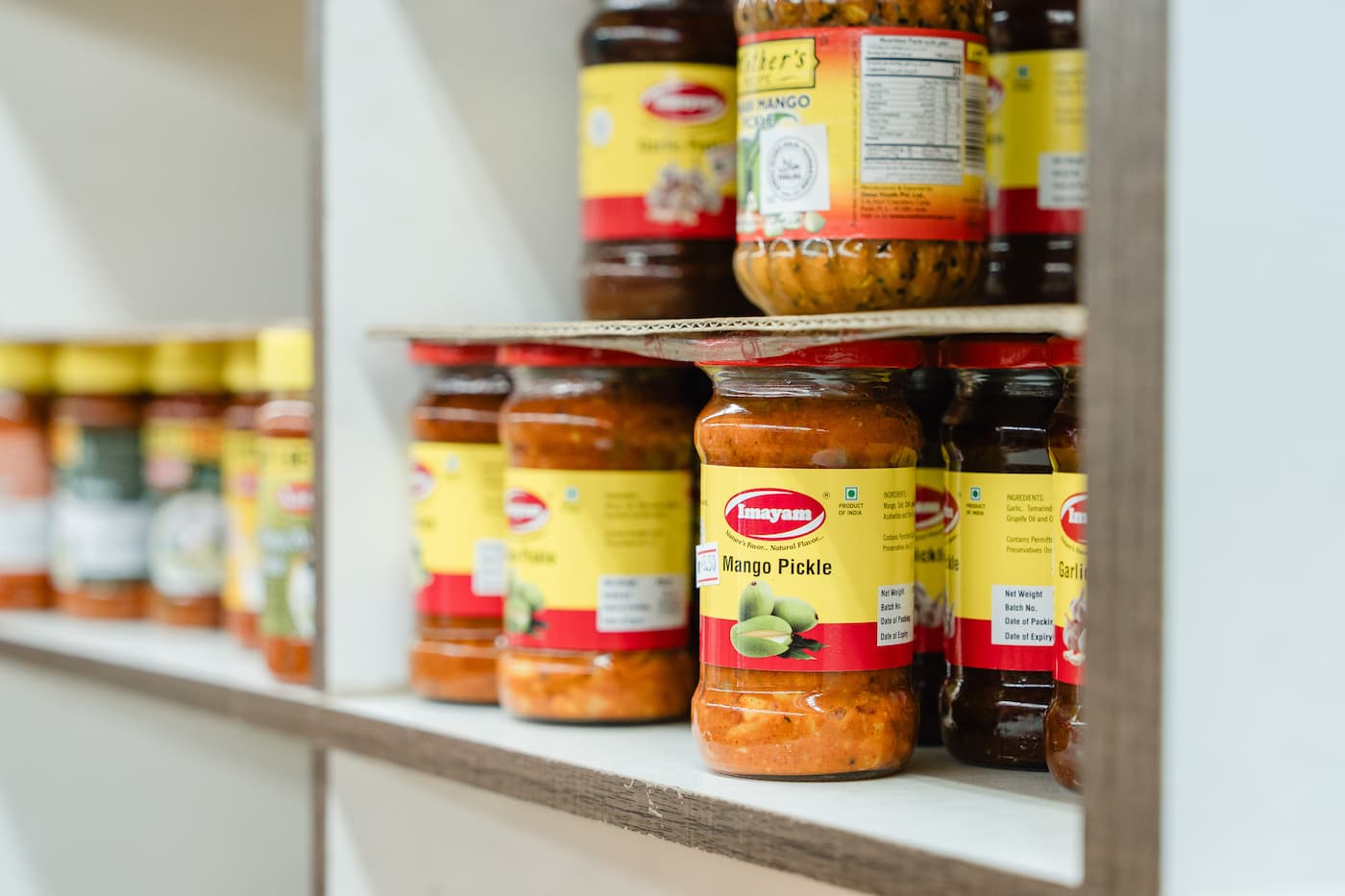
There are different types of dhal, split and whole, pale yellow to deep orange. They are scooped, weighed, and packed without pause. Beaten rice is stacked nearby. Tins of ghee sit along the lower shelves. Jars of pickles, brought in from India, line another section, labels turned outward.

Closer to the front, the goods shift again. Biscuits, tea bags, sugar, condensed milk. Bru instant coffee sits among them, its green packaging easy to spot. Toiletries run along one side. Soap, toothpaste, hair oil and small items picked up alongside everything else.

Shafie moves through the shop without looking for things. A request is made, and he is already reaching, measuring, passing it across the counter.

Outside, a rack holds magazines from India. Some current, some carried over. They are turned through while standing, or taken along with the rest of the purchase. A few curut sticks are kept within reach at the counter.

The shop draws a regular group of customers. Some come from nearby offices, stepping in briefly. Others have been coming here for years, long enough that the exchange requires very little speech.

Lebuh Ampang was once closely associated with the Chettiar community, whose businesses were established along this stretch. Some of the older shopfronts remain, their façades largely intact. If you look closely, traces of earlier signage can still be seen above the current storefronts.

Along this stretch, general merchandise sellers, textile traders, goldsmiths and provision shops occupy the ground floors of ageing shophouses, their goods extending outwards into the five-foot way.

Jewellers sit alongside saree shops, bolts of fabric stacked high in narrow interiors. There are what are locally referred to as “fancy shops”, small stores selling everyday adornments and household items, hair clips, bangles, ribbons, stainless steel containers, things picked up in passing rather than sought out.

Food sits easily within this row. Chettinad eateries serve banana leaf rice through the afternoon, meals laid out quickly and eaten just as quickly.

A tea stall faces the pavement. Further down, a flower garland maker threads jasmine and marigold from a low stool. Turn into one of the smaller lanes and it quietens, a second-hand bookshop in the corner, shelves uneven, books stacked without much order.
Maju Al Bismi Store
Address: 44, Jalan Tun Perak, Kuala Lumpur

Discover more stories

Ooops!
Generic Popup2