Discover KL’s Art Deco delights

ANN MARIE CHANDY | 16 June 2025

Get a fantastic view of the Oriental Building, a striking showcase of Art Deco architecture on Jalan Tun Perak, from Masjid Jamek LRT station. - Photos: Ann Marie Chandy
Heritage isn’t always wrapped in songket or found behind museum doors. Sometimes, it’s right there – in the clean lines of a staircase or a row of windows you’ve passed a hundred times without noticing. And just when you think you’ve got Kuala Lumpur all figured out – bam! – you discover Art Deco has been here for nearly a century, still bold, still stylish!

While Downtown KL may not boast as much as America’s Miami Beach or New Zealand’s Napier, what it does have is a pocket of tropical Art Deco rich with personality, adapted to our climate and blended with our city’s spirit.
“Every heritage building has a past — when I look at them, I imagine what life was like during their heyday.”

Zain Abdullah
Zain Abdullah, the passionate eye behind the Heritage Buildings of Malaysia (myheritagebuildings.blogspot.com), has long been captivated by the stories embedded in old buildings. “Every heritage building has a past — when I look at them, I imagine what life was like during their heyday,” he says.

Art Deco buildings, in particular, stand out to him for their timeless style. “They were so modern for their time, and the consistency of the design makes them easy to recognise even from a distance,” he says.

Zain has been documenting these distinctive features — like ziggurat-shaped facades, vertical grooves and flagpoles (even the ones without flags, he laughs) — not just in Kuala Lumpur, but also in Penang, Ipoh, and beyond. What fascinates him most is how the style became popular in the 1920s and 30s, just after World War I ended. “It was a hopeful time, especially in Europe, before the devastation of World War II arrived,” he reflects.

His favourite building in Downtown KL? “Definitely the Oriental Building at the corner of Jalan Melaka and Jalan Tun Perak,” he says without hesitation. “It was the tallest building in KL in 1932 and ticks all the Art Deco boxes — from slim windows to clean lines, a proud flagpole, and that pyramid-shaped gable on top. It’s just iconic.”

Whether you're a heritage enthusiast like Zain, a seeker of Insta-worthy facades, or simply in the mood for a refreshing city stroll, these buildings offer a fresh lens through which to experience the capital — layered with history, style and stories waiting to be discovered.
What is Art Deco, anyway?
Art Deco was born in the 1920s – a bold design movement that captured the machine age’s optimism and turned it into architecture, furniture, fashion and film. The look is instantly recognisable as Zain says: clean lines, ziggurat steps (steps in the shape of a pyramid), vertical emphasis, aerodynamic curves and sunburst motifs. While Western versions often glinted with chrome and lavish ornamentation, South-East Asia added its own spin – emphasising functionality and climate responsiveness.
Notice the ‘eyebrows’ above the windows? These overhangs, along with five-foot ways (right), were architectural responses to the harsh tropical climate – offering shade, reducing heat and sheltering pedestrians from rain.
In KL, that meant concrete over marble, overhangs over excess, recessed windows and five-foot ways that gave shade from the scorching sun. You’ll spot “eyebrows” (cantilevered window shades), ventilation holes, geometric screens and streamlining designed for airflow as much as aesthetics.

For those of you whose interest has been piqued, here’s a list of some must-see art deco stops in Downtown KL.
Central Market (Pasar Seni)
When you visit Central Market next, look beyond the souvenirs and street food, and you’ll spot some classic Art Deco features.
Tucked at the corner of Jalan Tun Tan Cheng Lock and Jalan Hang Kasturi near Chinatown, Central Market is more than just a place to shop – it’s a living showcase of Malaysia’s Art Deco heritage. Originally built in 1888 as a wet market and redesigned in 1937 by TY Lee, an engineer-architect with the Kuala Lumpur Sanitary Board, the building stands as a great example of adaptive reuse, now serving as a hub for Malaysian arts, culture and crafts.

Look beyond the souvenirs and street food, and you’ll spot classic Art Deco features: a stepped parapet (the steps above the roof line), textured white concrete bands running across the façade, and bold geometric motifs – including stepped pyramid motifs and vertical linking rings at all 22 entrances (see pic below). Painted in soft tropical shades of pale blue and white, the structure also sports a concrete flagpole on its crown and clever touches like ventilation blocks that blend form with function.

Next time you pass by, slow down and admire the symmetry and stylised elegance that make Central Market not just iconic, but architecturally fascinating too.
Oriental Building
Once the tallest building in Kuala Lumpur at 25m (82ft), the Oriental Building on Jalan Tun Perak is a striking showcase of Art Deco architecture and an urban treasure hiding in plain sight. Designed by AO Coltman and opened in 1932 as the headquarters of the Oriental Life Assurance Company, the five-storey structure later housed Radio Malaya and various government offices. Its gracefully curved façade followed the bend of the road, with rusticated (textured) arches lining the ground-floor arcade.
Spot the details! From the white stucco frieze of interlocking discs to the textured arches along the ground-floor arcade and the sunburst lines above the main archway — the Oriental Building is full of Art Deco flair waiting to be discovered.
A central panel on the front is flanked by two towers, framed by a white stucco frieze of interlocking discs – adding texture, rhythm and that signature Deco flair. Look closer and you’ll spot tall, slim windows set between stepped wall panels, pilasters (or decorative columns) starting from the third floor, and clean lines radiating from the main archway in a sunburst motif. A bit of interesting trivia is that the building had a cleverly flood-resistant basement. The Oriental Building blends form, function and flair, and its timeless design still stops architecture lovers in their tracks.
Clock Tower, Market Square
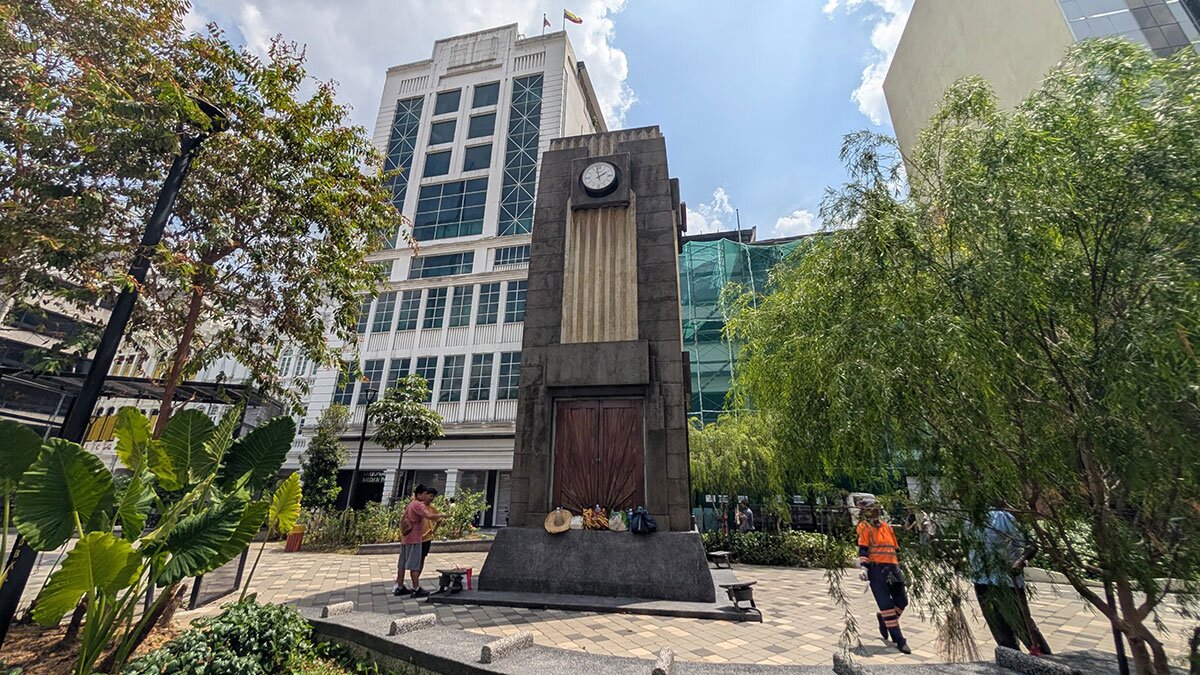
The Old Market Square Clock Tower, built in 1937 to mark the coronation of King George VI, is a modest yet elegant example of Deco architecture in Kuala Lumpur. Standing at 7.6m (25 feet), its cubic form, symmetrical lines and signature sunburst motifs reflect the style’s emphasis on bold geometry and lasting form. Though its original commemorative plaque was removed after independence in 1957, the tower remains a dignified focal point in the historic Medan Pasar market square, surrounded by buildings with banded pilasters that echo the same Deco era charm.
Sunshine, frozen in stone! The Old Market Square Clock Tower beams from every angle — its sunburst motifs are like a secret Art Deco wink to anyone who stops to look.
Odeon Cinema
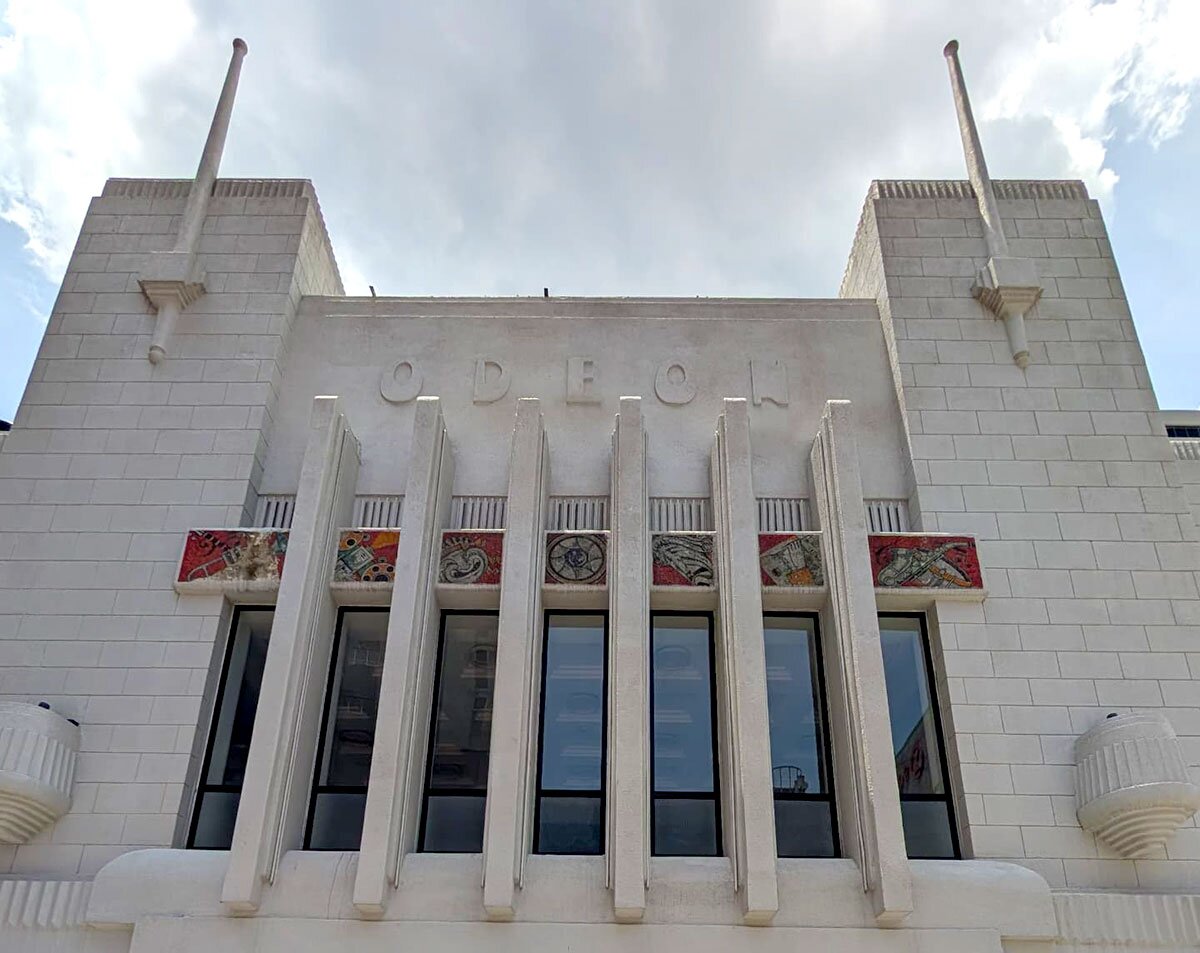
The Odeon Cinema at the Jalan Tuanku Abdul Rahman-Jalan Dang Wangi intersection, was built and designed by architect Coltman (again) in 1936, with structural design by Steen Sehested. The building is a striking example of Art Deco design, featuring bold vertical pylons, slim mullions (a vertical bar between the panes of glass in a window), and a mosaic frieze above the entrance depicting drama, comedy and music. The cinema’s name is displayed in distinctive Deco lettering, while flagpoles and rhythmic vertical “ribs” along the side façade enhance its streamlined silhouette. These features, along with clean lines and geometric ornamentation, reflect the modern, theatrical flair typical of Art Deco.
Drama, comedy, music — all in one mosaic! Look up at the Odeon for a show that’s been playing since 1936. No ticket needed.
Lee Rubber Building (Now, Else Hotel)
Another one of the buildings which held the honour of being ‘the tallest building in Kuala Lumpur’ at one time, Lee Rubber — completed in 1930 and also designed by Coltman — is another great example of early Art Deco style in the city. Located at the corner of Jalan Tun HS Lee and Jalan Hang Lekir, the building stands out with its strong, clean lines, flat roof and a dramatic corner cut at a sharp 45° angle.

The exterior, now repainted, still proudly displays key features: vertical stripes, the original name in both English and Chinese and a flagpole at the top. Over the years, this building served as the Lee Rubber Company’s office and was later used by the Japanese army during World War II. Today, this landmark has been beautifully restored and transformed into Else Hotel.

Thanks to a sensitive renovation by local designers Studio Bikin and Faizah Architect, the building’s original character — from its solid pillars to its bold corner tower — remains a treat for anyone interested in heritage and design.
The Anglo-Oriental Building/Wisma Ekran
Overshadowed by its more famous neighbour, Rumah Tangsi, the Anglo-Oriental Building is pure Deco drama — with curves, flagpoles and grooves galore. KL’s quiet scene-stealer since 1937. - Photo: Maria Tan
The Anglo-Oriental Building, built in 1937, is another stunning example of Deco in KL. Located at the corner of Jalan Tangsi and Jalan Parlimen, it features strong geometric shapes, clean lines and decorative details that define the style.

The building has three storeys and a basement, with two asymmetrical wings and a curved corner entrance flanked by tall, tower-like pylons. A concrete canopy juts out over the doorway, while decorative grooves run around the upper walls — these grooves and the smooth finish were made using Shanghai plaster, common in Deco buildings across Asia. One standout detail is the use of hammered pewter on the main doors and signage, nodding to the building's original owner, a mining company. Though later renamed Wisma Ekran in the 1990s, the building has since been left vacant, but its striking Art Deco features still hold plenty of charm for architecture and heritage lovers.

So, as you walk through KL, why don’t you slow down, look up and rediscover the city through its myriad textures, shadows and shapes? And the best part? Most of these stops are close to LRT and MRT stations like Pasar Seni and Masjid Jamek, so it’s easy on the legs and kind on the wallet.

Discover more stories

Ooops!
Generic Popup2