A taste of heritage

MANJEET DHILLON | 25 August 2026

SATURDAY mornings at Taman Tugu begin the way most mornings there begin – birdsong, forest canopy, joggers cutting past stalls still being set up.

Heritage Weekend on Aug 15 added something to the usual rhythm: a gathering built around rice, coconut, and a kampung kitchen nobody in the crowd actually grew up in.

For Warisan KL, heritage is not only found in the buildings, streets and landmarks that tell Kuala Lumpur’s story. It also lives in the knowledge people carry – in recipes passed down through generations, in the way food is prepared, and in the stories that give everyday traditions their meaning. At Taman Tugu last weekend, that living heritage took its place alongside the city’s natural and built heritage.

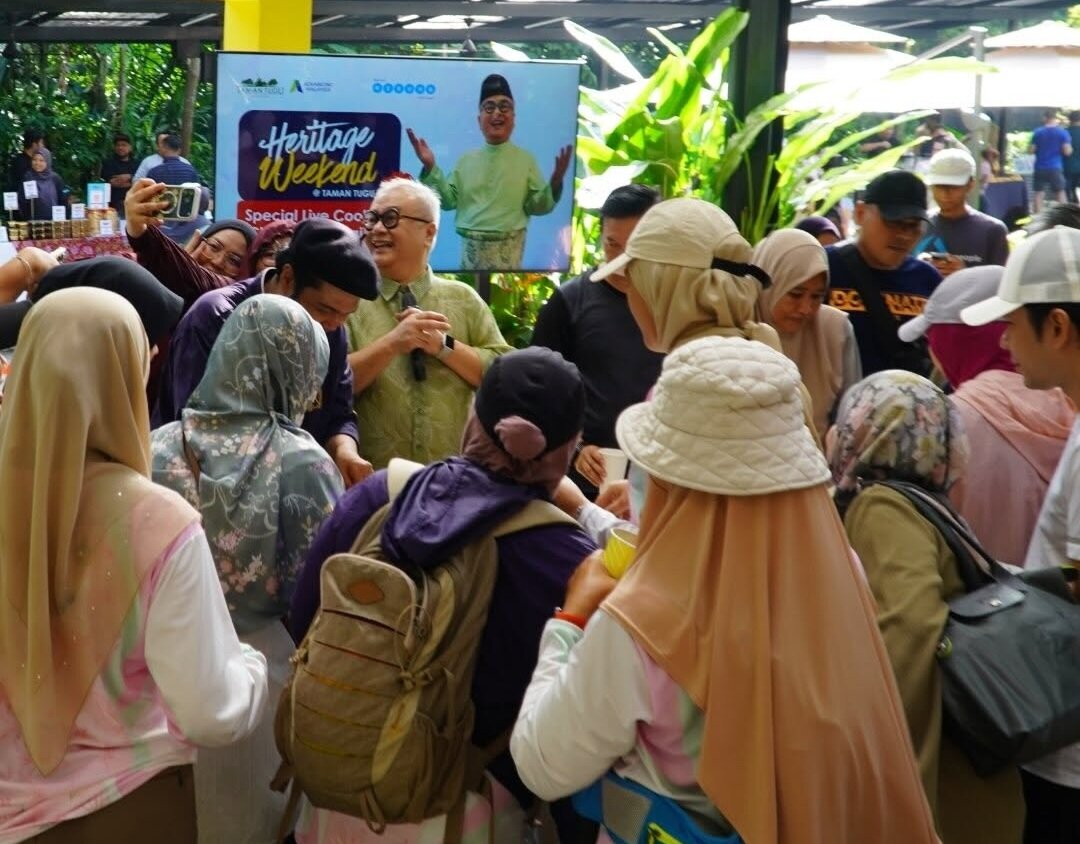
At the centre of it stood Chef Dato' Ismail Ahmad, working a large brass kuali over a portable stove, a small crowd already forming around his table. He's here to cook two dishes. Heritage, he told the gathering, doesn't have to mean old buildings and plaques. "I am heritage as well," he said, and the crowd laughed. "Sixty-six years old, but since I live near greenery, I look 25."


Chef Dato’ Ismail Ahmad brings heritage to the kuali, preparing two traditional dishes and serving up a reminder that heritage lives not only in places, but in people, skills and stories. At 66, he joked: “Since I live near greenery, I look 25.”

The first dish was nasi ulam Rembau, not the nasi ulam (herbs rice) most Malaysians would recognise. Every state has its own version, he explained, and this one belongs to his village specifically. "Only warga kampung saya yang makan," he said, noting that only the people of his kampung eat it this way. The whole food economy, he added, started from our grandparents' kitchens.

Into the pot: a fragrant tangle of herbs sliced fine: daun pegaga, young cashew shoots, bawang kesum, alongside thinly sliced petai, fried shallots, and ikan masin kurau, grilled first and pounded to a coarse powder. Ground dried shrimp and black pepper go in for backbone. The salted fish does double duty as flavour and seasoning, so there's no need to add salt beyond a final adjustment at the end.

A splash of calamansi lime brightens things before the rice goes in, stock granules if you want a little more depth, but nothing else. Santan is favoured for this dish, instead of kerisik, and even santan has its own hierarchy, he explains. The creamy liquid pressed from mature coconut pulp is graded by which press it comes from: pati is the first press, the thickest of the lot, while kěmanchar comes from what's squeezed out after. Fresh or packet both work for this dish, he says, so long as you're careful about the brand.

He credited the pot itself for a lot of the character. The brass keeps the temperature steady and gives the rice a richer colour than a non-stick pan manages. Chef Ismail is Tourism Malaysia's Culinary Ambassador and works with Jabatan Warisan Negara documenting traditional cooking methods before they're lost. His own kitchen, though, still runs on instinct and inherited habit rather than anything written down.

The second dish, lempeng kelapa, got the bigger reaction. The batter itself is simple math: flour and grated coconut, loosened with water until it's neither too thick nor too thin, he says, checking the consistency by eye rather than measurement. The audience got involved too, with two young girls being brought forward to help with the lempeng, learning how to stir the batter from the edge towards the centre. Chef Ismail watched their hands, adding water when the mixture needed loosening and showing them when it is ready. "Kacau dengan cinta," he told them to “stir it with love” and the parents nearby laughed along.

He improvised with an egg mould pan instead of a traditional lempeng mould, brushing each cavity with oil before ladling in the batter. Chilli or spring onion on top if you like, though it's traditionally served plain with sambal. Someone in the crowd said it looked a bit like a pancake. Chef Ismail shook his head, "Bukan pancake", and tugged a piece apart. He flipped each one only once the underside had gone slightly golden and firm. Rush it, he warned, and it tears.

In Kedah, he said, people just call it pek nga, from the old dialect phrase tempek atas belanga, tempek meaning to spread or smear, belanga the claypot the batter used to be poured onto. The name refers back to the old way of making it, when the batter was spread onto a claypot.

Around the station, the rest of the heritage market carried on. Heritage cuisine restaurant Rebung was selling nasi lemak alongside jars of dodol, kesirat, lempuk durian and wajik durian on batik-covered tables, next to acar buah and rempah rendang Rembau, teh tarik pouring from a kettle at the end of the row. The nasi ulam and lempeng kelapa went around for sampling and disappeared within seconds.

They were not presented as one Malaysian recipe, but as dishes that belong to particular places and have their own ways of being made. Rembau had its nasi ulam; Kedah had its pek nga. The market around them added still more versions of what Malaysians cook and eat, from the sweet things on the table to the savoury dishes being served nearby.

A delicious morning of heritage and good cheer as KL-ites watched chefs in action, sampled traditional dishes and explored a market brimming with familiar flavours – from nasi lemak and nasi ulam to lempeng kelapa, dodol and durian treats. The tastings disappeared in seconds!


As the session wound down, Chef Ismail returned to where he started: satu kampung itu saudara kita, one kampung makes us family. Don't forget your roots. The crowd drifted back into the park, still holding the last of their rice and coconut lempeng, while the market carried on around them.

It was a fitting reminder of what it means to keep heritage alive. It is not simply about preserving what has come before, but about continuing to practise it, share it and pass it on – from one kitchen to another, from one generation to the next.

In a city that is constantly changing, these are the stories, skills and everyday traditions that keep its sense of place intact. Heritage, after all, is not only something Kuala Lumpur remembers. It is something its people continue to make.

Keep up to date with events and activities at Taman Tugu by following Friends of Taman Tugu on Instagram: @friendsoftamantugu.


Discover more stories

connect with us
follow us on
Ooops!
Generic Popup2