A Season of Remembrance, A Century of Faith

CHIN JIAN WEI 22 December 2025

More than a century old, St Mary’s Cathedral dates back to British Malaya and has endured floods, upheavals and the passage of time, continuing to serve a living congregation today.
CHRISTMAS is once again upon us, and the people of Kuala Lumpur are getting ready to celebrate. Despite being a predominantly Muslim city, there is no shortage of historic churches in town, each home to tight-knit communities.

One such historic place of worship is St. Mary’s Cathedral, also known as the Cathedral of St. Mary the Virgin. The mother church of the Anglican Diocese of West Malaysia, it is located along Jalan Raja, part of the city centre and right next to Dataran Merdeka.

The cathedral is well over a century old, and dates back to the colonial British rule of Malaya, having been consecrated in the late 19th century. It has stood firm through the turbulent times of the early 20th century, survived multiple floods and remains an active and lively cathedral to this day

The heritage of the old building is maintained all these years later by the flourishing community that frequents its halls. Parady Chaiphakdi A/P Ee Chuan, a Services Support Associate at St. Mary’s, says, “During Christmas time, there is usually carolling. Usually, on the first weekend of December, there is this service called ‘Nine Lessons and Carols’.” This comprises lessons on nine passages of the Bible, interspersed with famous carols. Activities like these are a big crowd-puller, and go a long way to help keep the community thriving. “We encourage people to bring their friends and family,” adds Parady.

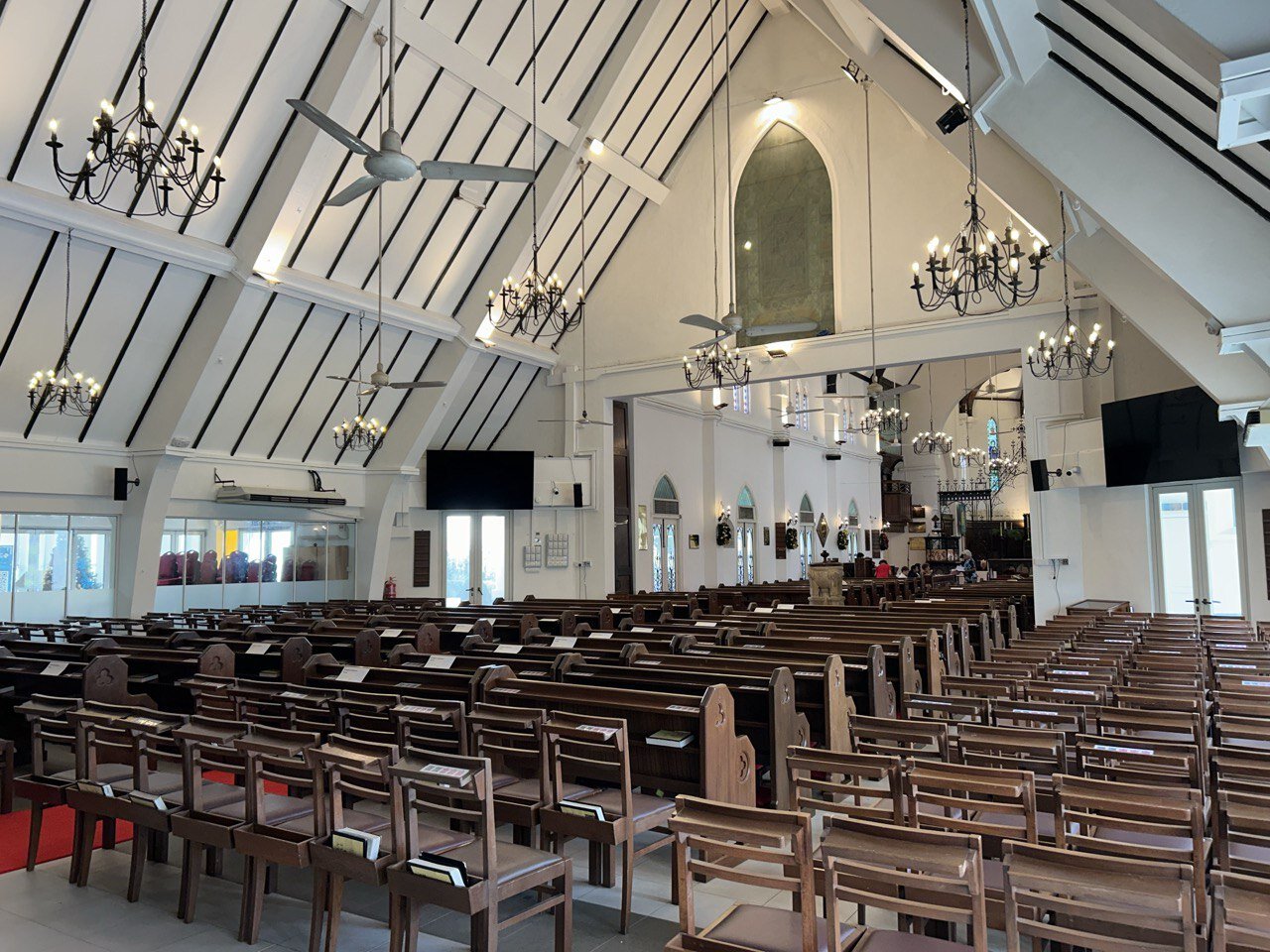
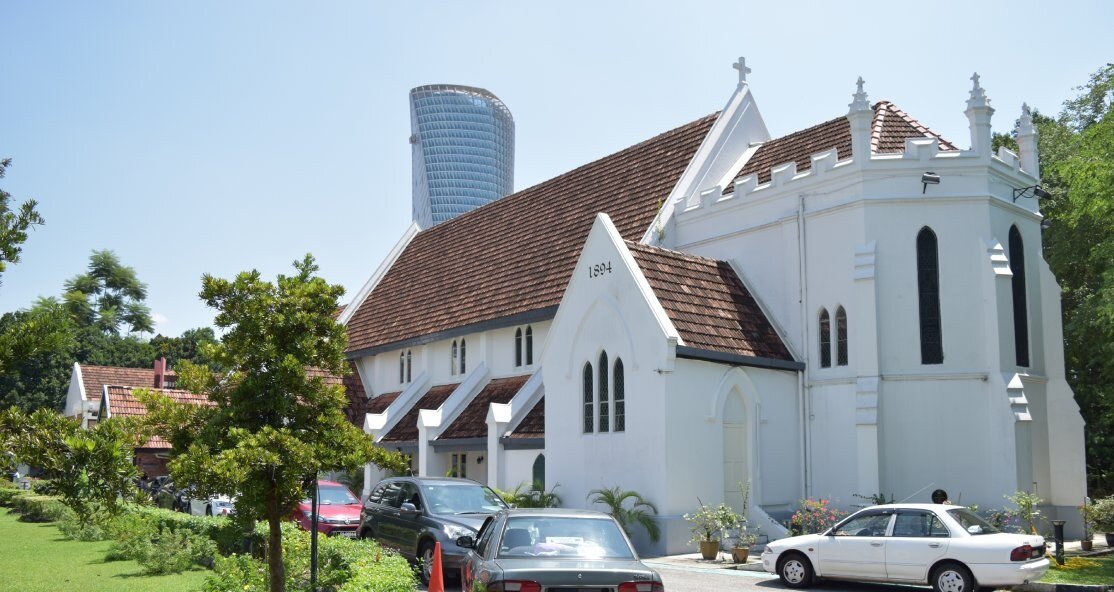
Looking at photographs of the cathedral, a casual observer might mistake this Malaysian cathedral for a European one. The cathedral building is designed in the shape of a cross, just as many early churches were, and is large enough to accommodate 200 people. That capacity is needed, as according to Parady, church membership stands at about 1400 people!

St. Mary’s Cathedral’s architecture boasts truly venerable inspiration, following an English Gothic design that was popular as early as the 12th century.

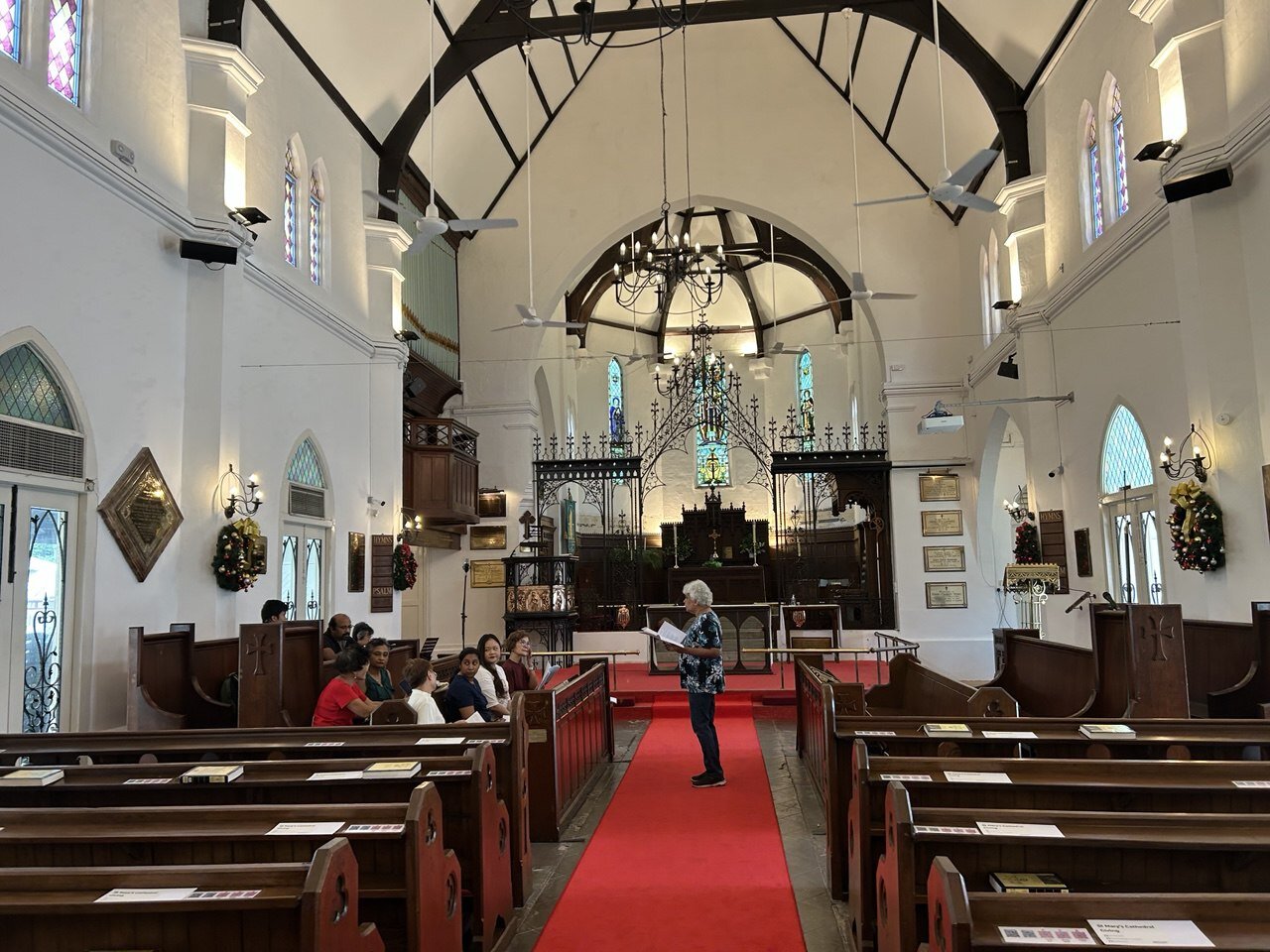
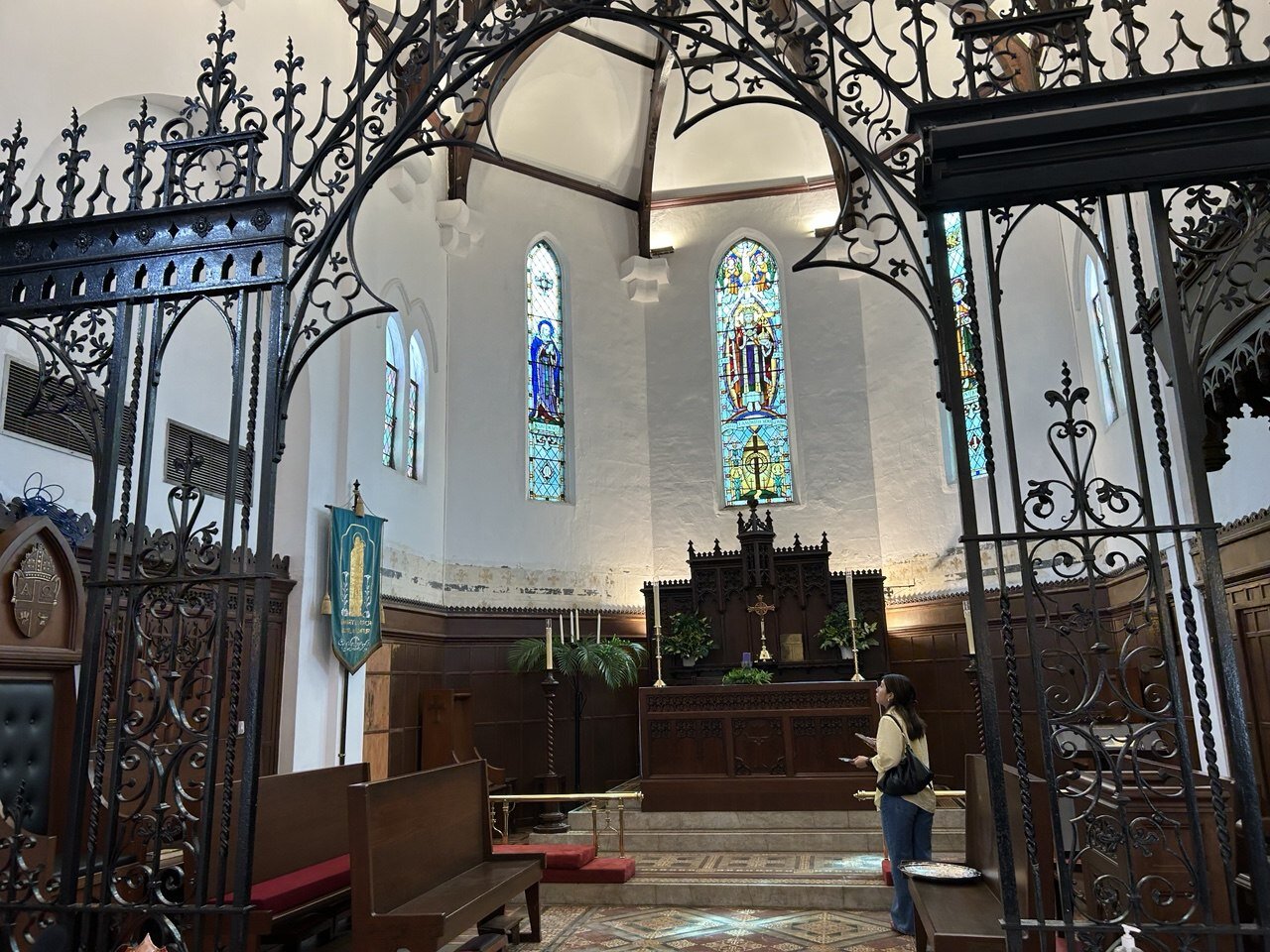
Stepping inside the cathedral, one cannot help but be impressed. The eye is drawn to the stained glass windows above the chancel (the area of the church housing the choir, located at the eastern part of the building), depicting Jesus Christ, St. John and the Virgin Mary.

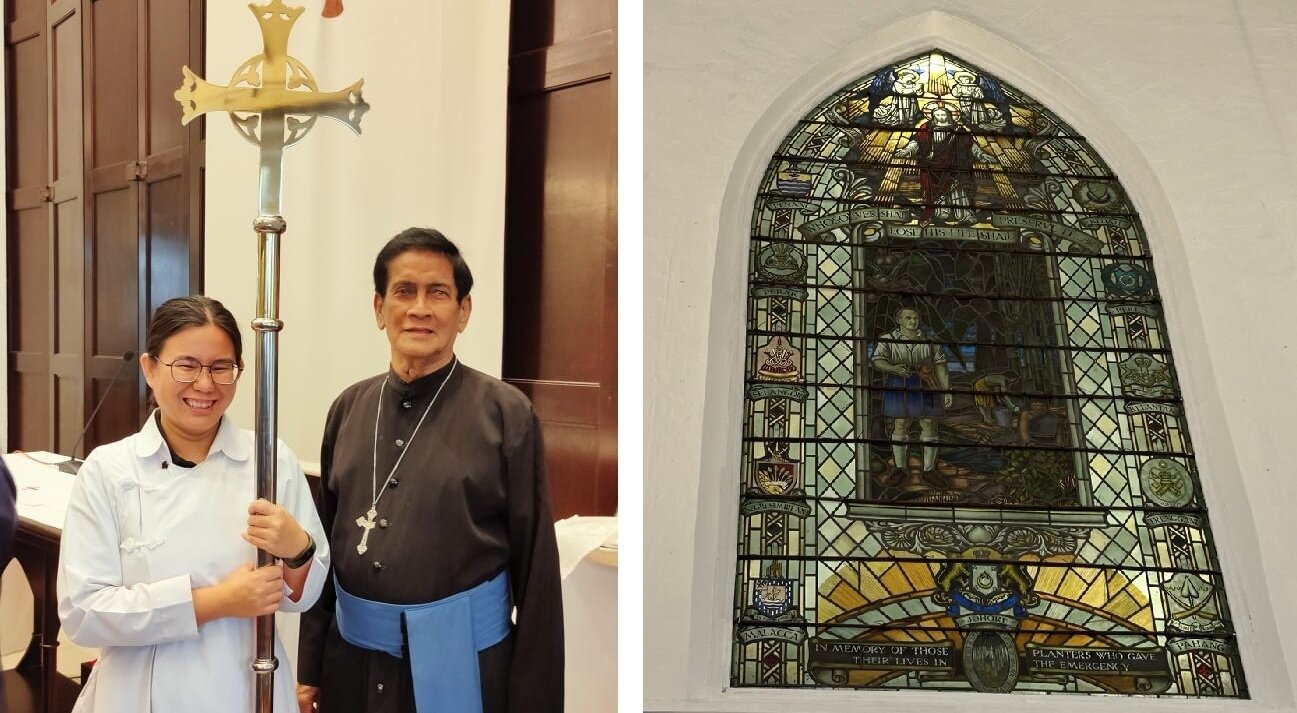
Joseph Sappathy, also known affectionately as Uncle Joe, serves as a verger in the church. In his late 80s, he has been with the church since the 1960s, and has many stories to tell. According to him, the central window depicting Christ, is not the original. During the Second World War, due to concerns over destruction caused by the war, the original window was taken down and hidden away by a planter (rubber plantation manager). “He buried it somewhere,” Joseph said. “Then he went back to England and never came back.”

Parady Chaiphakdi and Joseph Sappathy, long-serving staff of St Mary’s Church. Right: The Planter’s Window at St Mary’s Cathedral, commemorating planters who died during the Malayan Emergency (1947–1957), depicting Malaya’s main crops, estate workers and the crests of the former Federation of Malaya.

Another notable stained glass window is the Planter’s Window on the West End, put up in memory of the planters who lost their lives during the Emergency in Malaya between 1947 and 1957. Malaya’s main crops of rubber, tea, oil palm and coconut are all depicted, as well as local estate employees and a Scottish gentleman sporting a kilt. The crests of the states that made up the then Federation of Malaya are represented, symbolising the district planting associations throughout the country.

Dotted throughout the cathedral are also metal plaques of various shapes and sizes, placed to commemorate various notable events. Together, they form a picture of the many events the cathedral walls have borne witness to. There is a plaque commemorating the visit of the late Queen Elizabeth II, and one in remembrance of 91 souls who lost their lives in World War 1. Another notable plaque pointed out to us by Joseph is that of Dr. Ernest Aston Otho Travers, who founded the Sungai Buloh Leprosarium in 1930, the largest of its kind in the Commonwealth. “In those days, people ran away from lepers,” Joseph says. “But he dared to go near them and treat them and open a hospital for them. Jalan Travers is named after him.”

St. Mary’s also boasts an antique pipe organ, located on the upper floor of the north side of the nave. There has never been a maker’s label, but many believe it was built by Henry Willis, the famous Victorian organ builder who also built the organ in London’s St. Paul’s Cathedral. This massive musical instrument was once owned by “Mr. Duberly” (Ernest Duberly), the British Resident of Pahang, and was installed in 1904. It has been a key part of the building ever since, only having to be relocated once during the floods of 1928. Once hand-blown, it is now electrically powered. Some of the senior churchgoers still remember when the organ had to be prepared by pumping bellows.

Another interesting detail within the cathedral is the faintly visible fleur-de-lis on the walls near the altar. During a recent renovation, the white paint on the walls was scraped off to solve an unsightly peeling issue, and the original fleur-de-lis patterns were uncovered beneath several layers of paint. It seems the building has its share of secrets!

Most of the church pews are also old, dating back to 1894, according to Joseph. Despite suffering through floods so bad that they have floated off the floor, they remain steadfastly resilient and in good shape to this very day.

Parady says, “There are various groups like the church council where discussions are had about important things pertaining to the church, for instance, the huge job of repairing the roof beams that were eaten by termites. Quite a lot of effort had to be made to source for the appropriate wood; it had to be the same kind of wood as the beams. Then we needed to find people skilled enough to cut it according to the architecture. The carpenters here are not familiar with the European style cuts.”

Parady also opines that just as important as maintaining the “hardware” of the church is maintaining its spiritual heart, believing that St. Mary’s Cathedral is able to provide a good Christian environment for the youth to be raised in, where they feel like they can belong. Judging by the size of the community that frequents the cathedral, she is not alone in this sentiment.

File photo: St Mary’s Cathedral on Jalan Raja. With its cross-shaped layout and European-style architecture, the late 19th-century cathedral can accommodate up to 200 worshippers.

Discover more stories

Ooops!
Generic Popup2