A Journey Through Sarawak at Ruai

MANJEET DHILLON | 19 July 2026

MOST people know Sarawak laksa, says entrepreneur Fiona Marcus Raja, smiling as she settles into her chair. "But Sarawak is much bigger than one bowl of noodles."

Fiona is Kelabit, from the highlands of Bario. She splits her time between an events business back home and Ruai, a restaurant serving Sarawakian cuisine here in Kuala Lumpur. Ask her about Sarawak, and she speaks of it as though she's talking about family – this farmer, that village, a recipe passed down through generations, a dish forever tied to a cherished memory.

"We had a Kenyah artisan make this for us," she says, pointing at the Tree of Life (Kayo Urip) mural on the wall behind her, a rhinoceros hornbill and a clouded leopard (entutu) worked into its branches.

Bentwood chairs, woven rattan and a coffered ceiling recall the colonial-era interiors of old Sarawak. Ruai sits on the first floor of the Pejabat Pos Besar Lama (old General Post Office) on Jalan Raja, joined by an arched walkway to its more storied neighbour, the domed Bangunan Sultan Abdul Samad, right at the historic heart of Kuala Lumpur.

The 119-year old historic landmark reopened only this year, restored under the same Khazanah-led programme that returned its neighbour to public use after being largely out of reach for decades.

Up here, Ruai shares its floor with several other restaurants, each with its own door, all of them opening onto one long, colonial-style veranda that runs the length of the building.

It is not so different from a longhouse ruai, the shared corridor where separate households live under a single roof, working, cooking and keeping an eye on each other's business without ever quite losing their own space.
Most Malaysians on the peninsula know Sarawak in pieces – laksa, mee kolo, or a slice of kek lapis brought back from the Land of the Hornbills. But there's so much more to it than that.

Fiona talks about foraging the way most people talk about their weekly grocery shop. Rivers and forests shape what ends up on the plate just as much as the kitchen does.

Business Development & Operations Manager Jeremy Shim carries out the first course. Umai, he calls it, plainly, setting the plate down before Fiona picks up where he leaves off. Melanau fishermen, she says, used to cure raw fish with citrus out at sea, where you couldn't exactly light a fire. Chef Alex Ting's version uses sashimi grade hamachi, an umai dressing, a dabai cracker, and calamansi, close enough to the original to recognise it, different enough to make you look twice.


From the sea: Hamachi, Umai dressing and Calamansi with Dabai Cracker. – Photo: Manjeet Dhillon

Fiona doesn't wait for the next course to keep talking. She shares why Bario salt keeps vegetables looking freshly cut even after cooking.

Ruai is halal certified, a decision Fiona speaks about openly, one more reflection of the Sarawakian warmth she keeps circling back to, extended now to everyone who sits down at the table.

Future plans include bringing Bario salt and gula apong to Kuala Lumpur, while Chef Alex continues travelling back to Sarawak to learn directly from village elders rather than cookbooks.

Ayam pansuh is next. Traditionally, the Iban cook chicken inside a length of bamboo over open flame, letting the smoke work its way through the meat as it steams. Ruai's version arrives differently, tender chicken plated with tapioca leaves, tapioca purée, and a thin kicap mayonnaise.

Before the plate is even half finished, Fiona is already talking about the communal fire around which Kelabit families gather. Among the Kelabit, she says, it sits at the centre of everything, close enough to hear elders tell stories about how life in the village used to run.

Rice matters too, Bario rice especially, grown over generations in terraced hills. The short grains, she says, are just one of several products from home she hopes to sell directly out of Ruai before long. "A lot of our food is based on the history of how we lived," she says.

Pumpkin, splitgill mushroom, anchovies. – Photo: Nadzrin Faizal


The pumpkin arrives roasted and puréed, sitting with wild mushrooms and fried silver-bait anchovies, giving each bite a welcome crunch. Sarawak doesn't grow everything year-round, Fiona says, so the menu is built from what suppliers can actually guarantee.

Mee kolo comes topped with wagyu char siu, minced chicken, scallion oil, fried garlic, and it's the noodles that stop the conversation. Chef Alex has cooked them soft enough to bite through cleanly, gone silken once the oils work their way in, holding their own rather than disappearing. This is the dish, Fiona says, that Sarawakians think of when they're far from home. She's working on one that travels, an instant version for exactly that kind of homesickness.

Mouth-watering signatures: Kolo Mee, Charsiu Wagyu and Minced Chicken; Below: Laksa Sarawak, Chicken Thigh and Shrimp. – Photos: Manjeet Dhillon

Then comes the dish most would be waiting for. Sarawak laksa arrives in a bowl generous enough to share, and one spoon of the broth is enough to send you guessing – chicken, prawn, aromatics, spice – all of it folded together into something that refuses to be picked apart. Prawn heads and shells go in to simmer before getting strained out, and a sous vide chicken breast stands in for the shredded meat you might expect, though it stays unmistakably Sarawakian.

Fiona later confirms what's actually underneath all of it, a broth built from more than 20 ingredients. No two families make it the same way, she says. Some lighter, some richer and this is simply Ruai's version.

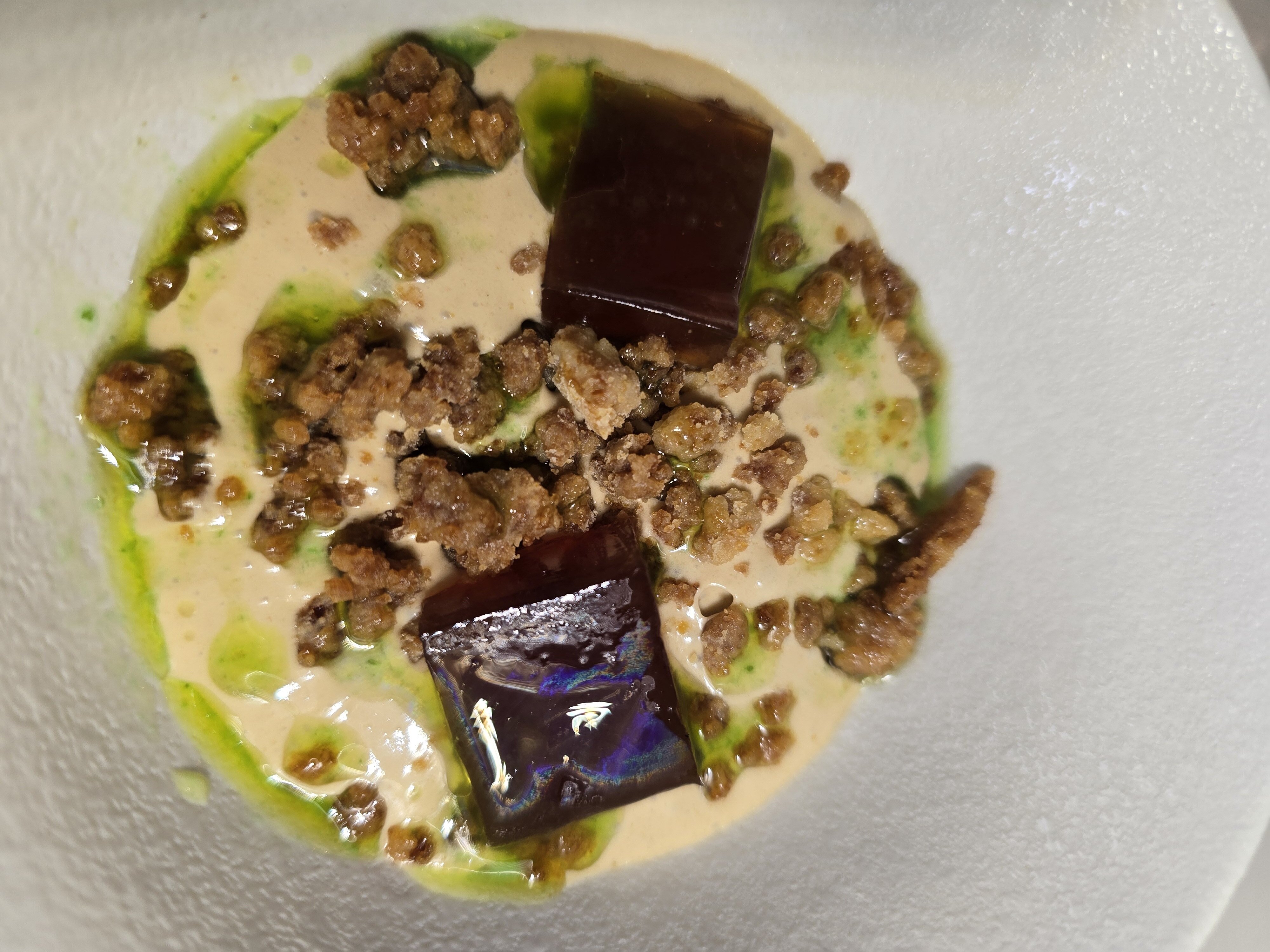
Dessert is the three layer milk tea, a drink cleverly reconstructed as a dessert, evaporated milk set into something closer to a custard and teased with a hint of gula apong, dark cubes of tea jelly cutting through it, a trace of pandan settling into the plate beneath, and a scatter of crumble giving the only real crunch in an otherwise silken bowl.

Need to sweeten the deal? Try Ruai's Three Layer Milk Tea, Apong and Pandan. Photo: Manjeet Dhillon

Every one of us ended up ordering our own. Fiona's already somewhere else by the time it lands, talking about the women she works with, hand-woven textiles in the Iban pua kumbu tradition, cushions and baskets patterned with motifs from home, slowly building into Ruai's line of Sarawak-made artisanal products. The restaurant, she tells us, is just one piece of it.

"There is no greeting among the Kelabit," she says. "It's always a question. Where are you from? How long are you here for?" Not nosiness, she means. Care. Bario even has a name for it – the Land of a Thousand Handshakes – because everyone greets everyone, and the first hour there is mostly just shaking hands.

The writer, in conversation with Fiona Marcus Raja (right), one of the entrepreneurs behind Ruai, whose roots lie in the highlands of Bario. Passionate about sharing the flavours, traditions and stories of Sarawak, she's creating a space in Kuala Lumpur where every meal offers a taste of home. – Photo: Nadzrin Faizal

Three hours pass and she never once sounds like she's selling anything. She's just introducing us to where she's from. By the last plate, it doesn't feel like a tasting menu anymore. It feels like a conversation that happened to come with six courses attached.

Ruai brings Sarawak a little closer, one conversation, one plate at a time.

As Kuala Lumpur continues to rediscover its historic heart through the Warisan KL initiative, places like Ruai remind us that heritage is as much about people as it is about buildings. Within the walls of the restored Pejabat Pos Besar Lama, Sarawak's stories now find a home hundreds of kilometres from where they began.

The journey east may still require a flight, but here, in one of the city's oldest landmarks, it begins with a conversation across the table.

Ruai – House of Sarawak
Lot No. 1-04, Pejabat Pos Besar Lama, Jln Raja, Kuala Lumpur
Open daily from 10am to 10pm
ruai.com.my


Discover more stories

Ooops!
Generic Popup2