A City Shaped by Its People

WAN NOR ALIA WAN ALI | 12 January 2026

AS 2026 begins, WarisanKL turns its gaze back to Kuala Lumpur – a city shaped by its people, places and creative urban pulse. From studios and cafés to museums and social enterprises, the stories gathered here trace how culture, heritage and social impact continue to give the city life. Through conversations with five individuals amongst the many shaping Kuala Lumpur in their own ways, WarisanKL.my reflects on the milestones of the past year and looks ahead to the hopes carrying this heritage-rich city forward.

Across the capital, artists, entrepreneurs and cultural practitioners continue to work quietly and persistently – activating neighbourhoods, building ecosystems and creating spaces that resonate with residents and visitors alike. As 2026 gets underway, these voices offer a grounded portrait of Kuala Lumpur as both canvas and home.


Any creative cycle is incomplete without the artists who use Kuala Lumpur itself as a working ground. For Jun Ong, light installation artist and co-founder of Matlab, 2025 marked a turning point.

“2025 was a deeply meaningful and transformative year for us. Our biggest achievement was the launch of Matlab, a materials resource centre in Kuala Lumpur founded through a Kuala Lumpur-based collective POW Ideas,” Ong shared.  

Realised with support from a Think City grant, Matlab was conceived as an open platform for architects, designers, artists and students to share knowledge and explore new possibilities in material use. Beyond the space itself, Ong observes a broader shift taking place within the city’s creative industry.  

“There has been a shift from purely aesthetic concerns to deeper discussions about process, materials, sustainability and local context,” he said. “Many small-scale, independent initiatives have emerged – alternative spaces, experimental exhibitions and cross-disciplinary collaborations – indicating a more layered and rooted creative ecosystem. Compared to previous years, the approach now feels more reflective and long-term.”  

When it comes to spending time in the city, Ong gravitates towards spaces that allow ideas to surface organically. “We enjoy small galleries, friends’ studios, artist talks, open studios, or simply walking through older parts of KL like Chow Kit and Jalan TAR. Intimate-scale activities often spark more honest and meaningful conversations,” he shared. “Last year we conducted a walking tour with HURUF to study old signage around KL from a materials and design perspective.”  

Looking ahead, Ong hopes for consistent, long-term support for the arts – not just through events or short-term projects, but through sustained efforts in space development, knowledge-sharing and talent nurturing. “We also hope for more efforts to document, archive and re-evaluate culture and heritage in a contemporary context. Support from organisations like Think City is crucial in building a resilient, inclusive and relevant ecosystem for the future."  

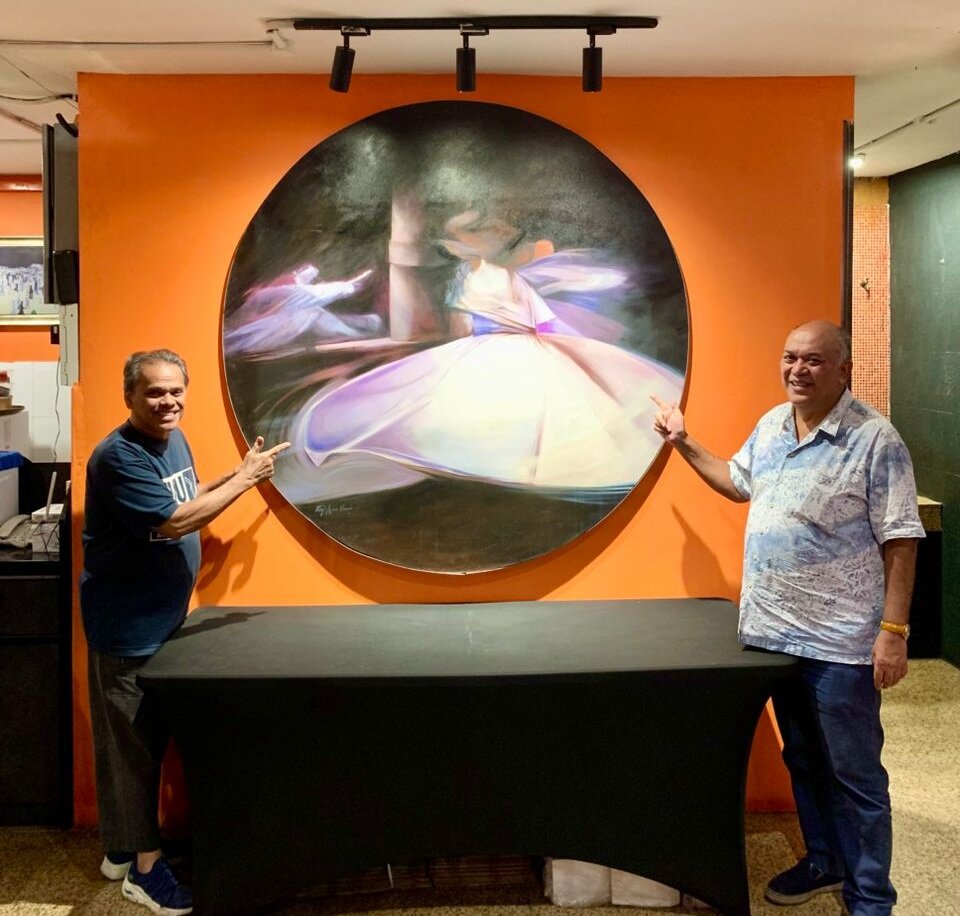
Just a short walk from Central Market and Kasturi Walk, High Street Art Café sits quietly within the city’s pedestrian flow, offering a moment of pause amid constant movement. Owned by Datuk Seri Zainal Rafique (pic, right), the café emerged from a desire to help revive a neighbourhood that had fallen silent. 

“After Covid, this area was empty. DBKL wanted to reactivate it. As an art lover, it felt natural for me to open a café like this and create a space for regular art exhibitions,” Zainal shared.    

For over a year, the café has contributed to the area’s renewed energy, serving a menu that blends traditional Malay dishes with Western cuisine – a convenient stop for city visitors before continuing their exploration. Yet the concept extends beyond food. Zainal sees the café as part of a wider ecosystem, where neighbouring spaces collectively shape the visitor experience around Central Market.   

“There are many renewal efforts underway, but there is still much more that can be done, including upgrading key areas and improving lighting,” he said. “These efforts can brighten up walkways and attract more visitors.”   

While acknowledging DBKL’s commendable work in upgrading and reactivating the area, Zainal also emphasised the importance of curation. “Beyond physical improvements, curation is also important – of shops and merchandise – so that local products are prioritised and visitors can truly enjoy locally made crafts.”

Just across from Central Market on Lorong Kasturi, Earth Heir occupies the first floor of a shoplot – a space that quietly introduces visitors to Malaysia’s growing social impact and sustainability movement.   

“Many foreign tourists who visit our space are unaware that Malaysia has initiatives like this,” founder Sasibai Kimis shared. “They are often surprised to learn that Malaysia is also actively engaged in sustainability and social impact work.”      
  
Reflecting on 2025, Sasibai highlighted several milestones for Earth Heir. The organisation collaborated with IKEA Social Entrepreneurship through the Social Enterprise Accelerator Malaysia (SEAM), and received one of the highest ratings in B Corp Malaysia – a global certification assessing social and environmental performance. This recognition places Earth Heir among companies worldwide meeting high standards of responsibility and transparency.   

Earth Heir also introduced the 1% Social Pledge, an initiative encouraging companies to allocate one per cent of their budgets to support products and services created by social impact organisations. Looking ahead to 2026, Sasibai hopes to grow this movement by bringing more partners on board.   

With 2026 designated as Visit Malaysia Year, her goal is clear: she hopes the Ministry of Tourism will place greater emphasis on sustainable tourism, positioning sustainability as a meaningful part of the Malaysian travel experience.   

As someone who frequently spends time in the city centre, Sasibai also reflects on the urban environment itself. “Green spaces are something we lack in the city. I love Taman Tugu and Perdana Botanical Gardens, which are closest to us, but it would be wonderful to have smaller parks scattered around central KL,” she said, while acknowledging the multiple considerations urban authorities must balance when undertaking such projects. Over the past year, Earth Heir has collaborated with several organisations, including contemporary art museum UR-MU.

Building accessible spaces for art and dialogue lies at the heart of UR-MU. Reflecting on 2025, senior staff member Miza Syakirah described a year defined by collaboration and public engagement.

“2025 brought many collaborations with partners from diverse backgrounds. We also organised activities such as Live Drawing sessions, art talks and several exhibitions by independent artists,” she said.

“All of this strengthens the arts ecosystem by creating space for networking, collaboration and job opportunities among those who share our vision – to make art more accessible to the public.” Beyond local engagement, UR-MU also focused on international visibility through online publications, positioning the museum as a preferred destination for visitors from around the world.

When asked about places and activities in Kuala Lumpur, UR-MU’s recommendations could easily fill a full day in the city. Alongside their three museum locations – UR-MU @ Toffee Raja Chulan, UR-MU @ Bukit Bintang and +n by UR-MU @ Tun H.S. Lee – they highlighted destinations such as RexKL, Taman Tugu, KLCC Park, River of Life and Masjid Jamek, Telekom Museum, Mosaic Museum, Sustained Art Space, Galeri Seni KL, White Box Gallery, Central Market, Menara Kuala Lumpur, Petaling Street, Dataran Merdeka and the Bangunan Sultan Abdul Samad.

“For food near our museum along Jalan Tun H.S. Lee – Boa Guys, Jokopi, Riwayat, Bubbly Boo, 8055, Piccadilly, Mountbatten, Wondermama and Belum Friday – all reflect the creative culture and social activity that make the area so appealing,” Miza shared.  

Looking ahead to 2026, UR-MU hopes to expand outreach, education and awareness around curatorial practices among the general public, creatives, funders and business owners. This includes strengthening research practices in art, culture, heritage and arts management, as well as supporting efforts to raise legal awareness among artists, institutions and business owners. UR-MU also aims to organise more inclusive arts and creative programmes for all ages and backgrounds, expanding community networks and cross-disciplinary collaborations.

For social worker, activist, social entrepreneur and author Stevens Chan, 2025 was both challenging and deeply affirming. Dialogue in the Dark, which centres inclusion and lived experience, spent the year rebuilding after an extended pause.

“2025 was a year filled with both challenges and achievements. We rose again after Covid, which had earlier forced us to halt operations for three years. Only towards the end of 2024 were we able to resume operations,” Chan shared.

Despite ongoing challenges in running a social enterprise, Dialogue in the Dark successfully organised more than 30 “In the Dark” workshops and activities throughout 2025, impacting over 1,000 participants from the corporate sector, government-linked companies (GLCs) and educational institutions. These programmes were facilitated by eight visually impaired facilitators and hosted by two autistic beneficiaries.   

Rather than dampening their spirit, the experience strengthened the organisation’s resilience and adaptability, sharpening decision-making and encouraging creative approaches to working with limited resources.    

Listening to stories like Chan’s serves as a reminder that sustaining passion requires collective effort. Beyond the support of tourists, stakeholders and institutions also play a crucial role in ensuring Kuala Lumpur’s creative and cultural ecosystem continues to thrive. Having weathered many ups and downs, Chan’s hope remains simple – for creativity to become more inclusive, transcending cultures and communities, and reflecting Malaysia’s rich diversity.    

Together, these five perspectives reveal a city shaped not by spectacle, but by steady, committed work – in studios, streets, cafés and community spaces. As Kuala Lumpur steps into 2026, its creative future continues to be built through care for place, people and purpose.

Discover more stories

Ooops!
Generic Popup2