A Brief History of Rumah Tangsi

CHIN JIAN WEI | 5 May 2025

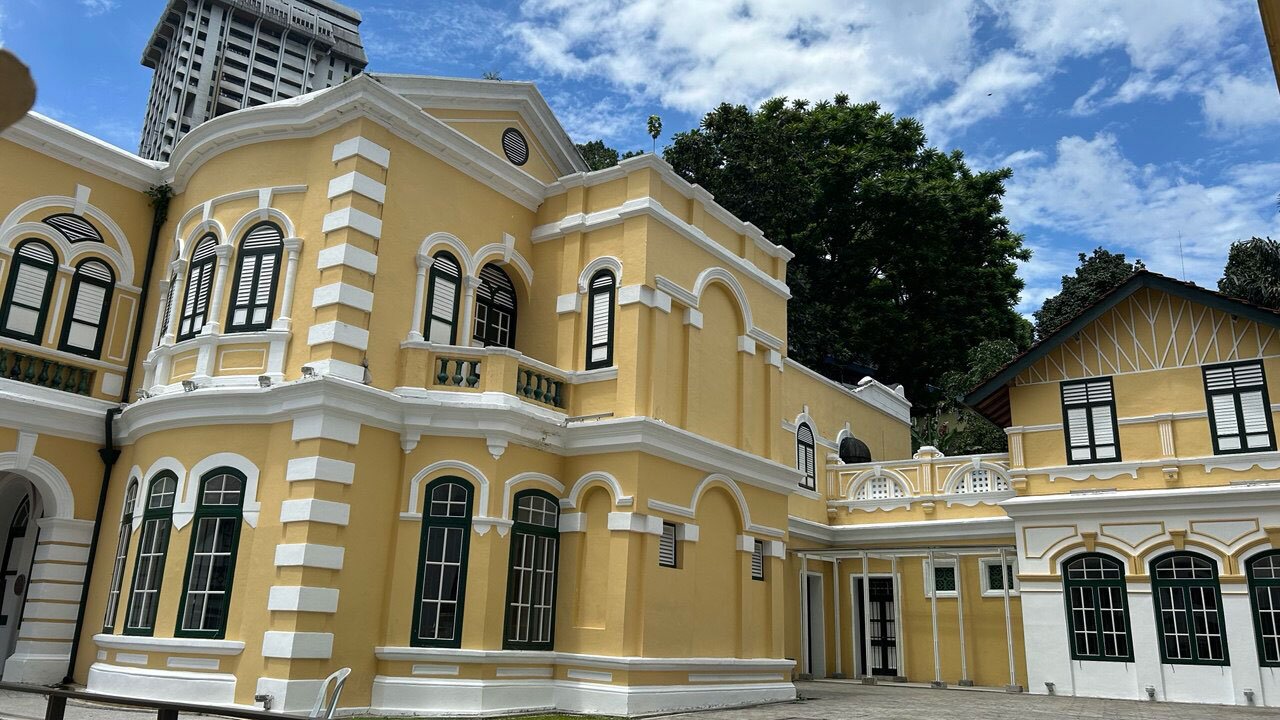
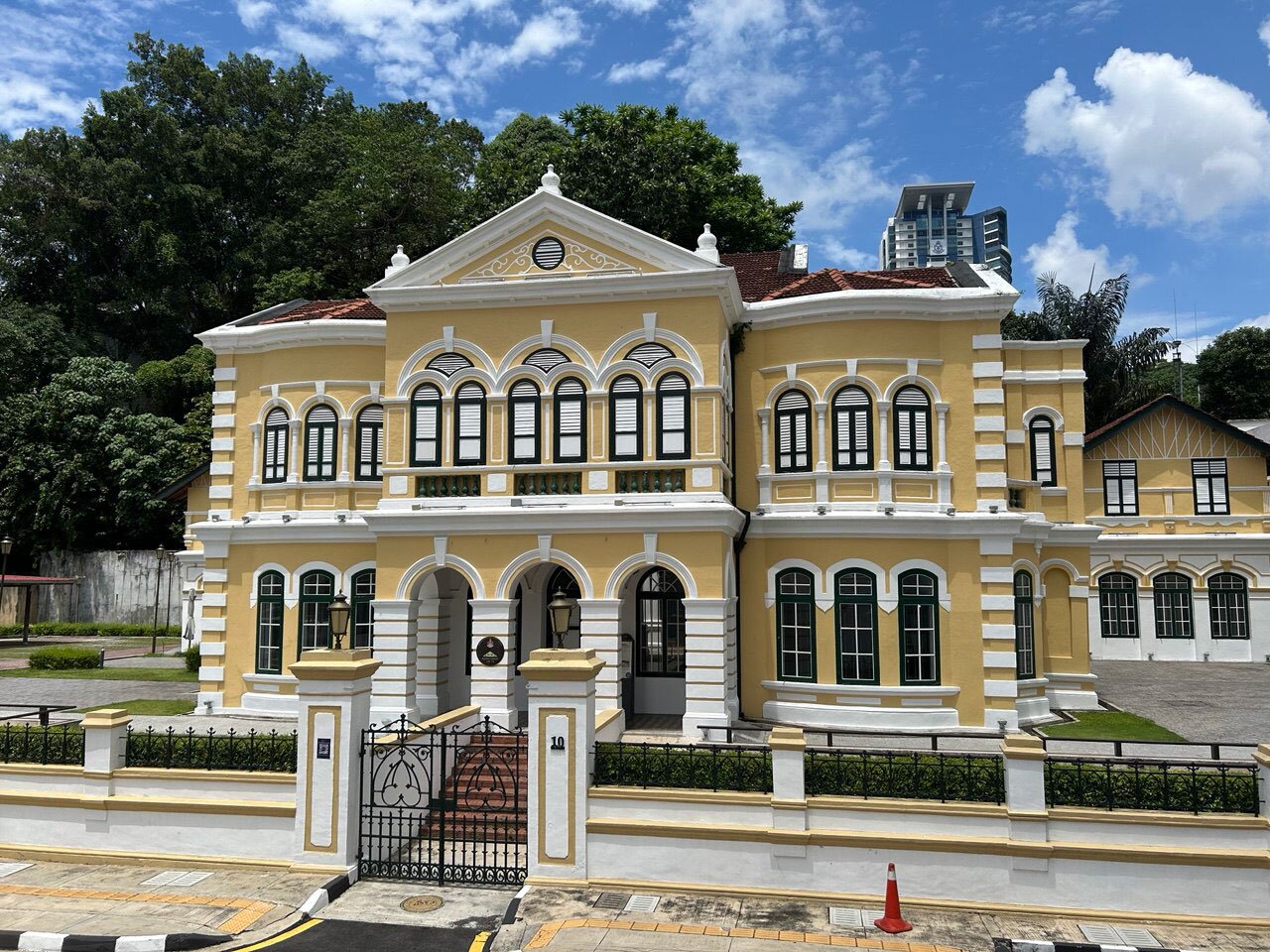
You may have heard of Rumah Tangsi. It’s the picturesque yellow and white colonial-era building that sits a stone’s throw away from Dataran Merdeka. Nowadays, it’s mainly used as an events space, playing host to weekend bazaars, weddings, or corporate events.

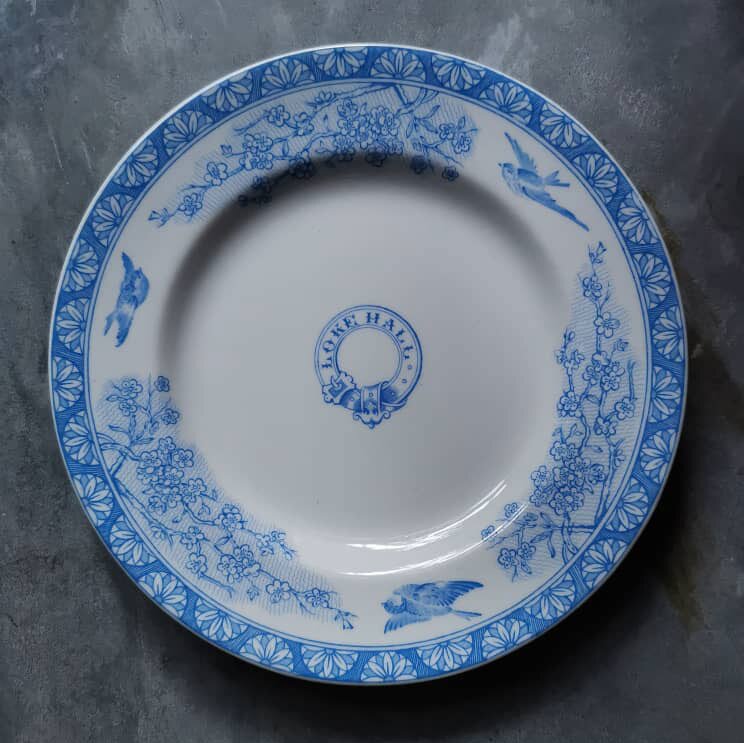
In a way, this is continuing a tradition set by its original owner – renowned late businessman Loke Chow Kit – who once hosted grand dinner parties and social gatherings for his family, friends, and colonial officials in the building once known as Loke Hall. Loke even customised all his personalised tableware from Britain with a “Loke Hall” insignia imprinted on them.
In their meticulously researched book, The Legacy and Heritage of Loke Chow Kit, authors Junn Ng and Ch’ng Symn explore the life and works of Loke, with Loke Hall being one of the objects of discussion. This article draws on much of the research carried out by Ng and Ch’ng in their book.

“The process of getting to know more of Kuala Lumpur’s historical landscape was rewarding,” Ng says regarding the process of conducting research for the book. Ng is a registered architect and conservator who serves as an expert in the architecture and landscape committee of the National Heritage Council. She has earned prominent conservation projects including the Malaysian Parliament House, and is also involved in many heritage impact assessment studies and heritage capacity buildings throughout Malaysia.

“I was born and raised in Penang, and my grandmother was from the old aristocratic Cheah family. Throughout the process, I was honoured to build connections with local communities, and uncover hidden stories that were related to Chow Kit’s business past, his families and other prominent personalities in the history of Kuala Lumpur. And most of all, the unexpected discovery of Chow Kit’s and my family connection in the motor vehicle business in Penang during the early 20th century.
Loke Chow Kit lived from 1860 to 1918 and was a Straits-born Chinese merchant. Despite being Asian, he was able to thrive in the high society of the time, rubbing shoulders with royals and high-ranking British officials.
Loke was the first Chinese man to build and own his own mansion in the European-dominated community of early 20th century Kuala Lumpur. He was known for his active philanthropy, with the Malay Weekly Mail describing him as possessing a "liberal and broad-minded generosity" and noting that "no one ever appealed to Mr. Chow Kit in vain for assistance."

Loke Hall was built when Loke’s company, Chow Kit & Co, was expanding rapidly, having become the city’s leading general and department store. Loke had decided to move his family and office to the town centre, and the mansion was built to achieve this. The 12,465sqft mansion faced the Selangor Club, the Church of England and other landmarks while also following Chinese feng shui in having its back to the hills and face to the river, which was believed to bring health and prosperity.
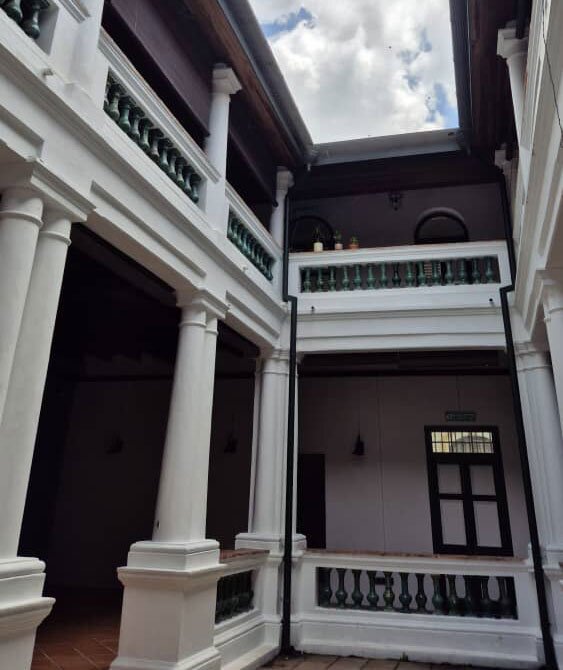
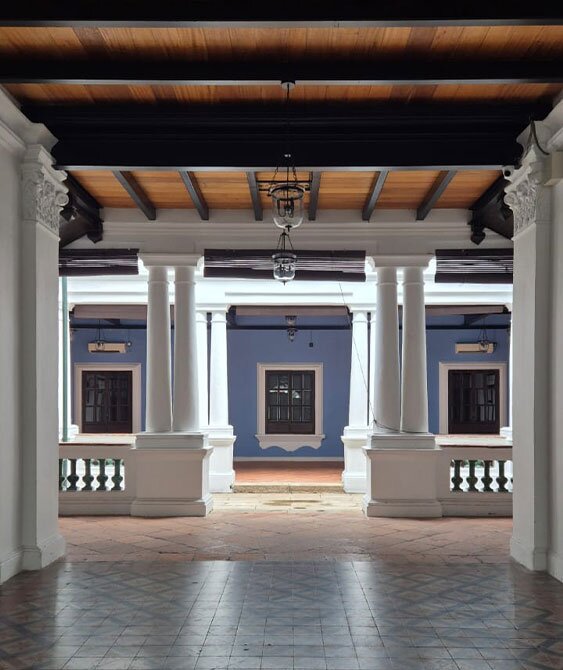
Loke Hall was designed in the Straits Eclectic style, displaying neo-classical and renaissance elements. Designed with three sections, the central section projects out, forming a porch. The mansion is highly symmetrical with two identical staircases and an open courtyard serving as its core. This courtyard, like in many aristocratic Chinese villas of the time, was built with feng shui in mind as well, welcoming direct sunlight into the heart of the home. This was believed to accumulate positive qi, which would help accrue wealth and preserve health.

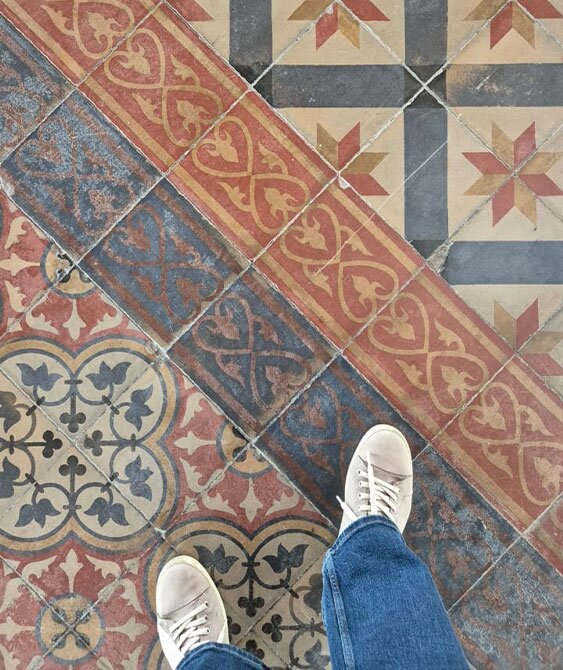
“Visitors to the house should look for this unique central courtyard,” Ng says. “The decorative encaustic floor tiles are as old as the building itself, dating back to 1903! (Encaustic tiles are ceramic tiles in which the pattern on the surface is not a product of glaze but of different colours of clay). If you spot blue walls, that was once the dining and family area for the Loke family.”

Ng is a fan of just about every aspect of this building. She especially likes the classical architectural ornaments on the façade that adapt both Western and Chinese elements.

As to who Loke commissioned to design the mansion in 1903, there are competing theories. Some suggest that due to his loyalty to the Straits, he probably hired a Straits architect, or WH Nicholas, who was an acquaintance. It is also possible that Loke commissioned Swan & Maclaren, the foremost architecture firm in Singapore at the time.

Since its inception, the mansion has gone through a long list of tenants. When Loke relocated his family to Penang in 1908, the mansion was converted into the Empire Hotel, starting a long trend of tenancy by various hotels. During the Japanese occupation of Malaya, the mansion was confiscated to serve as the Japanese Military Hotel, and after the war it was reclaimed by the British to serve as the headquarters mess for the Second Guards Brigade.

After Malaya gained its independence, Loke Hall was reopened as the Peninsula Hotel. It gained new life, becoming a popular spot for politicians and non-profit organisations as well as housing a famous Chinese restaurant. However, by the 1970s, the hotel was no longer able to remain profitable, and closed down.

In the years that followed, the building fell into disrepair and was even slated for demolition to make space for a high-rise development at one point, although this did not end up happening.

In 2012, City Hall took back the building, inscribing it as a heritage building, renaming it Rumah Tangsi (named for the road it is situated on), and undertaking efforts to conserve the then-dilapidated mansion in 2014. “Tangsi” is the Malay word for barracks, a reminder of the area’s colonial past when the road – then called Barrack Road – was home to police barracks and armoury buildings.

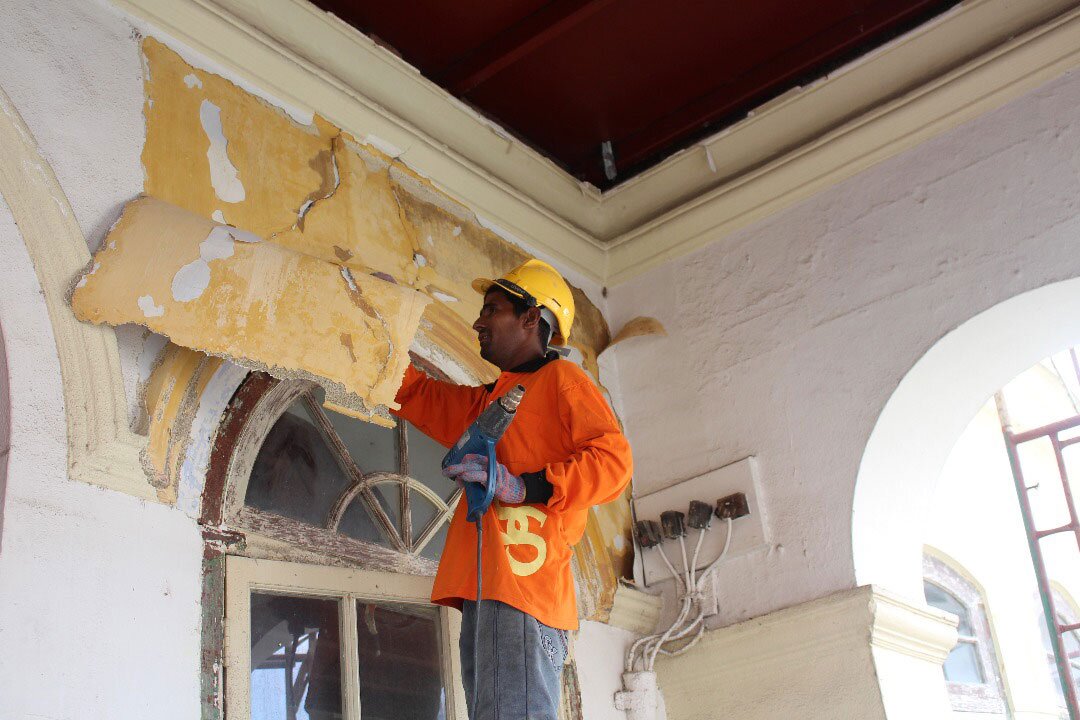
The efforts undertaken to restore the mansion back to its original glory were extensive. The dimensions and measurements of the building’s various aspects were drawn up, and traditional materials were obtained where possible to accurately replace any required parts.
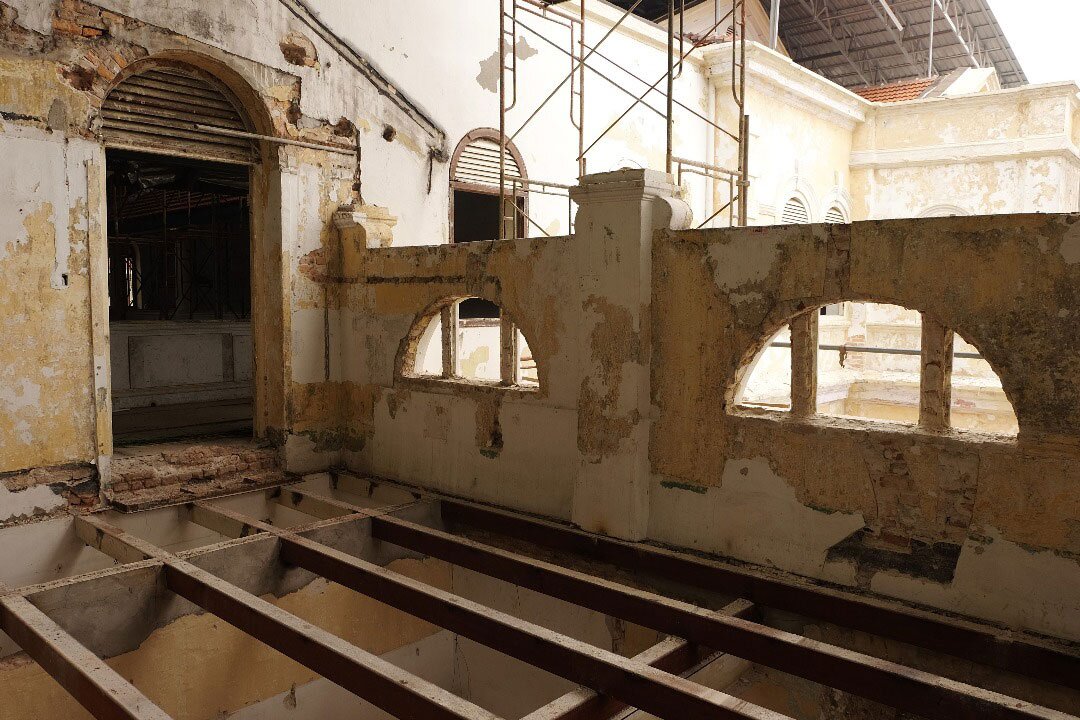
Over its many incarnations, modern materials were used to repair Loke Hall, but these compromised the original building system by blocking its natural breathability. Hence, incompatible additions, such as steel floor plates and concealed electrical wiring, were removed during conservation efforts. Moisture-trapping acrylic paint and overgrown vegetation were also removed, and water ponding issues throughout the building were addressed.
The original roof tiles were carefully removed; those in good condition were cleaned and reused, while the rest were replaced with tiles salvaged from a 1960s school building. The first-floor open yards, which had been covered for decades, were reopened and restored to their original state. The restoration also provided an opportunity to reintroduce timber floorboards, replacing the corroded steel floor plates that had previously been used.

“It was very challenging to remove the very heavy and thick steel floor plates and restore the timber floor boards, adjusting them to make them level with the existing stairs. Prior to that, the feeling was like walking on a ship!” Ng remarks with a laugh.

There were myriad other changes carried out on the building, even restoring a missing staircase and railing panels. By the end of the restoration process in 2017, Loke Hall had been born anew as Rumah Tangsi, reviving the antique beauty of the old mansion.
Now under the management of Seetizens Lab with City Hall (DBKL), Rumah Tangsi has enjoyed new life as an event space dedicated to hosting artistic and cultural events, with over 200 such events hosted since its restoration. Rumah Tangsi is a great example of the conservation of our nation’s heritage, ensuring that a piece of our history continues to be appreciated by future generations.

“Many buildings in various parts of the country deserve to be conserved just like Loke Hall was,” Ng says. “It is important to conserve them so that they can be living testimonies to our nation’s history and serve as inspiration for future generations.”
Where is it and how do you get there?
Rumah Tangsi is located at 10, Jalan Tangsi, Taman Tasik Perdana, 50480 Kuala Lumpur, Wilayah Persekutuan. If you're driving, parking is available at the Dataran Merdeka underground carpark, just a five-minute walk away. Alternatively, you can take the LRT to Masjid Jamek station, followed by a ten-minute walk to the building.

For events and announcements on what’s on at Rumah Tangsi, check out its Instagram (@rumahtangsi).

Discover more stories

Ooops!
Generic Popup2