Sofia Shamsunahar | 3 April 2025
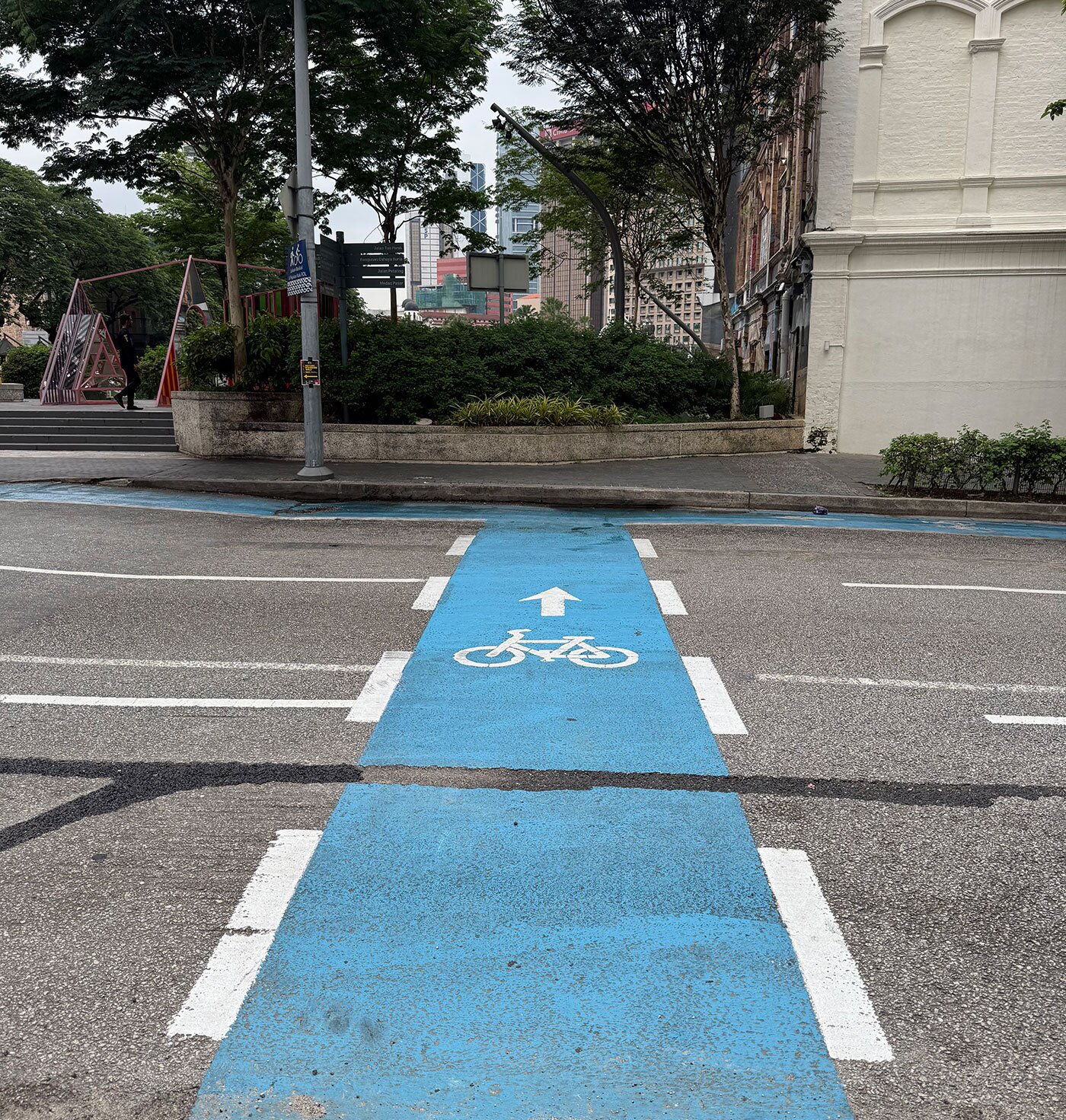
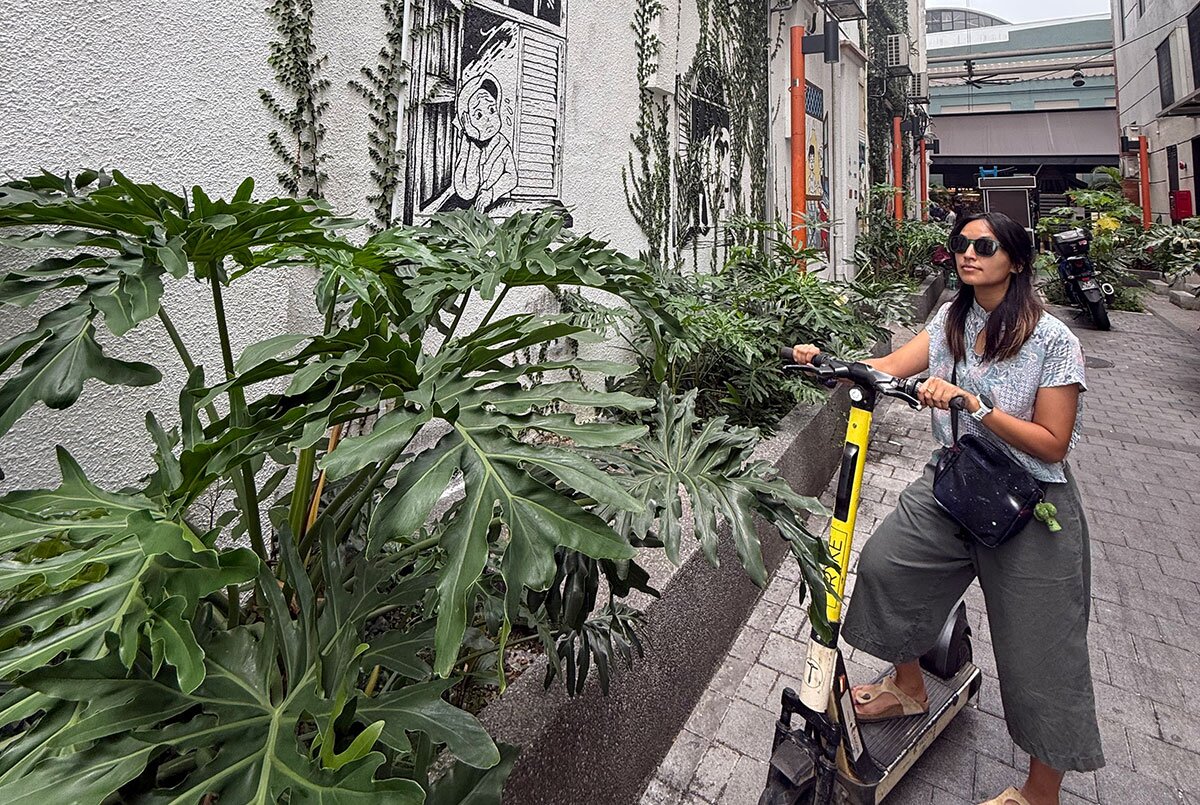
Why use an e-scooter on this journey, you may ask? Well, the Central Market or Pasar Seni area is usually congested with traffic, so I managed to beat some of it by riding the scooter on bike lanes, pavements and alleys. I could have obviously gone on foot, but I wanted to avoid the long distance sweaty walks in the scorching sun… and the scooter seemed like a fun option.
Unfortunately, the area still has some way to go to be completely scooter-friendly, what with vehicles parked on the bike lanes, pedestrian traffic lights not always working and no continuous path to ride on. However, if you’re willing to think outside the box when riding the route, it’s definitely worth a try!
TRYKE is the first and only Malaysian e-scooter service provider, with a mission to get more people outdoors and exploring. You can locate its bright yellow scooters on its app.
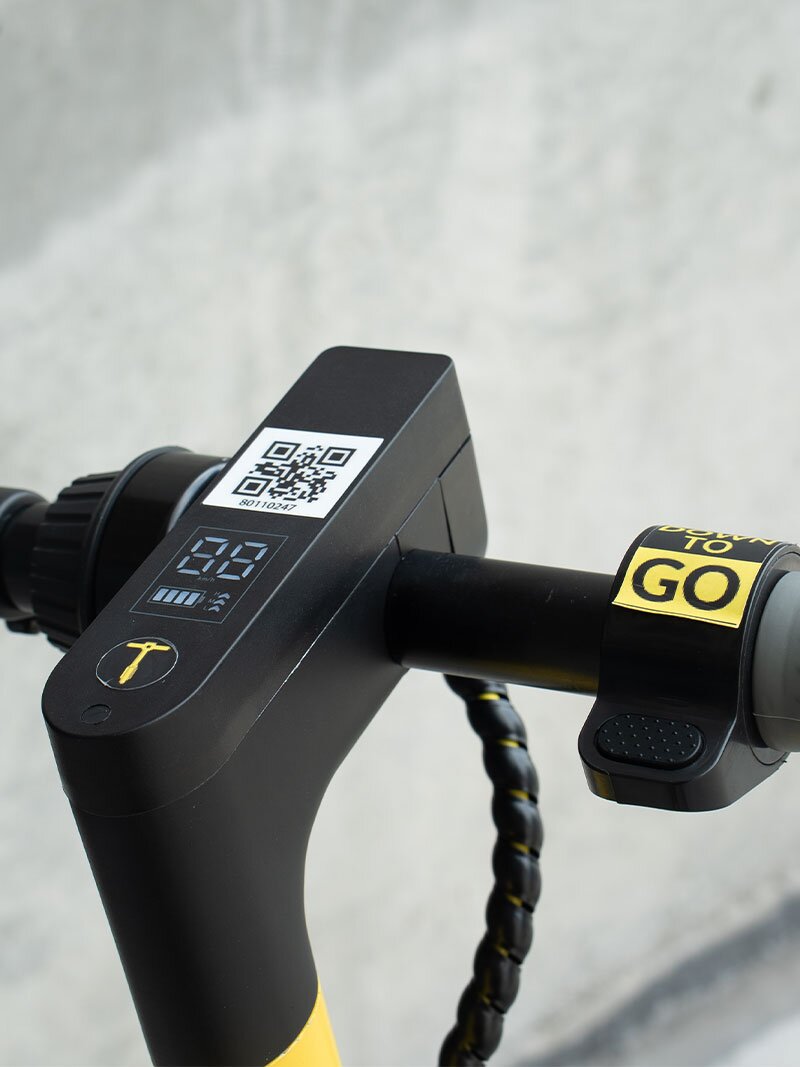
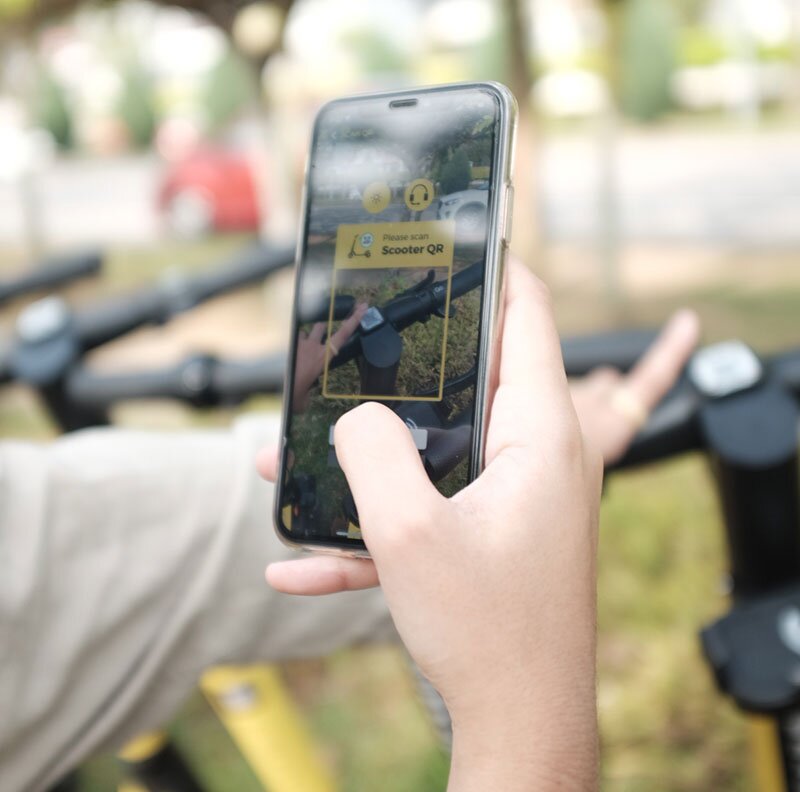
To rent a TRYKE, all you need to do is download the Tryke app, register payment details, locate a scooter through the app and then walk up to a scooter, scan the QR code on the handlebars with your phone, and go for a ride. If you’re with someone, you can add your date’s scooter through your app as well!
For the Kuala Lumpur area, TRYKE charges just RM1 to start your ride, and then 0.60 sen per minute. You can buy a 90-minute package at RM29.
Unlike a tour group, you have ownership of your trip and so you can take your time experiencing each heritage site without being rushed.
Enjoy your TRYKE and stay safe! Here’s our suggested route. Have fun exploring!
Kuala Lumpur Railway Station
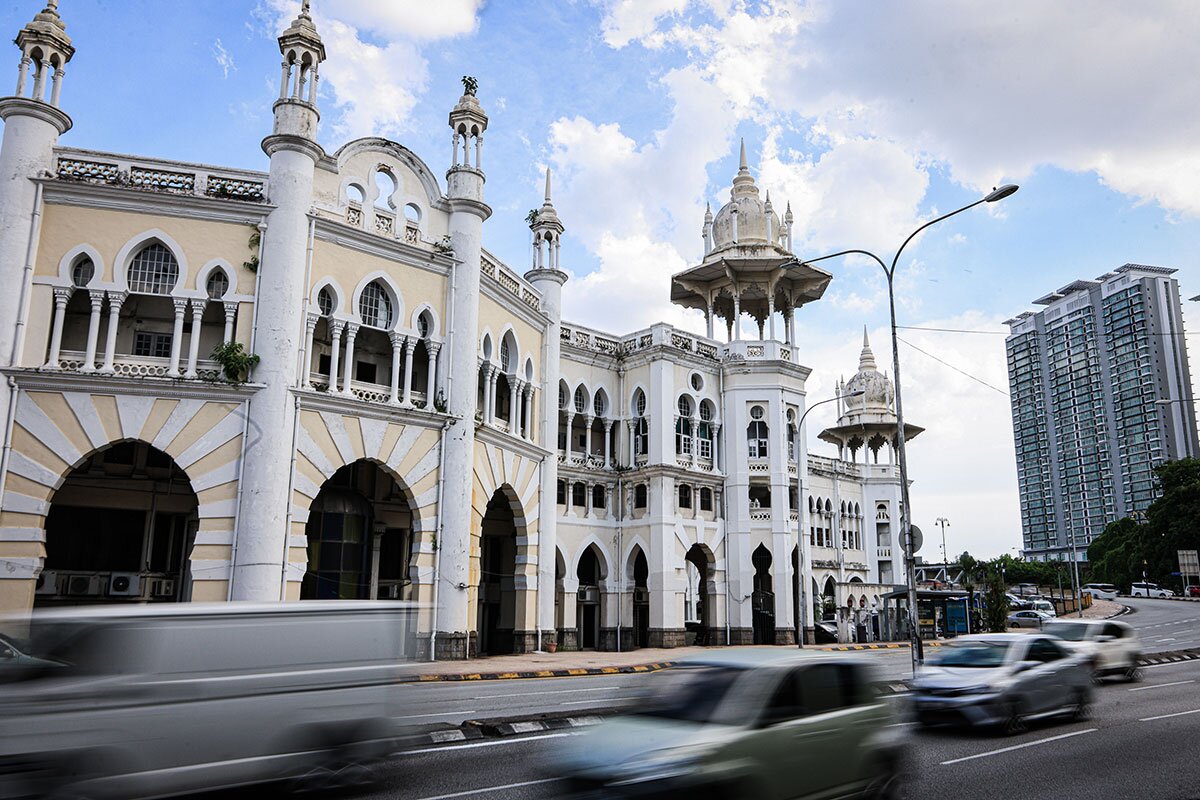
The Railway Station was the first stop on our route, located on Jalan Sultan Hishamuddin. The pretty colonial building was built in 1892, and remains a functioning train station with rides up North to Perlis (the Malaysian state bordering Thailand) and down South to Singapore. I was shocked to find out it cost RM23,000 to build – a hefty sum in the early 1900s no doubt! Arthur Benison Hubback, a British Architectural Assistant to the Director of Public Works, undertook the design of the station.
Dayabumi Complex
The second stop on our TRYKE route was the Dayabumi Complex, which is one of Kuala Lumpur’s earliest skyscrapers, launched in 1984, which boasts some amazing Modern Islamic, Moorish and International architectural styles. You can get to Dayabumi from the Kuala Lumpur Railway Station via the River of Life path, a wide path that hugs the main river which runs through the city, and view it across the river by the Central Market. The Dayabumi Complex consists of the 35 storey-Dayabumi Tower, the General Post Office (Pos Malaysia), a shopping complex which was demolished in 2015 pending redevelopment, and a connection to the KTM Komuter station.
Dayabumi Riverbanks (River of Life)
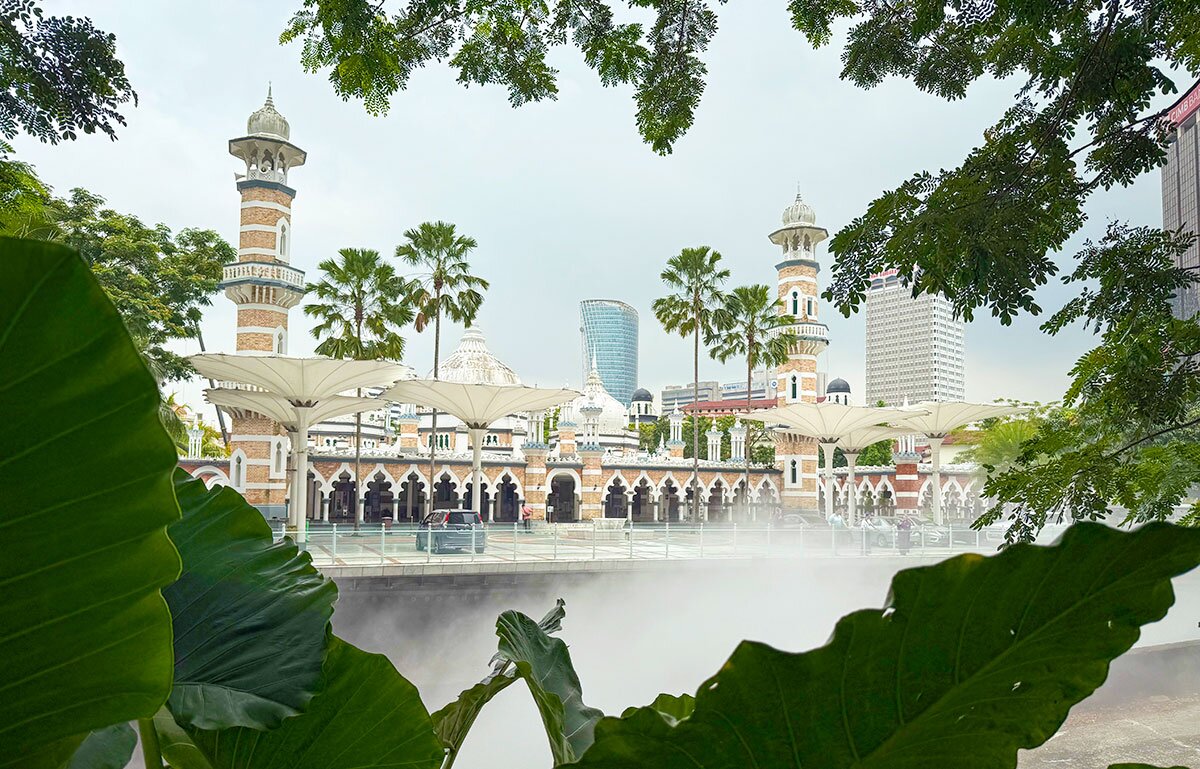
You can use the River of Life pathways as a way to get to different spots on our route. The River of Life is a government initiative to revitalise the rivers that run through Kuala Lumpur. The project aims to clean and help the quality of the water whilst beautifying the river and its surroundings. The project is the reason you can see a boardwalk, beautiful tropical plants, koi fish ponds, murals and cafes along the water. The River of Life helps frame Masjid Jamek wonderfully, as in the evenings you can get a view of the mosque with a dramatic blue mist from one of the bridges over the river. Getting around on your TRYKE is easy here as there is a wide foot path around the river in the Central Market area.
Central Market
Built in 1888, Central Market was first a wet market. Now, it’s a centre for Malaysian culture, arts and crafts. After going through a revamp in 2024, the market’s interior is now a funky and fresh mix of traditional and modern Malaysian art and culture, showing off an array of new shops as well as ones which have stood there for years. Visitors can try batik painting and various other workshops, such as an upcycling workshop with ekha hub. You can also try an array of Malaysian childhood goodies from Pasar Besar, a quirkily decorated Malaysian-specific grocery store, and send postcards off to loved ones on-the-spot at several Malaysian arty shops such as Loka Made. You can shop for pretty much every item you can think of in Batik (shirts, aprons, scrunchies, pillow cases and more!), wood carvings, jewellery, gadgets and more. Central Market is a fun way to spend a day, and to experience our country's crafts and culture.
Former Supreme Court Building
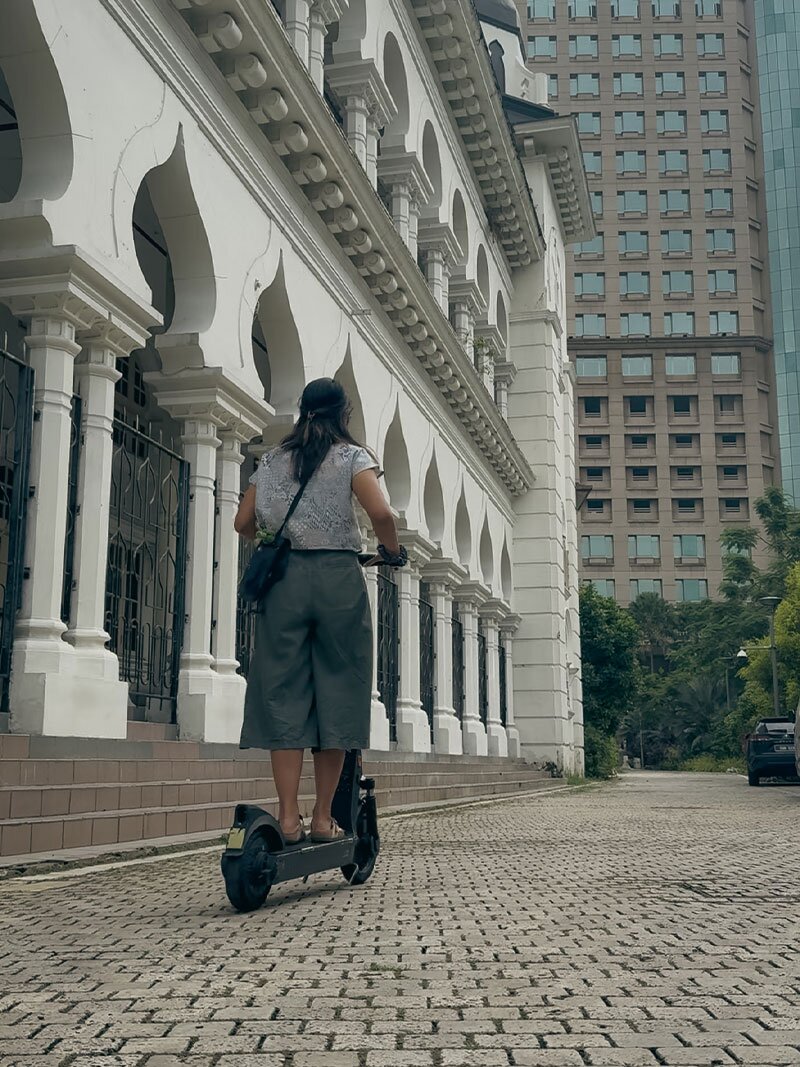
Ride to the former Supreme Court (often referred to as the Old Kuala Lumpur High Court) building along the alleyways next to Central Market. According to the official portal of the State Court of Kuala Lumpur, the Federal Court and the Kuala Lumpur High Court operated here in 1978. This beautiful heritage building sits next to Gombak River. The architect behind this building is once again, AB Hubback. Situated on Jalan Raja, next to Dataran Merdeka (Independence Square), the building was constructed in the Indo-Saracenic style similar to the Sultan Abdul Samad Building closeby.
Masjid Jamek
Right next to former Supreme Court is the iconic Masjid Jamek, which sits on the confluence of the Gombak River and Klang River, and can be accessed via Jalan Tun Perak. One of the oldest mosques in Kuala Lumpur, Masjid Jamek – officially Sultan Abdul Samad Jamek Mosque – was built in 1901. The architecture of the mosque is a combination of Moorish, Islamic and Mughal; designed once again by AB Hubback. Masjid Jamek served as Kuala Lumpur's main mosque until the national mosque, Masjid Negara, was built in 1965. Park your TRYKE and visit the mosque or just walk around it to explore the intricacies of its architecture. Be sure to follow the proper dress code. Women must cover their head, body, legs and arms. Men should have their legs covered. The mosque can provide robes and scarves if needed.
Discover more stories