Learn the ABC’s of South-East Asian Art at Muara Arts Gallery

DANIAL ISHAK | 2 November 2026

Front view of Muara Arts Gallery, located in Medan Pasar, which adds another dimension to the ongoing transformation of Kuala Lumpur's historic city centre, where heritage buildings are finding new purpose as cultural and public spaces. – Photos: DANIAL ISHAK

HOUSED in six restored early 20th-century shophouses, Muara Arts Gallery opened its doors on Nov 1 for the first time to eager visitors, who strolled through its pavilion with the clock tower reminding us of how much Kuala Lumpur has changed since it was first built – history paved in every crevice.

The opening of Muara Arts Gallery adds another dimension to the ongoing transformation of Kuala Lumpur's historic city centre, where heritage buildings are finding new purposes as cultural and public spaces.

Located at Medan Pasar, an area closely tied to the city's early commercial development, the gallery brings contemporary art into a historic setting, creating fresh reasons for people to return to this part of the city. Its focus on art, cultural exchange and the activation of heritage spaces also aligns with Warisan KL's strategic purpose of revitalising the historic city centre, strengthening its cultural identity and making it a more vibrant place for people to experience and enjoy. Alongside other restoration and cultural initiatives in the area, it reflects a growing effort to preserve Kuala Lumpur's built heritage while keeping its historic districts relevant and active.

Upon entering, the newly unveiled gallery space leads with a ticketing counter, followed by a seating area, along with its gift store, overlooking the Gombak and Klang rivers. Visitors head to Level 2 where the exhibition starts.

Much like other restorations that have been revitalising KL’s hotspots (including Seri Negara and Bangunan Sultan Abdul Samad), Muara Arts has kept much of its old charm while adapting to modern gallery/museum level facilities and flow – minimalist, with earthy-toned complements, suitable for the stature it looks to convey to visitors.


A signature piece – Zai Kuning's 'from, we are home and everywhere' – hangs gallantly between Levels 1 and 2 of Muara Arts Gallery.

Spanning approximately 1,858sqm, with high ceilings and warm natural light illuminating the space, Muara Arts aims to broaden access to contemporary art and encourage cultural exchange, and its inaugural exhibition will literally spell it out for you.

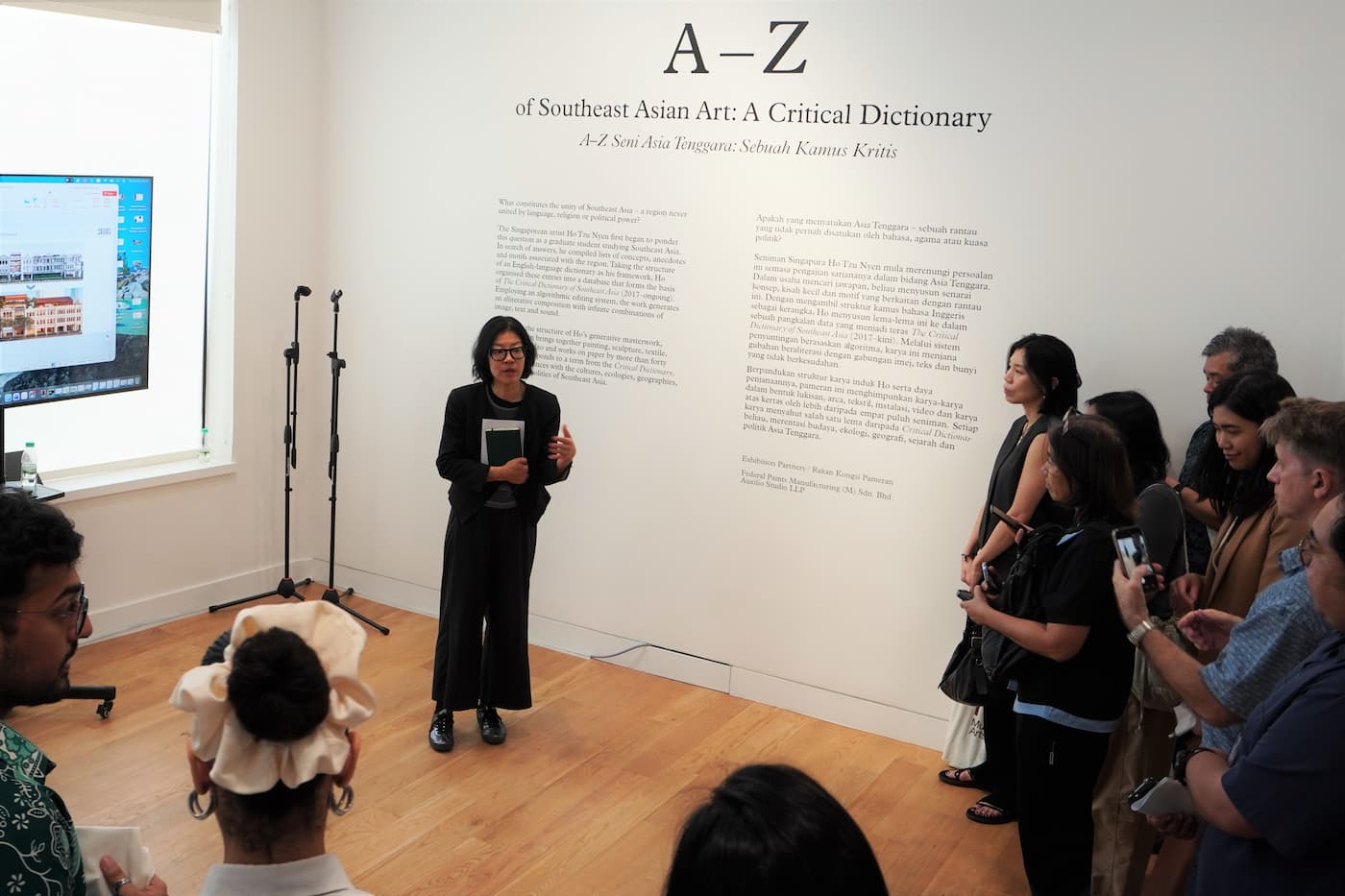
Drawing inspiration from Singaporean artist Ho Tzu Nyen’s ongoing generative work The Critical Dictionary Of Southeast Asia (2017–ongoing) and arranged alphabetically from A to Z, the exhibition explores the region's interconnected but diverse history, identity, culture and politics, as well as challenging conventional definitions of South-East Asia, and opening up space for new perspectives.

Curated by Lydia Yee and Zhen Feng Ang, the former shared the vision of Muara and why Kuala Lumpur, in a broader sense, is having a strengthened appreciation for arts and culture.


Lydia Yee, Consultant Artistic Director shares the central theme of ‘the A- Z of Southeast Asian Art’ exhibition during a recent media preview of Muara Arts Gallery.

“South-East Asia is an incredibly dynamic region for art today. It is home to so many talented artists and curators, and the art ecosystem now offers the conditions for them to thrive. The audience for art is young, enthusiastic and open to new experiences,” said Yee, Consultant Artistic Director, during a media preview of Muara Arts Gallery on Oct 30.

Yee is an independent curator, art historian and museum consultant, who has served as chief curator at Whitechapel Gallery, curator at Barbican Art Gallery and senior curator at The Bronx Museum of the Arts.

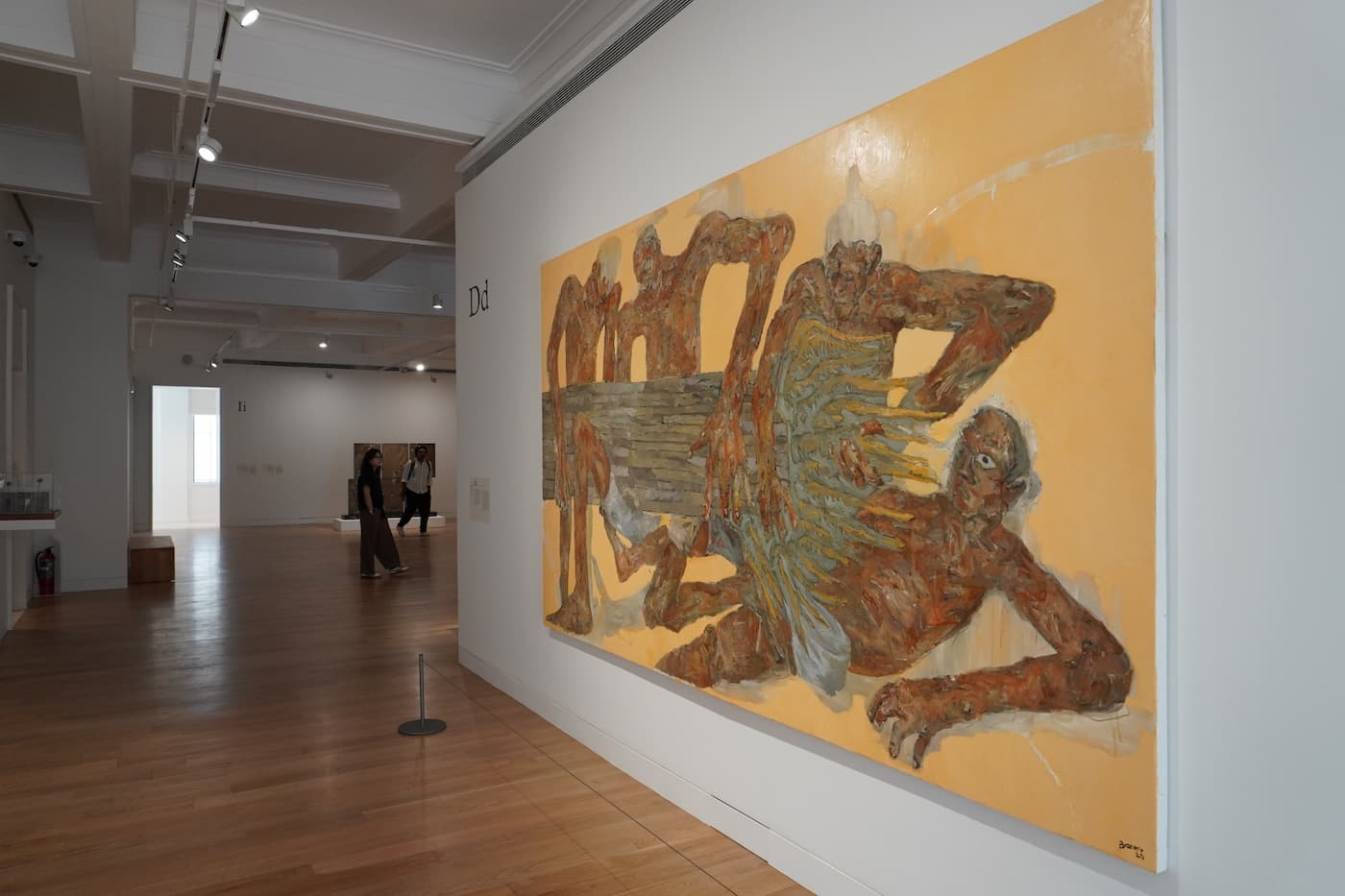
The exhibition brings together work from over 40 artists working across a multitude of different disciplines, including textiles, installation, video, painting and sculpture.

“We started with a list of Ho Tzu Nyen’s dictionary terms and a list of artists and artworks from across the region, which a group of researchers and writers helped us to identify. My co-curator and I had the task of creatively assembling a puzzle – fitting artworks to terms and meeting with artists to see if they were accurate to our reading of their work. In that process, we discovered that some artworks seem to naturally complement each other side by side, while others were more contrasting, something that would evoke different interpretations for the audience,” she added.

From “A for Animism” and “A for Archipelago” to “B for Buffalo”, “C for Corruption” and ultimately “Z for Zoomorphism”, the exhibition moves across the alphabet to reveal the many ways South-East Asia can be understood, questioned and imagined.

Malaysian artists that are featured in this exhibition include Wong Hoy Cheong, Yee I-Lann, Pangrok Sulap, Izat Arif, Anne Samat, Marcos Kueh, Nadiah Bamadhaj, Sharon Chin, Tan Zi Hao and the late Nirmala Dutt (1941–2016).

A look at one of the featured artists' work by Bornean collective Pangrok Sulap and (below) Anne Samat. Rather than offering a definitive account, the exhibition embraces the dictionary as a space for multiple perspectives.


Meanwhile, regional highlights include Agus Suwage (Indonesia), Navin Rawanchaikul (Thailand), Ho Tzu Nyen (Singapore), Pacita Abad (Philippines-US) and Isabel and Alfredo Aquilizan (Philippines). Beyond these established names, the exhibition offers plenty to discover, with each work engaging with a term reflecting the region’s culture, ecology, geography, history or politics.

That regional reach extends to the artists’ own lived experiences, with the exhibition deliberately making room for those working beyond their home countries.

“It was important for us to include diasporic voices as we live in a transnational age. Nearly a third of the artists don’t live permanently in their countries of origin for various reasons. Some have fled wars and other conflicts or emigrated for studies, economic opportunities and personal relationships – but they maintain strong ties to their homelands. Others divide their time between two places. The diasporic condition reflects the realities of life today,” Yee shared.

This convergence of artists and ideas is precisely what Yee and the gallery were built to hold.

“This is a remarkable moment for art in South-East Asia, and Muara Arts is now open to the public to explore and be a part of its continued evolution. Like the confluence of rivers from which it takes its name, the gallery is a meeting point; a place where artists from across the region, including those of the diaspora, can return, exchange knowledge and forge new collaborations,” Yee concluded.


Muara Arts began as a not-for-profit initiative of Creador Foundation, focused on modern and contemporary art, and is now overseen by the newly established Muara Arts Foundation, governed by an independent board of trustees.

Looking ahead, Creador’s Brahmal Vasudevan and Shanthi Kandiah have outlined plans that include a park, restaurants, retail outlets and the Muara Arts Theatre, slated for completion in 2029. In a significant development, Chris Lee, currently assistant chief executive of National Gallery Singapore, was recently reported to have been appointed CEO of both Medan Pasar Realty and Muara Arts, bringing his experience in the arts and cultural sector to the project starting mid December.
 
At Medan Pasar, the arrival of Muara Arts is another step in bringing new cultural life to a part of Kuala Lumpur where the city's history remains very much present.
 
‘A–Z of Southeast Asian Art: A Critical Dictionary’ runs till April 4, 2027 (Wednesdays to Mondays, 10am – 6pm), with a RM20 ticket entry.

Planning a visit to Muara Arts Gallery? Get your tickets here https://muaraarts.org/

Discover more stories

connect with us
follow us on
Ooops!
Generic Popup2