History, Architecture and New Experiences

ANN MARIE CHANDY | 11 February 2026

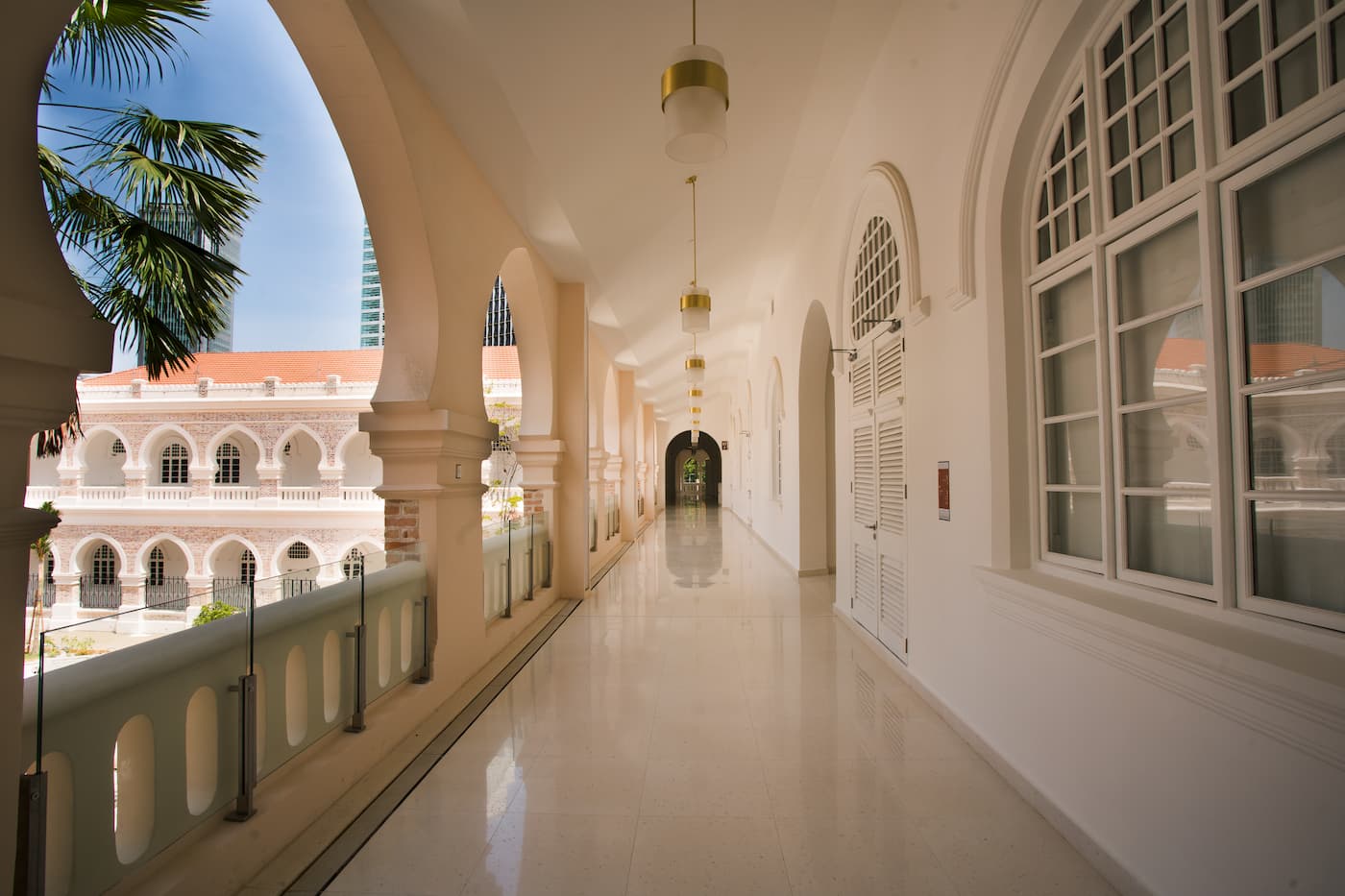
OVER the past week, Bangunan Sultan Abdul Samad has taken on a new life online. Social media feeds have been flooded with videos and reels of first-time visitors stepping through its doors – savouring the Moorish arches and tiled corridors, panning across newly opened museums, peeking into retail and craft spaces – Royal Selangor Gallery and KL City Gallery Gift Shop – and pausing, inevitably, for coffee at the Bakehouse by KLCG or Kaw Kaw Malaya. A building once admired from a distance is now being explored in real time, reframed through countless personal lenses.

Among the most captivating stops is the Balai Pertemuan on the first floor. Here, visitors slow down. Phones tilt upward, voices drop, and the scale of the space settles in. The inaugural exhibition, A City of Dreams: Kuala Lumpur 1820s–1974, unfolds as a visual and narrative journey through the city’s transformation – from modest riverine settlement to capital shaped by trade, migration and ambition. Archival images, large scale models, maps and stories chart how Kuala Lumpur took form, layer by layer, against the backdrop of a changing nation.
  
It is this mix of grandeur and intimacy – architecture that awes, stories that draw you in – that has made BSAS the talk of the town, and a place people are not just visiting, but soaking it all in.

For more than a century prior, BSAS stood at the edge of Dataran Merdeka, its copper domes and clock tower woven into the visual memory of the capital city. It is one of the city’s most photographed landmarks, a familiar backdrop to national celebrations, public gatherings and everyday moments alike.

Yet, the building remained just beyond reach for most people – admired from the outside, but largely closed to the public. That changed recently with the reopening of Block 1 of the BSAS Complex on Jan 31, following 11 months of careful conservation and restoration under Khazanah Nasional Berhad’s Dana Warisan, an initiative within Warisan KL.   
   
Officiated by the Yang di-Pertuan Agong Sultan Ibrahim, and witnessed by Prime Minister Dato’ Seri Anwar Ibrahim, Cabinet Ministers and leaders from across the public and private sectors, the reopening marked more than the completion of a conservation project. It signalled a shift in how heritage is experienced in the heart of the capital – from monument to meeting place. 

The official reopening of Block 1 of the BSAS Complex on Jan 31, was officiated by the Yang di-Pertuan Agong Sultan Ibrahim, with Prime Minister Dato’ Seri Anwar Ibrahim (right) and Dato’ Amirul Feisal Wan Zahir, Managing Director of Khazanah (left). 
Conservation with Purpose

The restoration of BSAS Block 1 forms part of Warisan KL, the national initiative launched by the Prime Minister in April 2025. Bringing together government agencies, GLCs, GLICs, corporate partners and the wider community, Warisan KL aims to reimagine and revitalise Kuala Lumpur’s iconic heritage assets as living, relevant spaces that support cultural pride, tourism and long-term economic growth – aligned with the principles of Ekonomi MADANI.
   
In his speech during the launch, Dato’ Seri Anwar said that this effort is part of the Government’s strategic approach to revitalising Kuala Lumpur’s key heritage sites as catalysts for culture-led urban economic development. “Heritage,” he said, “is not viewed as a burden of the past, but as a strategic asset capable of driving tourism, energising the creative industries, creating employment opportunities and strengthening the local business ecosystem.”

Under Khazanah Nasional Berhad’s stewardship, the BSAS restoration project was guided by the building’s status as a Category 1 National Heritage site, with works carefully designed to safeguard its architectural character while improving safety, accessibility and visitor experience.
Opening Doors

Block 1 marks the first completed phase of the wider BSAS Complex restoration, and for the public, it represents something great – the chance to step inside a building that has shaped national history.

During the launch Dato’ Amirul Feisal Wan Zahir, Managing Director of Khazanah thanked the Government of Malaysia for entrusting Khazanah with the restoration of the BSAS Complex.   
   
“The project demonstrates the value of strong public-private collaboration and synergy under the Warisan KL banner. Beyond conserving the building, our focus is to activate BSAS as an inclusive and living public space that is accessible to all, and one that contributes to Kuala Lumpur’s vibrancy and long-term growth. The timely re-opening of BSAS supports Visit Malaysia 2026 and aims to generate broader spillover effects to the local economy and across tourism, retail and logistics.”   

This approach reflects a broader conservation philosophy: preservation is not about freezing buildings in time, but about ensuring they continue to serve the city and its people in meaningful ways.
A Wider Heritage Landscape

The reopening of BSAS Block 1 is one milestone within a much larger effort. Under Warisan KL, Khazanah has been entrusted with the preservation and rejuvenation of significant historic buildings, including Seri Negara and Carcosa at Bukit Carcosa, as well as the broader BSAS Complex, which includes the former Kuala Lumpur High Court, Panggung Bandaraya, the old FMS Survey Office, Pejabat Pos Lama and the National Textile Museum.   

An allocation of RM600mil has been committed to this initiative, with restoration works across the remaining buildings progressing in phases over the coming years. Planned enhancements include a pedestrian bridge linking Seri Negara and Carcosa to the Perdana Botanical Gardens Kuala Lumpur, further strengthening physical and experiential connections across the city’s heritage precincts.   
     
Together, these projects reflect an ambition to position Kuala Lumpur not just as a modern capital, but as a city where history remains visible, accessible and actively lived.
     
For decades, BSAS has been a familiar presence in national imagery – appearing in textbooks, postcards and televised celebrations. With the reopening of Block 1, it begins a new chapter as a space to be entered, explored and experienced by the public.
      
Opened to visitors earlier this month, exactly one year after restoration works began, the galleries welcome the public daily from 9am to 6pm, with complimentary admission to the Kuala Lumpur City Gallery for the first month.

Through Warisan KL, the soul of the city is being gently restored, weaving heritage, history, culture, the arts and inclusivity back into a shared sense of national pride – open for locals and international visitors alike to discover.
While you’re there, don’t just walk through – linger. Here’s what to look out for:

Confluence Hall (Level 1)
History gets a glow-up here. City of Dreams unfolds in five richly layered chapters framed by the Selangor Sultanate, charting Kuala Lumpur’s journey from muddy river confluence to modern metropolis. Informative, yes – but also surprisingly cinematic.
The Grand BSAS
Look up. Then down. Peer through and around. Suspended from the ceiling is a dramatic, upright and inverted scale model of the building itself – 12ft long, mirror-like and slightly surreal. It’s BSAS admiring itself, and it’s impossible not to stop and stare.
Hikayat Chamber
This one’s for the little (and secretly not-so-little) visitors. Malaysian folktales and rainforest lore come alive through immersive projections, soundscapes and animation, with Pak Utan leading the way. A gentle, magical pause in the middle of your visit.
Visionary Hall
Past meets future in a sensory-rich space of projection mapping, motion graphics and immersive sound. From speculative urban reimaginings to The Greater KL Show and a miniature skyline featuring Merdeka 118, The Exchange 106, KL Tower and more – this is KL dreaming forward.
Royal Selangor Gallery Exhibition
From a family pewter workshop founded in 1885 to a global design name – this exhibition traces Royal Selangor’s evolution with elegance and flair. Keep an eye out for David Beckham’s boot and the special-edition BE@RBRICK, because heritage can have a playful side too.
School of Hard Knocks
Got time on your hands? Literally use them. Sign up for a hands-on workshop and craft your own pewter plate – a souvenir you can actually say you made yourself.
BOH Heritage Exhibition
Tea lovers, this one’s for you. Archival photographs, early marketing materials and industrial artefacts tell the story of BOH and its place in Malaysia’s everyday rituals – one cup at a time.
Ang Eng
A Nyonya kebaya boutique with roots in Kedah and a KL presence since the 1970s. The craftsmanship is exquisite, the embroidery painstaking, and window-gazing alone is dangerously absorbing.

Discover more stories

Ooops!
Generic Popup2