A month that put Kuala Lumpur back in motion

3 June 2026

Framed by the iconic Bangunan Sultan Abdul Samad, a diverse crowd of festival-goers turned out in force for Wayang Women at KL Festival 2026, transforming one of Kuala Lumpur's most historic public spaces into a vibrant gathering place for culture and community. – Photo: Sunlee Khan/KL Festival/Think City

KUALA LUMPUR'S historic heart came alive in striking ways throughout May as KL Festival 2026 (KL Fest) turned heritage buildings, public squares, riverfronts and hidden alleys into stages for creativity, conversation and community.

For 26 days, spaces that form the backbone of the Warisan KL initiative – including Dataran Merdeka, Bangunan Sultan Abdul Samad, Central Market, Jalan Petaling, Jalan Sang Guna, Jalan Tun H.S. Lee and even long-forgotten buildings such as Pak Peng – welcomed thousands of visitors who experienced the city not merely as a backdrop, but as a destination in itself.

It was more than a festival. It was a demonstration of how culture can activate historic urban spaces, drawing people back into the city centre and encouraging them to rediscover Kuala Lumpur's layered stories.

Through performances, workshops, talks, exhibitions and community-led activations, KL Fest, organised by impact organisation Think City and Dewan Bandaraya Kuala Lumpur, reaffirmed the ambitions of Warisan KL – the national initiative to revitalise the capital's historic core.

One of the festival's defining images came during Jogeton at Dataran Merdeka. Despite persistent rain, audiences packed the historic square, dancing and singing along beneath the illuminated façade of Bangunan Sultan Abdul Samad. With guest star Aisha Retno, the concert captured the spirit of the festival itself – resilient, joyful and deeply connected to place. As umbrellas and ponchos dotted the crowd, one of Kuala Lumpur's most recognisable landmarks provided a dramatic backdrop, demonstrating how heritage spaces can become vibrant stages for contemporary culture.


With the iconic Bangunan Sultan Abdul Samad standing proudly in the background, Jogeton brought together a diverse crowd of Malaysians in a vibrant celebration of music, heritage and togetherness. The scene was a powerful reminder of how historic spaces can continue to unite communities in the present day. – Photo: Sunlee Khan/KL Festival/Think City

The festival's reach was not confined to grand stages. It spilled into alleyways and side streets through Warung Terang, River Of Life and heritage walk activations, where informal food and culture pop-ups turned forgotten corners into gathering points. Young audiences lingered long after performances ended, drawn as much by conversation and discovery as by the programmes themselves. The effect was subtle but significant: a renewed sense that the city belongs in motion, not just observation.

Artistic Director June Tan described this year’s edition as a dialogue between memory and future. “This year’s KL Fest theme, Memory and Tomorrow, invited both residents and visitors to experience how memories and culture continue to live and breathe through the city’s artists, communities and people,” she said. Tan pointed to the festival’s closing Marching Band showcase (pic below) at Dataran Merdeka as a symbolic passing of energy between generations – discipline meeting aspiration in a public square long associated with national memory.

KL Festival 2026 concluded with a Marching Band showcase at the end of May after 26 days of cultural programming across Kuala Lumpur's historic core. 

Pictured below at the closing ceremony are (from left) Artistic Director June Tan, Kuala Lumpur Mayor Datuk Fadlun Mak Ujud, Minister Hannah Yeoh, Chairman of the National Creative Industry Trust Foundation Datuk Zulkifli Ishak, President of AMG Federation Sehat Kurniawan Saiman, and Think City Senior Director Izan Satrina Mohd Sallehuddin. – Photos: Sunlee Khan/KL Festival/Think City


Across the city, participation took many forms. At Badan Warisan Malaysia’s Heritage Talks, discussions on architecture, conservation and history attracted unexpectedly strong audiences, drawing history enthusiasts, architects, filmmakers, journalists and students alike. The response demonstrated that public interest in architectural and historical discourse remains strong when these subjects are presented in engaging and accessible ways. Meanwhile, the organisation’s expanded programme of daily guided tours at Rumah Penghulu Abu Seman, a traditional Malay timber house, also saw encouraging attendance, offering visitors a closer connection our nation’s built heritage.
 
President of Badan Warisan Malaysia Lim Wei-Ling said that for BWM, participating in the KL Fest this year was an amazing experience.
KL Trails & Tales, presented by Mariana Isa (pic) and Maganjeet Kaur at Wisma Maran, offered a captivating journey through Kuala Lumpur's layered past, weaving together history, geography, architecture and the occasional myth into an engaging and richly textured narrative. – Photo: Ann Marie Chandy

“The response and turnout for our KL history talks series and Rumah Penghulu tours have been absolutely sensational. The talks on Yap Ah Loy, The Klang Wars, KL Trails & Tales, Sutan Puasa and Orang Asli of KL in particular drew record crowds.

“We were especially delighted to see that participation in the festival enabled us to reach new and more diverse audiences. It was exciting to see young people and teens sprawled on the floor listening to some of the talks because there were no seats left! We have also been really happy to see the number of Malaysian visitors for our tours of Rumah Penghulu more than doubled compared to an average month.”

The festival, according to Lim, has highlighted the genuine thirst amongst the community for cultural and historical activities, whilst simultaneously providing a platform for organisations like BWM to help people connect, engage and explore. We’re already looking forward to next year!

Elsewhere also, younger audiences gravitated towards interactive spaces such as the Museum of Science Arts and Innovation for Children (MoSAIC) and Hikayat Fandom, where storytelling and heritage interpretation merged into hands-on experiences. Children and teenagers moved easily between activities, suggesting a generational shift in how cultural programming is consumed – less passive, more participatory.

Hikayat Fandom’s Ninot Aziz said: “The KL Festival saw a record number of visitors to our corner at GMBB. Both the Balai Gema Hikayat and May Storytelling Fest received full house attendance during performances and continuous flow of visitors during weekdays. More than that, we were happy to give our visitors a unique memory, a piece of Malaysia’s Hikayat to take home.”

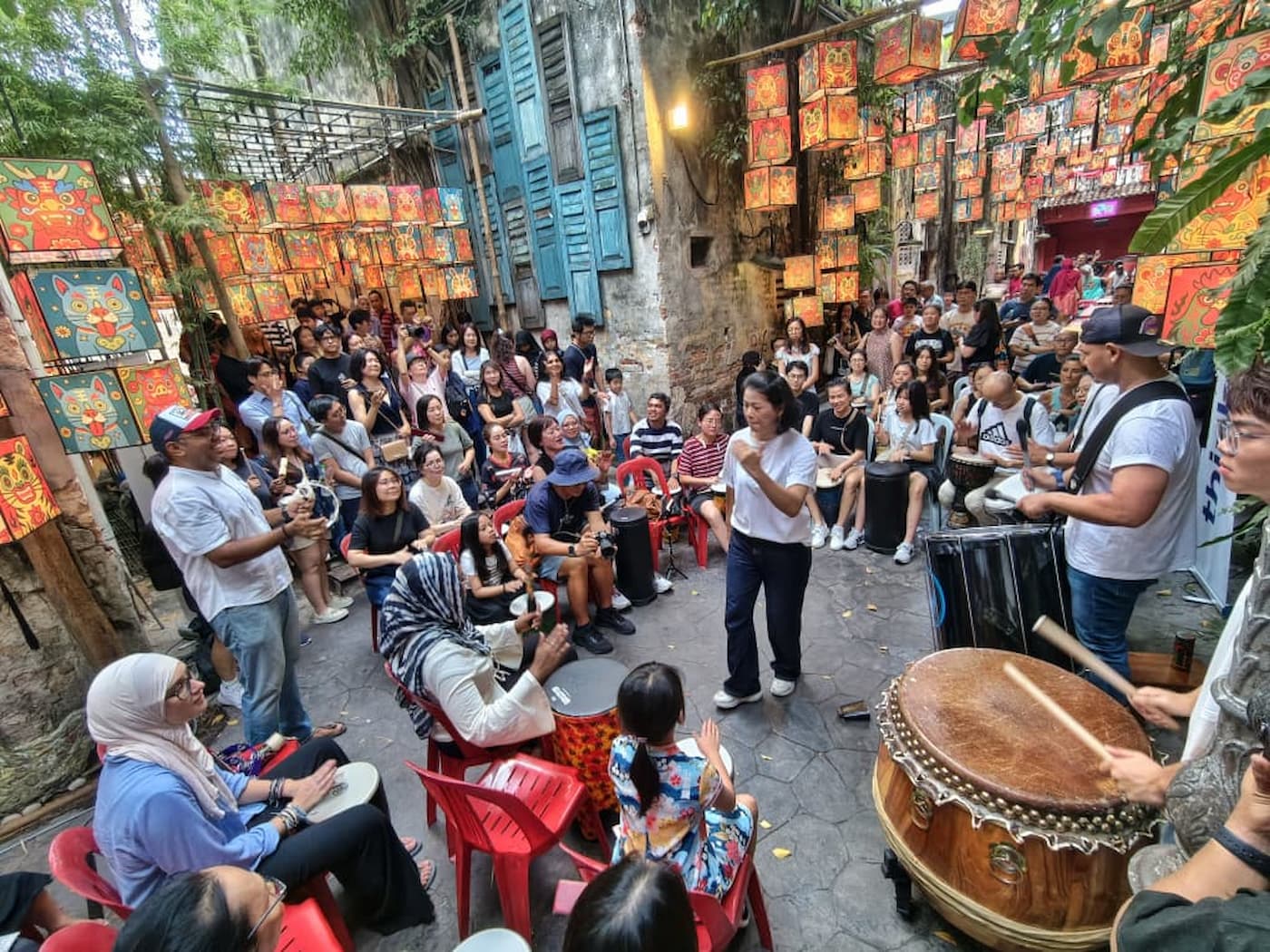
Heritage corridors across the city also pulsed with activity. Kwai Chai Hong's activation, Echoes of Chinatown, drew a steady stream of visitors, transforming its lanes into a stage for rotating performances, including striking wushu and Shaolin kung fu showcases alongside a lively drum circle. Similar energy echoed through neighbourhood-led programmes and partner sites, each adding fragments to a larger civic mosaic.

KCH’s Zeen Chang gave her thumbs up for the festival. “It didn't just ignite the interest of the visitors but the community as well,” she said. “We were able to learn from each other, and collaborate for a common outcome. This brought communities closer together, celebrating diversity, and showcasing unity as colourful Malaysians.”
Echoes of Chinatown in Kwai Chai Hong featured two days of colour and cultural action. – Photo:  Kwai Chai Hong


In green spaces, there were walks (pic above), talks and reflective encounters with the environment. It was a reminder that cultural programming in Kuala Lumpur is no longer confined to buildings – it extends into landscapes, ecosystems and lived geography.

International collaboration added further texture to the festival, bringing artists and ideas from across Asia and beyond into conversation with Kuala Lumpur's own cultural landscape. Among the most intriguing presentations was Origin of a Tale (pic below), a claymaking performance by artists from Lebanon that transformed a simple act of creation into a form of storytelling. Audiences of all ages gathered around the work, captivated by the marvelous tactile process as narratives emerged through movement, craft and imagination.

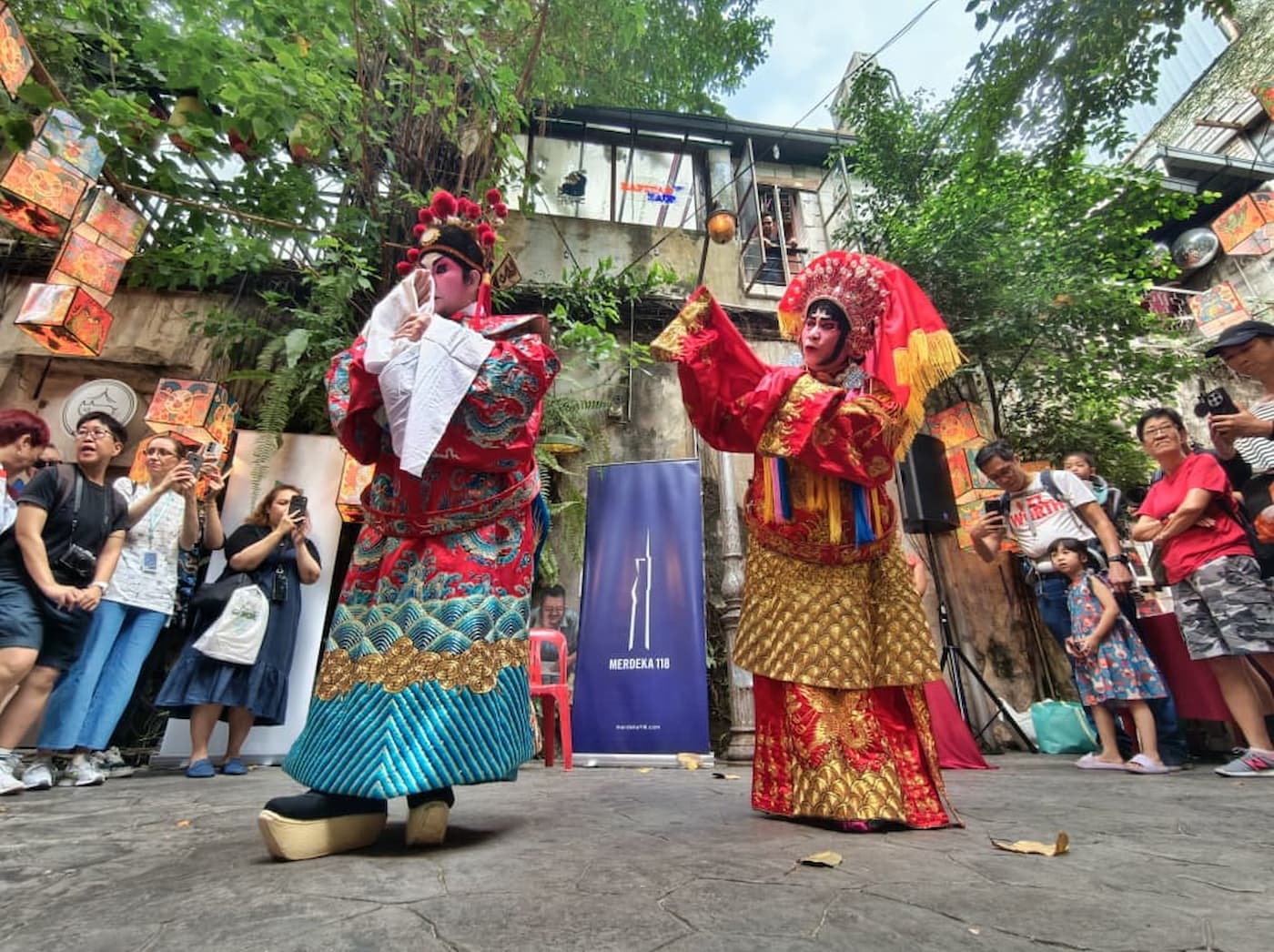
The festival also welcomed internationally acclaimed Thai choreographer Pichet Klunchun with Chapter 2. From Indonesia came The Lessons of Silence, a powerful multidisciplinary performance by Agnes Christina. Regional connections were equally evident in Wayang Women, a witty and inventive collaboration involving artists from Malaysia, Indonesia and Myanmar. Blending humour, folklore and the traditions of Wayang Kulit, the production caught the attention of record audiences flocking Dataran Merdeka to catch it.
 
KL Fest also served as a meeting point for cultural practitioners shaping the future of the region's creative landscape. The Currents and Confluences Producers Meeting brought together international curators, independent producers and cultural leaders (pic below) for a day of exchange on cross-cultural collaboration, Indigenous arts, cultural policy and sustainable creative ecosystems. Discussions explored how governments, cultural institutions and artists can work together to build stronger creative ecosystems while fostering meaningful international partnerships.

A quiet highlight also unfolded at the Merdeka Textile Museum preview, where a dramatic poetry recitation by multihyphenate performer Zamzuriah Zahari was followed by an in-depth panel discussion on Malay textile traditions. The session drew scholars, designers and curious visitors alike, offering a rare moment of reflection amid the festival’s broader momentum. It was, by design, unhurried – a deliberate counterpoint to the city’s usual pace.

Regional meeting point
The breadth of international participation reflected KL Fest's growing ambition to position Kuala Lumpur as a regional meeting point for culture, creativity and exchange. For Hannah Yeoh, Minister in the Prime Minister's Department (Federal Territories), that balance between global outlook and local identity is central to the festival's mission.

"KL Fest has affirmed its place as Kuala Lumpur's international city festival, reflecting the kind of city we aspire to build – one that is open, creative and inclusive, globally connected while remaining deeply rooted in its heritage, cultures and communities," she said.

Together, these artistic and professional exchanges underscored KL Fest's growing role not only as a showcase for artistic work, but as a platform for regional and international dialogue – positioning Kuala Lumpur as a place where ideas, traditions and creative futures can converge.

Managing Director of Think City, Dato’ Hamdan Abdul Majeed, framed this expansion as intentional. “What makes KL Fest distinctive is that it is deeply embedded within the historic fabric of Kuala Lumpur itself,” he said. “A great city is ultimately shaped by its social spaces… where people gather, interact and collectively bring the city to life.”

Hamdan added that the response signalled “a growing appetite for the historic core to evolve into a more vibrant, liveable and internationally relevant cultural district.”

That appetite was evident in the numbers and in the mood. Over 150 activations, more than 700 hours of programming, and participation that cut across age, background and geography. But beyond metrics, the festival’s defining feature was continuity – something happening every day, in different forms, across different districts, rain or shine.

Yeoh confirmed that KL Fest will return, describing the festival as a growing expression of Kuala Lumpur's identity and aspirations. "I am delighted to confirm that KL Festival will return in May 2027, and I hope the next edition will explore themes of kindness, empathy, unity and hope, reflecting the strength and diversity of Malaysia," she said.
The announcement was met with enthusiasm by festival-goers and partners alike, signalling that what began as a month-long programme of arts and cultural activities is steadily evolving into a recurring platform for civic participation, cultural exchange and urban renewal.

The alignment with Warisan KL gave the festival a broader framework – one that situates cultural activation within long-term urban regeneration. The city’s historic core was not simply animated; it was reintroduced as a shared civic asset. As visitors moved between performances, talks and food spaces, a different relationship with Kuala Lumpur quietly emerged – one grounded in proximity rather than spectacle.

As the festival transitions into the next phase of Kuala Lumpur’s cultural calendar, attention now turns to continuity. The KL Orchestra Festival will carry the momentum forward, followed by August activations around Merdeka 118 and National Day, and later Malaysia Day celebrations in September. The intent is clear: keep the city in motion, not episodically, but rhythmically.

KL Fest ends not as a conclusion but as a marker in the longer journey of Warisan KL. A reminder that heritage is not static, culture is not seasonal, and cities are not finished products. They are ongoing negotiations between memory and possibility – and this month, Kuala Lumpur made that negotiation visible on its streets.

Discover more stories

Ooops!
Generic Popup2